To establish a pilot program to assess the use of technology to speed up and enhance the cargo inspection process at land ports of entry along the border.
Analysis under review: This bill has generated analysis that may be too generic or incomplete. Clause-level evidence remains available below.
Summary
What This Bill Does
This bill creates a 5-year pilot program to test new technologies at US-Mexico and US-Canada border crossings. The goal is to use artificial intelligence, machine learning, and other advanced technologies to make cargo and vehicle inspections faster and better at catching illegal drugs like fentanyl, weapons, and human traffickers.
Who Benefits and How
Technology companies specializing in AI, machine learning, quantum sensing, and inspection equipment benefit from new government contracts to develop and test their products at border crossings. Customs and Border Protection (CBP) gains access to improved detection capabilities and more efficient inspection processes. Legitimate cross-border trade and travelers may benefit from reduced wait times as inspection efficiency improves.
Who Bears the Burden and How
The Department of Homeland Security must implement the pilot program within 1 year and submit detailed reports to Congress, creating administrative workload. CBP officers must be trained on new technologies and adapt their workflows. Taxpayers fund the pilot program and potential future technology implementation costs.
Key Provisions
- Requires testing of at least 5 types of nonintrusive inspection (NII) technology enhancements from categories including AI, machine learning, and quantum sensing
- Mandates cost-effectiveness prioritization when selecting technologies
- Requires reports on privacy, civil rights, and civil liberties impacts before and after implementation
- Establishes performance metrics including detection probability, false alarm rates, throughput, and cost savings
Evidence Chain:
This summary is generated from the full bill text using AI analysis. Expand "Detailed Analysis" below for identified beneficiaries/burden bearers with clause-level evidence links.
At a Glance
What This Bill Does
Establishes a 5-year pilot program to test advanced technology enhancements (AI, machine learning, quantum sensing) for improving cargo and vehicle inspections at land ports of entry to better detect contraband, fentanyl, illegal drugs, weapons, and human smuggling.
Key Policy Areas
Border Security, Homeland Security, Technology, Drug Enforcement
Primary Purpose
Establishes a 5-year pilot program to test advanced technology enhancements (AI, machine learning, quantum sensing) for improving cargo and vehicle inspections at land ports of entry to better detect contraband, fentanyl, illegal drugs, weapons, and human smuggling.
Policy Domains
CATCH Fentanyl Act
Identified Gains
- Technology companies (AI, machine learning, quantum sensing, inspection equipment vendors)
- U.S. Customs and Border Protection
- Cross-border trade and commerce
- Border communities
Identified Costs
- Department of Homeland Security (administrative burden)
- Federal taxpayers (implementation costs)
- Drug traffickers and smugglers (detection risk)
Sponsors
Legislative Progress
ReportedReported by Mr. Peters, with an amendment
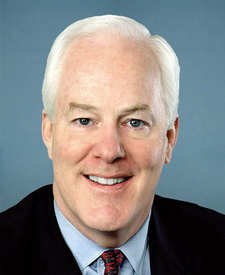
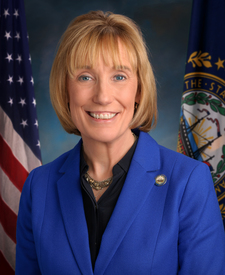
Mr. Cornyn (for himself and Ms. Hassan) introduced the following …
Stakeholder Effects
cui bono?How this legislation distributes effects. Mention counts reflect frequency, not effect magnitude.
Customs and Border Protection, DHS Privacy Officer, DHS Science and Technology Directorate
Drug trafficking organizations, Human smuggling networks
Technology companies providing AI, machine learning, and inspection equipment
Nonintrusive inspection equipment manufacturers
Bill Structure & Actor Mappings
Who is "The Secretary" in each section?
- "the_secretary"
- → Secretary of Homeland Security
- "cbp_innovation_team"
- → U.S. Customs and Border Protection Innovation Team within the Office of the Commissioner
- "dhs_privacy_officer"
- → DHS Privacy Officer
- "civil_rights_officer"
- → Civil Rights and Civil Liberties Officer
Key Definitions
Terms defined in this bill
The Committee on Homeland Security and Governmental Affairs of the Senate and the Committee on Homeland Security of the House of Representatives
Has the meaning given in section 238(g) of the John S. McCain National Defense Authorization Act for Fiscal Year 2019 (Public Law 115-232; 10 U.S.C. 4061 note)
Technical equipment and machines, such as X-ray or gamma-ray imaging equipment, that allow cargo inspections without the need to open the means of transport and unload the cargo
The projects required under section 3(a) for testing and assessing the use of technologies to improve the inspection process at land ports of entry
The U.S. Customs and Border Protection Innovation Team within the Office of the Commissioner
We use a combination of our own taxonomy and classification in addition to large language models to assess meaning and potential beneficiaries. High confidence means strong textual evidence. Always verify with the original bill text.
Learn more about our methodology