To provide subsidized summer and year-round employment for youth who face systemic barriers to employment and viable career options and to assist local community partnerships in improving high school graduation and youth employment rates, and for other purposes.
Analysis under review: This bill has generated analysis that may be too generic or incomplete. Clause-level evidence remains available below.
Summary
What This Bill Does
The Youth Jobs Act creates a major federal initiative to provide subsidized summer and year-round employment for youth ages 14-24, particularly those facing barriers to employment like poverty, lack of education, or involvement in foster care or justice systems. The bill authorizes $1-1.25 billion annually from 2025-2030, distributed through state workforce agencies and competitive grants to local partnerships. Programs must include work readiness training, mentoring, career counseling, financial literacy education, and supportive services like transportation and childcare.
Who Benefits and How
Youth facing employment barriers (low-income, out-of-school, foster youth, justice-involved) benefit from subsidized wages, work experience, and career training. Local workforce boards gain substantial new funding. Community-based organizations providing youth services receive contracts. Employers gain access to subsidized labor (up to 100% for summer jobs, at least 25% employer-paid for year-round). Indian tribes and Native organizations receive 1.5% set-aside.
Who Bears the Burden and How
Federal taxpayers fund the $6.75 billion program. Department of Labor must administer complex program with detailed reporting requirements. Local workforce boards face new planning requirements and performance accountability. States must coordinate across workforce, education, child welfare, and juvenile justice systems.
Key Provisions
- $1B-$1.25B annually for FY2025-2030 in authorized appropriations
- 30% for summer employment (up to 100% wage subsidy), 35% for year-round employment (25%+ employer match)
- 35% for competitive grants to local community partnerships
- Minimum wage requirement, detailed supportive services, 12-month follow-up required
- Priority for high-skill, high-wage, in-demand industries
Evidence Chain:
This summary is generated from the full bill text using AI analysis. Expand "Detailed Analysis" below for identified beneficiaries/burden bearers.
At a Glance
What This Bill Does
Establishes a $6.75 billion federal youth employment program providing subsidized summer and year-round jobs to youth facing barriers to employment, plus competitive grants to local partnerships to improve high school graduation and employment rates
Key Policy Areas
Workforce Development, Education, Youth Services, Labor
Primary Purpose
Establishes a $6.75 billion federal youth employment program providing subsidized summer and year-round jobs to youth facing barriers to employment, plus competitive grants to local partnerships to improve high school graduation and employment rates
Policy Domains
Section 6 - Connecting-for-Opportunities Competitive Grants
Identified Gains
Contextual inference, no direct clause citation- High school dropouts and at-risk youth
- Local educational agencies
- Community-based organizations
- Workforce development providers
Contextual inference, no direct clause citation
Identified Costs
Contextual inference, no direct clause citation- Federal taxpayers
- Local community partnerships (complex reporting)
- School districts (data sharing)
Contextual inference, no direct clause citation
Section 4 - Summer Employment Opportunities
Identified Gains
Contextual inference, no direct clause citation- Youth ages 14-24 facing employment barriers
- Local workforce boards
- Employers receiving subsidized labor
- Community-based youth organizations
Contextual inference, no direct clause citation
Identified Costs
Contextual inference, no direct clause citation- Federal taxpayers
- Department of Labor
- State workforce agencies
Contextual inference, no direct clause citation
Section 5 - Year-Round Employment Opportunities
Identified Gains
Contextual inference, no direct clause citation- Out-of-school youth
- Employers in high-demand industries
- Local workforce boards
Contextual inference, no direct clause citation
Identified Costs
Contextual inference, no direct clause citation- Employers (25%+ wage contribution)
- Federal taxpayers
- Local workforce boards (reporting burden)
Contextual inference, no direct clause citation
Sponsors

Legislative Progress
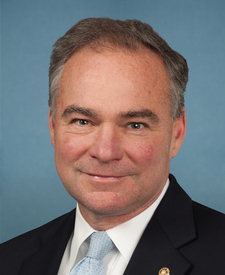
IntroducedMr. Kaine (for himself and Ms. Butler) introduced the following …
Impact analysis is available but no clear stakeholder effects identified. View clause-level analysis →
Bill Structure & Actor Mappings
Who is "The Secretary" in each section?
- "governor"
- → State Governor
- "secretary"
- → Secretary of Labor
- "local_board"
- → Local Workforce Development Board
- "governor"
- → State Governor
- "secretary"
- → Secretary of Labor
- "local_board"
- → Local Workforce Development Board
- "secretary"
- → Secretary of Labor
- "local_partnership"
- → Local Community Partnership
Key Definitions
Terms defined in this bill
An individual who at the time of eligibility determination is an out-of-school youth or an in-school youth
Services such as transportation, child care, dependent care, housing, needs-related payments, food and nutrition services, and health and mental health care supports necessary to enable participation in program activities
An individual who at the time of eligibility determination is an out-of-school youth
We use a combination of our own taxonomy and classification in addition to large language models to assess meaning and potential beneficiaries. High confidence means strong textual evidence. Always verify with the original bill text.
Learn more about our methodology