To amend the Federal Funding Accountability and Transparency Act of 2006 to ensure that other transaction agreements are reported to USAspending.gov, and for other purposes.
Analysis under review: This bill has generated analysis that may be too generic or incomplete. Clause-level evidence remains available below.
Summary
What This Bill Does
This bill closes a transparency loophole in federal contracting. Currently, agencies can use 'other transaction agreements' (OTAs) - a flexible contracting tool - without fully reporting the spending to the public. The Stop Secret Spending Act requires all OTA spending to be posted on USAspending.gov, creates annual reports on unreported federal spending, and mandates inspector general audits of data quality.
Who Benefits and How
Taxpayers and government watchdog groups benefit from increased visibility into previously hidden federal spending. Journalists and researchers gain access to data on OTA contracts. Congress gains oversight tools through mandatory IG reports and GAO recommendations.
Who Bears the Burden and How
Federal agencies must implement new reporting systems for OTA data within 90 days to 3 years. Inspectors General face new biennial reporting requirements on data quality. The Treasury Secretary must create new website features and unique identifiers for OTA tracking.
Key Provisions
- Requires all other transaction agreements to be reported on USAspending.gov
- Mandates annual reports disclosing total unreported federal spending and the reasons why
- Requires Inspector General audits of spending data quality every 2 years for 10 years
- Directs GAO to recommend updates to Federal Acquisition Regulation
Evidence Chain:
This summary is generated from the full bill text using AI analysis. Expand "Detailed Analysis" below for identified beneficiaries/burden bearers.
At a Glance
What This Bill Does
Requires federal agencies to publicly report other transaction agreements (OTAs) on USAspending.gov, creating transparency for a category of federal spending that has largely bypassed public disclosure requirements
Key Policy Areas
Government Transparency, Federal Procurement, Oversight
Primary Purpose
Requires federal agencies to publicly report other transaction agreements (OTAs) on USAspending.gov, creating transparency for a category of federal spending that has largely bypassed public disclosure requirements
Policy Domains
Stop Secret Spending Act of 2024
Identified Gains
Contextual inference, no direct clause citation- Taxpayers
- Government watchdog organizations
- Congress
- Journalists and researchers
Contextual inference, no direct clause citation
Identified Costs
Contextual inference, no direct clause citation- Federal agencies
- Inspectors General
- Department of the Treasury
Contextual inference, no direct clause citation
Sponsors

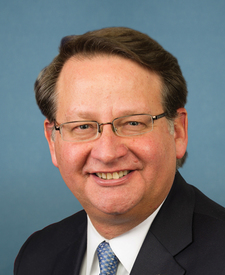

Legislative Progress
ReportedReported by Mr. Peters, with an amendment
Ms. Ernst introduced the following bill; which was read twice …
Ms. Ernst (for herself, Mr. Lankford, and Mr. Peters) introduced …
Stakeholder Effects
cui bono?How this legislation distributes effects. Mention counts reflect frequency, not effect magnitude.
Congress, Congress and oversight committees, Department of the Treasury
Positive-direction: Congress, Congress and oversight committees
Negative-direction: Department of the Treasury, Federal agencies subject to 31 USC 901(b), Federal agencies using OTAs, Government Accountability Office, Inspectors General of Federal agencies, Inspectors General of executive departments and agencies, Office of Management and Budget
Defense contractors and technology companies receiving OTAs, Government contractors receiving OTAs
Taxpayers and government watchdog organizations, Taxpayers and transparency advocates
Bill Structure & Actor Mappings
Who is "The Secretary" in each section?
- "the_director"
- → Director of the Office of Management and Budget
- "the_secretary"
- → Secretary of the Treasury
- "the_comptroller_general"
- → Comptroller General of the United States (GAO)
Key Definitions
Terms defined in this bill
A type of federal contract that provides flexibility outside traditional procurement rules, now explicitly included in the definition of Federal awards requiring disclosure
Agencies described in paragraphs (1) and (2) of section 901(b) of title 31, United States Code (Executive departments and certain independent agencies)
We use a combination of our own taxonomy and classification in addition to large language models to assess meaning and potential beneficiaries. High confidence means strong textual evidence. Always verify with the original bill text.
Learn more about our methodology