Safe Access to Cash Act of 2026
Summary
What This Bill Does
The Safe Access to Cash Act creates a new federal criminal offense for taking or attempting to take property by force, violence, or intimidation from a person using or servicing an ATM. It also covers conspiracy and related incidental crimes, giving federal prosecutors a specific statute for ATM robbery conduct that can threaten bank customers, cash users, and service workers.
Who Benefits and How
ATM users benefit from stronger federal criminal penalties aimed at robbery during cash access. Bank customers benefit if the federal offense deters intimidation at ATMs. ATM service workers benefit because the offense covers people servicing machines as well as users. Financial institutions benefit from clearer federal enforcement for ATM robbery incidents.
Who Bears the Burden and How
DOJ prosecutors must charge and prove the new ATM robbery offense where appropriate. Federal courts must process cases under the new criminal statute. Robbery offenders face federal prosecution and penalties. Financial institutions may need to preserve evidence and coordinate with federal investigators.
Key Provisions
- Adds a new federal offense for ATM robbery and incidental crimes.
- Covers force, violence, intimidation, attempts, and conspiracies.
- Protects people using or servicing ATMs.
- Creates a specific federal enforcement tool for crimes around cash access.
Evidence Chain:
This summary is generated from the full bill text using AI analysis. Expand "Detailed Analysis" below for identified beneficiaries/burden bearers with clause-level evidence links.
At a Glance
What This Bill Does
Creates federal offenses for ATM robbery and incidental crimes involving people using or servicing automated teller machines.
Key Policy Areas
Criminal Justice, Financial Services
Primary Purpose
Creates federal offenses for ATM robbery and incidental crimes involving people using or servicing automated teller machines.
Policy Domains
Bill provisions
Identified Gains
- ATM users
- Bank customer families
- ATM service employees
- Financial institution managers
Identified Costs
- DOJ prosecutor attorneys
- Federal courts
- Robbery defendants
- Financial institution compliance staff
Sponsors
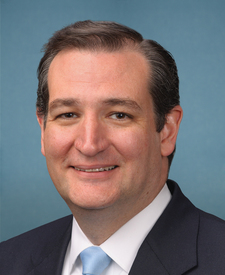
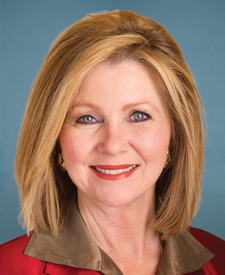
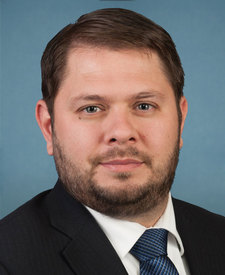
Legislative Progress
ReportedCommittee on the Judiciary. Reported by Senator Grassley with an …
Placed on Senate Legislative Calendar under General Orders. Calendar No. …
Committee on the Judiciary. Ordered to be reported with an …
Committee on the Judiciary. Reported by Senator Grassley with an …
Mr. Cruz (for himself and Mr. Gallego) introduced the following …
Introduced in Senate
Mr. Cruz (for himself, Mr. Gallego, and Mrs. Blackburn) introduced …
Read twice and referred to the Committee on the Judiciary.
Stakeholder Effects
cui bono?How this legislation distributes effects. Mention counts reflect frequency, not effect magnitude.
ATM service workers, Financial institutions
Bill Structure & Actor Mappings
Who is "The Secretary" in each section?
- "attorney_general"
- → Attorney General
We use a combination of our own taxonomy and classification in addition to large language models to assess meaning and potential beneficiaries. High confidence means strong textual evidence. Always verify with the original bill text.
Learn more about our methodology