S3732-119

Reported

Water Security and Drought Resilience Act

119th Congress Introduced Jan 29, 2026

Summary

What This Bill Does

The bill makes storage projects in any Reclamation State eligible for assistance under the WIIN Act and adds projects with feasibility studies authorized by the Infrastructure Investment and Jobs Act, while requiring awards across multiple states. It expands the IIJA small-storage program to cover surface or groundwater storage and conveyance projects from 200 to 30,000 acre-feet and aquifer-recharge projects averaging 200 to 150,000 acre-feet that increase storage, move or recover water, and stabilize groundwater. That program receives a $20 million annual authorization for fiscal years 2027 through 2033 and must preserve state and federal water law, compacts, treaties, and water rights; it authorizes no federal water acquisition. A new natural water-retention program offers nonreimbursable grants for aquifer recharge, floodplain retention, runoff-timing, and natural-process projects, with a federal share up to 90 percent and $15 million annually for fiscal years 2027 through 2031.

Who Benefits and How

States, Indian Tribes, municipalities, irrigation districts, water districts, wastewater districts, and supported nonprofit partners benefit from access to expanded or new storage grants across Reclamation States. Agricultural water users, municipal customers, and drought-prone communities benefit when funded storage, conveyance, aquifer-recharge, floodplain, or runoff-management projects increase reliable water availability and stabilize groundwater. Water infrastructure contractors, engineers, and environmental restoration providers may gain work designing and constructing the newly eligible projects.

Who Bears the Burden and How

Bureau of Reclamation grant administrators must evaluate expanded technical criteria, verify large-project storage estimates across wet, normal, and dry years, spread awards across multiple states, and oversee two funded programs. Federal taxpayers bear up to $20 million annually for seven years plus $15 million annually for five years if Congress appropriates the authorized amounts; natural-project sponsors must provide at least 10 percent of project cost. Applicants must establish eligibility, technical benefits, credible storage estimates where required, and compliance with construction-funding and existing water-law safeguards.

Key Provisions

  • Expands WIIN storage assistance to projects in any Reclamation State and specified IIJA feasibility-study projects.
  • Requires storage assistance and small-storage grants to be distributed across multiple Reclamation States.
  • Expands small-storage eligibility to defined surface, groundwater, conveyance, and aquifer-recharge projects and authorizes $20 million annually for fiscal years 2027-2033.
  • Protects state and federal water law, interstate compacts, treaties, and existing water rights and authorizes no federal water acquisition.
  • Creates natural water-retention and release grants with a federal share up to 90 percent.
  • Authorizes $15 million annually for natural-project grants for fiscal years 2027-2031.

Evidence Chain:

This summary is generated from the full bill text using AI analysis. Expand "Detailed Analysis" below for identified beneficiaries/burden bearers with clause-level evidence links.

At a Glance

What This Bill Does

Expand and fund western water-storage assistance, broaden small-storage eligibility, and create grants for natural water-retention and release projects.

Key Policy Areas

Water Resources, Environment, Infrastructure, Tribal Affairs

Primary Purpose

Expand and fund western water-storage assistance, broaden small-storage eligibility, and create grants for natural water-retention and release projects.

Policy Domains

Water Resources Environment Infrastructure Tribal Affairs

Water Security and Drought Resilience Act

Identified Gains
  • State and municipal water authorities
  • Indian tribal governments
  • Irrigation and water district operators
  • Agricultural water users and drought-prone communities
  • Water infrastructure contractors and engineers
Model: codex-gpt-5 | Version: bill_summary_v2 | Source: is
Indian tribal governments: , ,
State and municipal water authorities: , ,
Irrigation and water district operators: , ,
Water infrastructure contractors and engineers: , ,
Agricultural water users and drought-prone communities: , ,
Identified Costs
  • Bureau of Reclamation grant administrators
  • Federal taxpayers
  • Natural-project grant applicants
Model: codex-gpt-5 | Version: bill_summary_v2 | Source: is
Federal taxpayers: , ,
Natural-project grant applicants: , ,
Bureau of Reclamation grant administrators: , ,

Legislative Progress

Reported
Introduced Committee Passed
Jul 29, 2026

Committee on Energy and Natural Resources. Ordered to be reported …

Mar 17, 2026

Committee on Energy and Natural Resources Subcommittee on Water and …

Jan 29, 2026

Read twice and referred to the Committee on Energy and …

Jan 29, 2026

Introduced in Senate

Jan 29, 2026

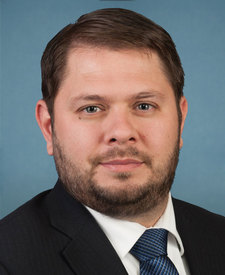
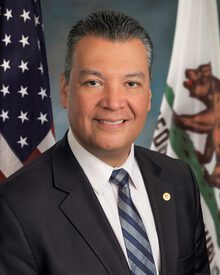
Mr. Gallego (for himself, Mr. Kelly, and Mr. Padilla) introduced …

Stakeholder Effects

cui bono?

How this legislation distributes effects. Mention counts reflect frequency, not effect magnitude.

General Public
5 mentions across 3 clauses
+3 positive -2 negative

Holders of existing water rights, Taxpayers, Water users in Reclamation States

Positive-direction: Holders of existing water rights, Water users in Reclamation States, Watershed residents facing drought or flood risk

Negative-direction: Taxpayers

Government
4 mentions across 3 clauses
+1 positive -3 negative

Bureau of Reclamation assistance administrators, Bureau of Reclamation natural-project administrators, Bureau of Reclamation small-storage staff

Positive-direction: State and municipal water authorities

Negative-direction: Bureau of Reclamation assistance administrators, Bureau of Reclamation natural-project administrators, Bureau of Reclamation small-storage staff

Water Infrastructure
2 mentions across 2 clauses
+2 positive

Small water-storage project sponsors, Water-storage project sponsors

Agricultural Water Users
2 mentions across 2 clauses
+2 positive

Agricultural water users, Irrigation district operators

Water Management
1 mention across 1 clause
+1 positive

Groundwater recharge project operators

Tribal Nations
1 mention across 1 clause
+1 positive

Indian Tribes sponsoring natural water projects

Environment
1 mention across 1 clause
+1 positive

Natural-infrastructure project providers

Construction
1 mention across 1 clause
+1 positive

Water infrastructure contractors

3/4
sections analyzed
Full impact breakdown

Bill Structure & Actor Mappings

Who is "The Secretary" in each section?

Domains
Water Resources Environment Infrastructure Tribal Affairs
Actor Mappings
"the_secretary"
→ Secretary of the Interior acting through the Commissioner of Reclamation
"small_storage_applicants"
→ Eligible sponsors of small storage and aquifer-recharge projects
"natural_project_applicants"
→ States, Tribes, local water entities, authorities, and qualified nonprofit partners

Key Definitions

Terms defined in this bill

2 terms
"qualified partner" §qualified_partner

A nonprofit in a Reclamation State acting with written support from an otherwise eligible water or power delivery entity or authority.

"natural water retention and release project" §natural_water_retention_and_release_project

A primarily natural-material project that mimics riverine, wetland, ecosystem, or hydrologic processes to improve aquifer recharge, floodplain retention, runoff timing, or water availability.

We use a combination of our own taxonomy and classification in addition to large language models to assess meaning and potential beneficiaries. High confidence means strong textual evidence. Always verify with the original bill text.

Learn more about our methodology