To amend section 3663A of title 18, United States Code, to clarify that restitution includes necessary and reasonable expenses incurred by a person who has assumed the victim's rights.
Analysis under review: This bill has generated analysis that may be too generic or incomplete. Clause-level evidence remains available below.
Summary
What This Bill Does
This bill ensures that when someone (like a family member) assumes the rights of a crime victim, defendants can be ordered to reimburse that person's reasonable expenses for participating in investigations, court proceedings, and transporting the victim for care.
Who Benefits and How
- Crime victims' family members and advocates can recover costs of supporting victims
- Victims benefit when supporters can afford to help them through the justice process
- Restitution framework is clarified to cover caregivers' out-of-pocket expenses
Who Bears the Burden and How
- Convicted defendants must pay restitution covering caregivers' expenses
- No new burdens on victims or their supporters
Key Provisions
- Covers lost income during investigation/prosecution participation
- Covers transportation for victim's medical, psychiatric, and therapeutic care
- Covers child care expenses during court proceedings
- Includes physical therapy, occupational therapy, and rehabilitation costs
Evidence Chain:
This summary is generated from the full bill text using AI analysis. Expand "Detailed Analysis" below for identified beneficiaries/burden bearers.
At a Glance
What This Bill Does
This bill amends federal law to clarify and expand the types of expenses that a court must include in restitution orders for persons who have assumed a victim's rights, specifically covering costs related to participation in legal proceedings, medical care transport, and rehabilitation transport.
Key Policy Areas
Criminal Justice, Victim's Rights
Primary Purpose
This bill amends federal law to clarify and expand the types of expenses that a court must include in restitution orders for persons who have assumed a victim's rights, specifically covering costs related to participation in legal proceedings, medical care transport, and rehabilitation transport.
Policy Domains
Clarification of Restitution for Persons Assuming Victim's Rights
Identified Gains
Contextual inference, no direct clause citation- Persons who have assumed a victim's rights
Contextual inference, no direct clause citation
Identified Costs
Contextual inference, no direct clause citation- Defendants ordered to pay restitution
Contextual inference, no direct clause citation
Sponsors
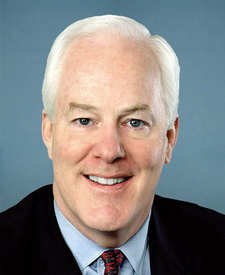



Legislative Progress
Enrolled (Passed Congress)Mr. Cornyn (for himself, Mr. Blumenthal, Mrs. Blackburn, and Mr. …
Passed Senate (inferred from es version)
Passed House (inferred from enr version)
Enrolled Bill (inferred from enr version)
Bill Structure & Actor Mappings
Who is "The Secretary" in each section?
- "a_court"
- → A judicial body responsible for ordering restitution.
- "the_defendant"
- → The individual against whom a restitution order is issued.
- "a_person_who_has_assumed_the_victim's_rights"
- → An individual who has taken on the rights of a victim under paragraph (2) of 18 U.S.C. 3663A(a).
Key Definitions
Terms defined in this bill
The short title of this Act, also referred to as the Victims' VOICES Act.
We use a combination of our own taxonomy and classification in addition to large language models to assess meaning and potential beneficiaries. High confidence means strong textual evidence. Always verify with the original bill text.
Learn more about our methodology