American Decade of Sports Act
Summary
What This Bill Does
The reported American Decade of Sports Act requires the Secretary of State to submit a five-year sports-diplomacy strategy within 180 days and a second five-year strategy five years after the first, incorporating lessons from events held during the initial period. The strategies must state diplomatic objectives and metrics; coordinate host cities, diaspora communities, creators, athletes, sports organizations, businesses, human-rights groups, and civil society; integrate sports into bilateral, public, and commercial diplomacy; plan secure and expeditious visa processing; identify resource needs; and consider domestic public-diplomacy resources for foreign visitors. State must publish each strategy, consult congressional foreign-affairs committees before submission, and provide implementation information every 180 days through 2034. The bill establishes an Office of Sports Diplomacy in the Bureau of Educational and Cultural Affairs to manage exchanges and implement the strategies across State, other agencies, host cities, diaspora groups, leagues, athletes, tourism and trade offices, cultural creators, and visa stakeholders. The office authority sunsets ten years after enactment. State must also report annually to Congress on progress through the end of 2034. Unlike the introduced version, the reported bill does not require three additional full-time employees or prescribe a specific supervisory position.
Who Benefits and How
U.S. host cities, tourism and trade offices, sports leagues, athletes, sponsors, cultural creators, and diaspora communities gain structured roles in international engagement around the World Cup, Olympics and Paralympics, Rugby World Cups, and other covered events. Foreign audiences and visitors gain expanded cultural and diplomatic programming. Eligible international athletes, families, support staff, broadcasters, and spectators may benefit from coordinated plans to reduce visa appointment waits while preserving security. State and Congress gain measurable strategies, lessons-learned analysis, semiannual implementation information, and annual progress reports.
Who Bears the Burden and How
The State Department must produce and publish two strategies, consult Congress, coordinate across bureaus and agencies, plan visa operations, manage partnerships, provide semiannual updates, and submit annual reports through 2034. The Bureau of Educational and Cultural Affairs must operate the new office for up to ten years. Host cities, sports organizations, diaspora groups, creators, civil-society organizations, and visa partners must devote staff time to coordination. The final bill provides no dedicated staffing floor, so State may need to absorb the work with available personnel and resources.
Key Provisions
- Requires an initial five-year sports-diplomacy strategy within 180 days.
- Requires a second five-year strategy after five years with lessons learned from earlier events.
- Requires plans for host-city partnerships, diaspora engagement, commercial diplomacy, cultural outreach, metrics, and secure visa processing.
- Establishes the Office of Sports Diplomacy to manage exchanges and implement the strategies.
- Provides semiannual implementation information and annual congressional reports through 2034.
- Limits the office authority to ten years and omits the introduced three-person staffing mandate.
Evidence Chain:
This summary is generated from the full bill text using AI analysis. Expand "Detailed Analysis" below for identified beneficiaries/burden bearers with clause-level evidence links.
At a Glance
What This Bill Does
Uses major international sporting events hosted in the United States through 2034 as a platform for diplomacy, cultural exchange, commercial engagement, and coordinated visa planning.
Key Policy Areas
Public Diplomacy, International Sports, Visa Policy
Primary Purpose
Uses major international sporting events hosted in the United States through 2034 as a platform for diplomacy, cultural exchange, commercial engagement, and coordinated visa planning.
Policy Domains
American Decade of Sports Act
Identified Gains
- United States host cities
- International athletes and eligible visitors
- United States sports leagues and athletes
- Diaspora communities and cultural creators
- Host-city tourism and trade offices
Identified Costs
- Department of State strategy staff
- Office of Sports Diplomacy staff
- Bureau of Educational and Cultural Affairs managers
- Consular and visa-processing personnel
- Congressional foreign-affairs committee staff
Sponsors
Legislative Progress
ReportedPlaced on Senate Legislative Calendar under General Orders. Calendar No. …
Committee on Foreign Relations. Reported by Senator Risch with an …
Reported by Ms. Rosen, with an amendment
Committee on Foreign Relations. Ordered to be reported with an …
Read twice and referred to the Committee on Foreign Relations.
Introduced in Senate
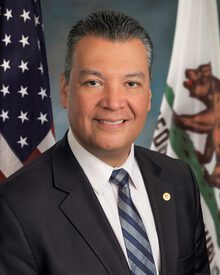
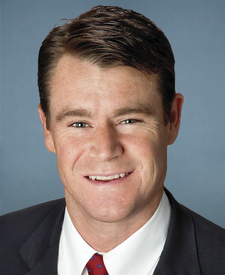
Ms. Rosen (for herself, Mr. Young, Mr. Padilla, and Mr. …
Stakeholder Effects
cui bono?How this legislation distributes effects. Mention counts reflect frequency, not effect magnitude.
Bureau of Educational and Cultural Affairs, Congressional foreign-affairs committees, Consular and visa-processing personnel
Positive-direction: Congressional foreign-affairs committees, Department of State personnel managers, Department of State sports-diplomacy planners
Negative-direction: Bureau of Educational and Cultural Affairs, Consular and visa-processing personnel, Department of State congressional-reporting staff, Department of State strategy staff, Office of Sports Diplomacy
Host-city tourism and trade offices, United States host-city tourism and trade offices, United States host-city tourism offices
Eligible international athletes and visitors, Eligible international sports visitors, Taxpayers monitoring sports diplomacy
United States arts, film, and music creators, United States cultural creators
Bill Structure & Actor Mappings
Who is "The Secretary" in each section?
- "parent_bureau"
- → Bureau of Educational and Cultural Affairs
- "strategy_owner"
- → Secretary of State
- "operating_office"
- → Office of Sports Diplomacy
- "oversight_bodies"
- → Senate Foreign Relations and House Foreign Affairs Committees
- "traveling_public"
- → Eligible athletes, families, support staff, broadcasters, and visitors
- "domestic_partners"
- → Host cities, sports organizations, diaspora communities, and cultural creators
We use a combination of our own taxonomy and classification in addition to large language models to assess meaning and potential beneficiaries. High confidence means strong textual evidence. Always verify with the original bill text.
Learn more about our methodology