Fort Peck Water System Reauthorization Act
Summary
What This Bill Does
S.3635, the Fort Peck Water System Reauthorization Act, changes2026 to2028 in section9(a)(1) and9(b) of the underlying2000 Act. It extends the authorization window for planning, design and construction of the Assiniboine and Sioux Rural Water System on the Fort Peck Indian Reservation and the interconnected Dry Prairie Rural Water System serving parts of Roosevelt, Sheridan, Daniels and Valley Counties outside the reservation. These are fiscal-year dates, not a guaranteed construction-completion deadline or a direction to shut off water after2026.
The Senate committee ordered the bill reported without amendment on July29,2026; the available bill text is the introduced version. Its House companion H.R.7250 contains the same date changes and was presented to the President on September17,2026. The current action record does not establish enactment. The two bills are alternative vehicles for the same extension, not additive funding awards.
Who Benefits and How
The Fort Peck Tribal Executive Board and reservation water users benefit from two more fiscal years of authorized federal construction support. Dry Prairie Rural Water Association Incorporated and its water users receive the same continuity for their linked infrastructure. Contractors providing water-system construction services could gain work if available funding and project decisions support it, but neither a contract nor a new connection is guaranteed.
The existing indexed project authorizations are $124million for the reservation system and $51million for Dry Prairie. S.3635 changes only their end dates; it does not create a fresh $175million grant, make those amounts annual, reset prior spending, or expand the service territory. Completion and service improvements remain contingent on execution and funding.
Who Bears the Burden and How
The Bureau of Reclamation must continue administering construction assistance if the extended authority is used, including the existing cooperative-agreement and project-review requirements. Federal spending remains dependent on appropriations. Existing construction cost shares remain100% federal for the reservation system and no more than76% federal for Dry Prairie. The Dry Prairie association retains its nonfederal construction share and operation, maintenance and replacement costs. These are continuing conditions of supported work, not newly increased percentages imposed by this bill.
The separate Bureau of Indian Affairs authorization for reservation-system operation and maintenance is not amended. Existing environmental-review requirements, conservation planning and water-rights protections remain in place. No new household fee, private compliance mandate or guaranteed contractor payment is created.
Key Provisions
- Extends the section9(a)(1) reservation-system construction authorization through FY2028.
- Extends the separate section9(b) Dry Prairie construction authorization through FY2028.
- Uses the existing funding amounts, cost indexing and cost-sharing framework without adding an appropriation or changing the separate operation-and-maintenance authority.
Evidence Chain:
This summary is generated from the full bill text using AI analysis. Expand "Detailed Analysis" below for identified beneficiaries/burden bearers with clause-level evidence links.
At a Glance
What This Bill Does
Extend through fiscal year2028 the two construction-funding authorizations for the Fort Peck Reservation Rural Water System, without increasing their project amounts or appropriating new funds.
Key Policy Areas
Water Infrastructure, Tribal Affairs
Primary Purpose
Extend through fiscal year2028 the two construction-funding authorizations for the Fort Peck Reservation Rural Water System, without increasing their project amounts or appropriating new funds.
Policy Domains
Fort Peck Water System Reauthorization Act
Identified Gains
- Fort Peck Tribal Executive Board
- Dry Prairie Rural Water Association Incorporated
- Residents served by the Fort Peck water systems
Identified Costs
- Bureau of Reclamation construction-assistance administrators
- Dry Prairie Rural Water Association Incorporated
Sponsors
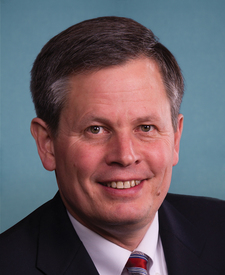
Steve Daines
R-MT | Primary Sponsor

Legislative Progress
ReportedCommittee on Energy and Natural Resources. Ordered to be reported …
Committee on Energy and Natural Resources Subcommittee on Water and …
Read twice and referred to the Committee on Energy and …
Introduced in Senate
Mr. Daines (for himself and Mr. Sheehy) introduced the following …
Stakeholder Effects
cui bono?How this legislation distributes effects. Mention counts reflect frequency, not effect magnitude.
Bureau of Reclamation Fort Peck construction-assistance administration, Fort Peck Tribal Executive Board
Positive-direction: Fort Peck Tribal Executive Board
Negative-direction: Bureau of Reclamation Fort Peck construction-assistance administration
Residents served by the Dry Prairie Rural Water System, Residents served by the Fort Peck Reservation water system
Bill Structure & Actor Mappings
Who is "The Secretary" in each section?
- "the_secretary"
- → Secretary of the Interior
- "tribal_partner"
- → Fort Peck Tribal Executive Board
- "reservation_operations"
- → Bureau of Indian Affairs
- "off_reservation_partner"
- → Dry Prairie Rural Water Association Incorporated
- "construction_administrator"
- → Bureau of Reclamation
Note: Source: https://www.govinfo.gov/content/pkg/BILLS-119s3635is/xml/BILLS-119s3635is.xml . Underlying Act and amendment: https://www.govinfo.gov/content/pkg/PLAW-106publ382/html/PLAW-106publ382.htm ; https://www.govinfo.gov/content/pkg/PLAW-115publ244/html/PLAW-115publ244.htm section206. Current compilation https://www.govinfo.gov/content/pkg/COMPS-18388/pdf/COMPS-18388.pdf read, including all section9 amounts and cost-sharing provisions. Companion current action verified September22,2026: presented, not shown enacted.
Key Definitions
Terms defined in this bill
FY2026 becomesFY2028 only in section9(a)(1) and9(b); section9(a)(2) operations authority is unchanged.
We use a combination of our own taxonomy and classification in addition to large language models to assess meaning and potential beneficiaries. High confidence means strong textual evidence. Always verify with the original bill text.
Learn more about our methodology