To impose sanctions with respect to foreign governments that resist efforts to repatriate their citizens who have unlawfully entered the United States and foreign governments and foreign persons that knowingly facilitate unlawful immigration into the United States, and for other purposes.
Analysis under review: This bill has generated analysis that may be too generic or incomplete. Clause-level evidence remains available below.
Summary
The STOP MADNESS Act would authorize the President to impose economic sanctions against foreign governments that refuse to take back their citizens who have unlawfully entered the United States, as well as against any foreign government or person that knowingly facilitates illegal immigration. Using International Emergency Economic Powers Act authorities, the President could block property and financial transactions of sanctioned entities within the US. The bill requires regular reporting to Congress and includes penalties for violations, a national security waiver, and exceptions for intelligence and law enforcement activities.
Evidence Chain:
This summary is generated from the full bill text using AI analysis. Expand "Detailed Analysis" below for identified beneficiaries/burden bearers.
At a Glance
What This Bill Does
Authorizes the President to impose economic sanctions on foreign governments that resist repatriating citizens who unlawfully entered the United States and on foreign governments and persons that knowingly facilitate unlawful immigration into the United States.
Who Benefits
- US immigration enforcement agencies
- US border security
Who Bears Costs
- Foreign governments of countries with significant unauthorized migrant populations in the US
- Foreign persons facilitating unauthorized immigration
- Foreign financial institutions with US exposure
Key Policy Areas
{'domain': 'Immigration', 'evidence': ['Sec. 2 declares migrants who unlawfully entered the US are a national security threat and should be repatriated', 'Sec. 6 authorizes sanctions against governments that resist repatriation or facilitate unlawful immigration']}, {'domain': 'Foreign Affairs', 'evidence': ['Sec. 5 invokes International Emergency Economic Powers Act authorities', 'Sec. 6 authorizes property blocking under IEEPA for foreign governments and persons']}, {'domain': 'Finance', 'evidence': ['Sec. 6(b) authorizes blocking and prohibiting all transactions in property of sanctioned entities in the US financial system']}
Primary Purpose
Authorizes the President to impose economic sanctions on foreign governments that resist repatriating citizens who unlawfully entered the United States and on foreign governments and persons that knowingly facilitate unlawful immigration into the United States.
Policy Domains
Legislative Strategy
"Leverages existing IEEPA framework to create a new sanctions regime specifically targeting foreign governments and persons involved in unlawful immigration, with broad presidential discretion."
Sponsors
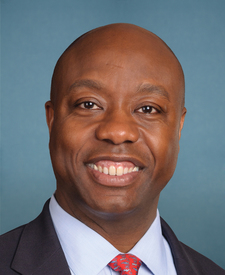
Tim Scott
R-SC | Primary Sponsor

Legislative Progress
IntroducedMr. Scott of South Carolina (for himself and Mr. Moreno) …
Stakeholder Effects
cui bono?How this legislation distributes effects. Mention counts reflect frequency, not effect magnitude.
Congressional oversight committees, Executive branch (President and Treasury OFAC), Intelligence Community
Positive-direction: Congressional oversight committees, Intelligence Community, Law enforcement agencies, US immigration enforcement
Negative-direction: Executive branch (President and Treasury OFAC)
Foreign governments and their instrumentalities, Foreign governments of origin countries, Foreign governments resisting repatriation
Foreign persons facilitating unlawful immigration, Persons violating sanctions provisions
US financial institutions handling foreign transactions
Bill Structure & Actor Mappings
Who is "The Secretary" in each section?
- "the_president"
- → President of the United States
- "the_president"
- → President of the United States
- "the_president"
- → President of the United States
Key Definitions
Terms defined in this bill
Senate Banking Committee, House Foreign Affairs Committee, and House Financial Services Committee.
Any governing body or political organization exercising control over a foreign country or substantial portion thereof, including ministries, officials, and owned/controlled entities.
An individual or entity that is not a United States person and is not a foreign government.
Actual knowledge or should have known of the conduct, circumstance, or result.
US citizens, lawful permanent residents, lawfully admitted aliens, and entities organized under US law.
We use a combination of our own taxonomy and classification in addition to large language models to assess meaning and potential beneficiaries. High confidence means strong textual evidence. Always verify with the original bill text.
Learn more about our methodology