Community Protection and Wildfire Resilience Act
Summary
What This Bill Does
The bill defines the eligible entities, planning standards, and project concepts that govern who can participate in the bill's wildfire resilience grant program and what activities qualify, establishes a new FEMA wildfire resilience grant program, sets grant caps and cost-share rules, prioritizes high-risk communities, and directs local hiring preferences for funded projects, and requires the Comptroller General to publish a report on federal wildfire-protection authorities and programs, including implementation impediments and funding gaps. It relies on reporting requirements, definition changes, grants, and delegation of rulemaking. The main policy areas are Disaster Response, Housing, and Finance.
Who Benefits and How
Local contractors, AmeriCorps, and conservation corps working on resilience projects could gain revenue opportunities, Construction and retrofit contractors providing wildfire-hardening work could gain revenue opportunities, and At-risk communities and Tribal communities seeking recognition on wildfire-risk maps could face fewer barriers.
Who Bears the Burden and How
Government Accountability Office would take on compliance duties, FEMA and the United States Fire Administrator would take on compliance duties, and FEMA, the United States Fire Administrator, and the Forest Service would take on compliance duties.
Key Provisions
- Defines the eligible entities, planning standards, and project concepts that govern who can participate in the bill's wildfire resilience grant program and what activities qualify.
- Establishes a new FEMA wildfire resilience grant program, sets grant caps and cost-share rules, prioritizes high-risk communities, and directs local hiring preferences for funded projects.
- Requires the Comptroller General to publish a report on federal wildfire-protection authorities and programs, including implementation impediments and funding gaps.
- Expands the statutory framework for at-risk communities and requires recurring federal maps, including maps of Tribal at-risk communities, to guide wildfire resilience planning.
- Requires a federal report on wildfire radio-frequency interoperability, communication gaps, and potential technology fixes for fire-suppression efforts.
Evidence Chain:
This summary is generated from the full bill text using AI analysis. Expand "Detailed Analysis" below for identified beneficiaries/burden bearers with clause-level evidence links.
At a Glance
What This Bill Does
The bill defines the eligible entities, planning standards, and project concepts that govern who can participate in the bill's wildfire resilience grant program and what activities qualify, establishes a new FEMA wildfire resilience grant program, sets grant caps and cost-share rules, prioritizes high-risk communities, and directs local hiring preferences for funded projects, and requires the Comptroller General to publish a report on federal wildfire-protection authorities and programs, including implementation impediments and funding gaps.
Key Policy Areas
Disaster Response, Housing, Finance
Primary Purpose
The bill defines the eligible entities, planning standards, and project concepts that govern who can participate in the bill's wildfire resilience grant program and what activities qualify, establishes a new FEMA wildfire resilience grant program, sets grant caps and cost-share rules, prioritizes high-risk communities, and directs local hiring preferences for funded projects, and requires the Comptroller General to publish a report on federal wildfire-protection authorities and programs, including implementation impediments and funding gaps.
Policy Domains
Wildfire Resilience Grants and Oversight
Identified Gains
- Local contractors, AmeriCorps, and conservation corps working on resilience projects
- Construction and retrofit contractors providing wildfire-hardening work
- At-risk communities and Tribal communities seeking recognition on wildfire-risk maps
- States, tribes, local governments, and fire departments seeking wildfire resilience grants
Identified Costs
- Government Accountability Office
- FEMA and the United States Fire Administrator
- FEMA, the United States Fire Administrator, and the Forest Service
- FEMA and Forest Service officials responsible for wildfire-risk mapping
- FEMA and Forest Service officials administering wildfire resilience grants
Sponsors
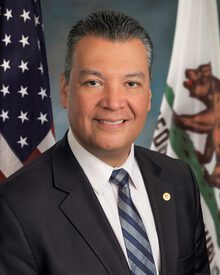
Alex Padilla
D-CA | Primary Sponsor

Legislative Progress
In CommitteeMr. Padilla (for himself and Mr. Sheehy) introduced the following …
Read twice and referred to the Committee on Homeland Security …
Introduced in Senate
Stakeholder Effects
cui bono?How this legislation distributes effects. Mention counts reflect frequency, not effect magnitude.
At-risk communities and Tribal communities seeking recognition on wildfire-risk maps, FEMA and Forest Service officials administering wildfire resilience grants, FEMA and Forest Service officials responsible for wildfire-risk mapping
Positive-direction: At-risk communities and Tribal communities seeking recognition on wildfire-risk maps, States, tribes, local governments, and fire departments seeking wildfire resilience grants
Negative-direction: FEMA and Forest Service officials administering wildfire resilience grants, FEMA and Forest Service officials responsible for wildfire-risk mapping, FEMA and the United States Fire Administrator, FEMA, the United States Fire Administrator, and the Forest Service, Government Accountability Office
Construction and retrofit contractors providing wildfire-hardening work, Local contractors, AmeriCorps, and conservation corps working on resilience projects
Bill Structure & Actor Mappings
Who is "The Secretary" in each section?
- "chief"
- → Chief of the Forest Service
- "administrator"
- → Administrator of the Federal Emergency Management Agency
- "fire_administrator"
- → United States Fire Administrator
- "comptroller_general"
- → Comptroller General of the United States
Key Definitions
Terms defined in this bill
A state, Indian Tribe, local or regional government unit, fire protection district, municipal or volunteer fire department, or a collaboration of at least two such entities.
Public safety, health, education, transportation, communications, water, power, and private infrastructure needed to preserve community safety, resilience, or continuity during wildfire threats.
A vegetation-management project within 100 feet of a structure, or a stricter state-law equivalent, that reduces wildfire fuel and exposure around homes, businesses, or administrative facilities.
A coordinated local plan developed with governments, tribes, responders, utilities, nonprofits, and state agencies that covers detection, warnings, evacuation, vulnerable populations, hardening, defensible space, land use, local capacity, and existing wildfire plans.
We use a combination of our own taxonomy and classification in addition to large language models to assess meaning and potential beneficiaries. High confidence means strong textual evidence. Always verify with the original bill text.
Learn more about our methodology