To amend the Financial Stability Act of 2010 to require the Financial Stability Oversight Council to consider alternative approaches before determining that a U.S. nonbank financial company shall be supervised by the Board of Governors of the Federal Reserve System, and for other purposes.
Sponsors
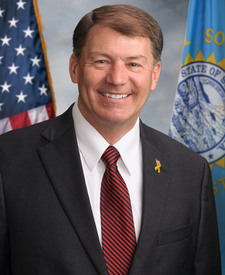

Legislative Progress
IntroducedMr. Rounds (for himself and Ms. Sinema) introduced the following …
Summary
What This Bill Does
This bill amends the Financial Stability Act of 2010 to require the Financial Stability Oversight Council (FSOC) to consider alternative approaches before designating a U.S. nonbank financial company for Federal Reserve supervision. The bill adds new procedural hurdles that FSOC must clear before it can vote to subject large financial institutions like insurance companies or asset managers to stricter oversight.
Who Benefits and How
Large nonbank financial companies (such as major insurance companies, asset managers, and hedge funds) benefit by gaining additional procedural protections before being designated as "systemically important." These companies can now propose their own written plans to address financial stability concerns, and FSOC must first determine that alternative regulatory approaches are "impracticable or insufficient" before voting on designation. This creates more opportunities for companies to avoid Federal Reserve supervision and its accompanying capital requirements.
Who Bears the Burden and How
FSOC and its member agencies bear new administrative burdens, including mandatory annual reporting to Congress on financial stability planning materials and potential gaps. The Council must also publicly release detailed minutes after any closed meeting, reducing deliberative confidentiality. Financial regulators may find it harder to quickly designate a rapidly-growing financial company as systemically important during a developing crisis.
Key Provisions
- Requires FSOC to consult with the company and its primary regulator before voting on designation, determining that alternatives are "impracticable or insufficient"
- Allows companies to submit written plans to mitigate systemic risk as an alternative to designation
- Mandates annual reports to Congress identifying financial stability planning materials and gaps
- Requires public release of detailed minutes after closed FSOC meetings
- Expands notice requirements under subsection (f)(1) to include the new alternative-approach determination
Evidence Chain:
This summary is derived from the structured analysis below. See "Detailed Analysis" for per-title beneficiaries/burden bearers with clause-level evidence links.
Primary Purpose
This bill amends the Financial Stability Act of 2010 to require the Financial Stability Oversight Council (FSOC) to consider alternative approaches before determining that a U.S. nonbank financial company should be supervised by the Federal Reserve.
Policy Domains
Bill Structure & Actor Mappings
Who is "The Secretary" in each section?
Key Definitions
Terms defined in this bill
A financial institution that is not a bank but provides financial services.
The council responsible for identifying risks to the financial stability of the United States.
The main regulatory body overseeing a specific nonbank financial company.
The governing body of the Federal Reserve, responsible for setting monetary policy and supervising banks.
The original act establishing the FSOC and outlining its responsibilities.
Documents and information related to financial stability planning.
Shortcomings or missing elements in the financial stability planning process.
A meeting of the FSOC that is not open to the public.
Comprehensive records of what was discussed and decided in a meeting.
The various financial services, instruments, and methods used by companies.
A Senate committee overseeing financial institutions.
A House of Representatives committee overseeing financial institutions.
A document outlining steps a company will take to mitigate financial risks.
Enhanced regulations and protections to mitigate financial risks.
Any risk that could disrupt or harm the overall financial system.
The initial decision by the FSOC regarding a nonbank financial company's supervision.
Not feasible or possible to implement.
Not adequate or enough to achieve the desired outcome.
We use a combination of our own taxonomy and classification in addition to large language models to assess meaning and potential beneficiaries. High confidence means strong textual evidence. Always verify with the original bill text.
Learn more about our methodology