To require governmentwide source code sharing, and for other purposes.
Analysis under review: This bill has generated analysis that may be too generic or incomplete. Clause-level evidence remains available below.
Summary
What This Bill Does
Mandates federal agency source code sharing to eliminate duplicative software development and licensing costs, implementing recommendations from multiple GAO reports on software management inefficiencies.
Who Benefits and How
Federal agencies gain access to shared code solutions reducing development costs. Taxpayers benefit from reduced duplicative software spending. Interoperability between federal systems improves.
Who Bears the Burden and How
Federal agencies must share source code and adapt to new processes. IT contractors may see reduced revenue from duplicative development. Agencies face transition costs to shared code infrastructure.
Key Provisions
- Requires government-wide source code sharing mechanism
- Cites GAO reports documenting billions in unnecessary software costs
- Addresses fragmented technology landscape impeding interoperability
- Includes DoD open source software pilot and license management findings
Evidence Chain:
This summary is generated from the full bill text using AI analysis. Expand "Detailed Analysis" below for identified beneficiaries/burden bearers.
At a Glance
What This Bill Does
Requires government-wide source code sharing between federal agencies to reduce duplication and costs
Who Benefits
- Federal agencies
- Taxpayers
- Government IT efficiency
Who Bears Costs
- Federal agencies (transition)
- IT contractors
- Government IT staff
Key Policy Areas
Information Technology, Government Efficiency, Software Development, Federal Procurement
Primary Purpose
Requires government-wide source code sharing between federal agencies to reduce duplication and costs
Policy Domains
Legislative Strategy
"Reduce government IT costs through mandatory code sharing"
Sponsors
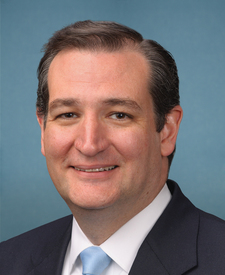

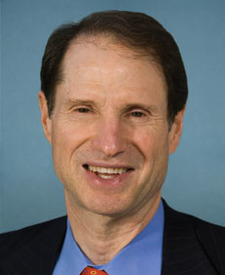
Legislative Progress
ReportedReported by Mr. Peters, with an amendment
Mr. Cruz (for himself, Mr. Peters, and Mr. Wyden) introduced …
Mr. Cruz (for himself and Mr. Peters) introduced the following …
Stakeholder Effects
cui bono?How this legislation distributes effects. Mention counts reflect frequency, not effect magnitude.
Federal agencies, GAO, Government Accountability Office
Positive-direction: National security agencies
Negative-direction: Federal agencies, GAO, Government Accountability Office, OMB, Office of Management and Budget
Bill Structure & Actor Mappings
Who is "The Secretary" in each section?
We use a combination of our own taxonomy and classification in addition to large language models to assess meaning and potential beneficiaries. High confidence means strong textual evidence. Always verify with the original bill text.
Learn more about our methodology