No Trade Preferences for Communist China Act
Analysis under review: This bill has generated analysis that may be too generic or incomplete. Clause-level evidence remains available below.
Summary
What This Bill Does
This bill revokes permanent normal trade relations (PNTR) status for the People's Republic of China, which was granted in 2000 when China joined the World Trade Organization. Effective 90 days after enactment, all Chinese imports would revert to the higher Column 2 tariff rates in the Harmonized Tariff Schedule -- the rates typically reserved for countries without normal trade relations with the U.S. The President is also authorized to impose even higher duties beyond Column 2 rates. The definition of China explicitly includes Hong Kong and Macau.
Who Benefits and How
U.S. domestic manufacturers and workers in industries that compete with Chinese imports would benefit from significantly higher tariffs on Chinese goods, making domestic products more price-competitive. Industries that have lost market share to subsidized Chinese competition -- including manufacturing, rare earths, and technology sectors -- could see renewed demand for domestically produced alternatives.
Who Bears the Burden and How
U.S. consumers would face higher prices on a wide range of goods currently imported from China at lower tariff rates. U.S. importers, retailers, and businesses with supply chains dependent on Chinese manufacturing would face substantially increased costs and potential supply disruptions. The bill provides no phase-in period beyond 90 days, meaning businesses would need to rapidly restructure sourcing arrangements.
Key Provisions
- Revokes PNTR status for China 90 days after enactment
- Applies Column 2 tariff rates (historically much higher than normal rates) to all Chinese products
- Authorizes the President to proclaim rates even higher than Column 2
- Defines China to include Hong Kong and Macau Special Administrative Regions
- Cites GATT Article XXI national security exception as legal justification
Evidence Chain:
This summary is generated from the full bill text using AI analysis. Expand "Detailed Analysis" below for identified beneficiaries/burden bearers.
At a Glance
What This Bill Does
Revokes permanent normal trade relations (PNTR) status for China, reverting Chinese imports to higher Column 2 tariff rates and authorizing the President to impose even higher duties
Key Policy Areas
International Trade, Foreign Policy, National Security
Primary Purpose
Revokes permanent normal trade relations (PNTR) status for China, reverting Chinese imports to higher Column 2 tariff rates and authorizing the President to impose even higher duties
Policy Domains
No Trade Preferences for Communist China Act
Identified Gains
Contextual inference, no direct clause citation- U.S. domestic manufacturers
- U.S. workers in import-competing industries
- Domestic rare earth producers
Contextual inference, no direct clause citation
Identified Costs
Contextual inference, no direct clause citation- U.S. consumers of Chinese-made goods
- U.S. importers and retailers sourcing from China
- Chinese exporters and manufacturers
- U.S. businesses reliant on Chinese supply chains
Contextual inference, no direct clause citation
Sponsors
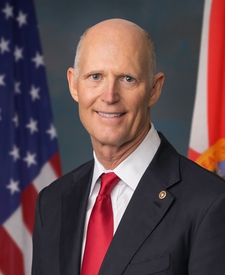
Legislative Progress
In CommitteeRead twice and referred to the Committee on Finance.
Introduced in Senate
Mr. Scott of Florida introduced the following bill; which was …
Impact analysis is available but no clear stakeholder effects identified. View clause-level analysis →
Bill Structure & Actor Mappings
Who is "The Secretary" in each section?
- "the_president"
- → President of the United States
Key Definitions
Terms defined in this bill
The government of the People's Republic of China, the government of the Special Administrative Region of Hong Kong, the government of the Special Administrative Region of Macau, and any agency or instrumentality thereof
We use a combination of our own taxonomy and classification in addition to large language models to assess meaning and potential beneficiaries. High confidence means strong textual evidence. Always verify with the original bill text.
Learn more about our methodology