Closing the Contraception Coverage Gap Act
Analysis under review: This bill has generated analysis that may be too generic or incomplete. Clause-level evidence remains available below.
Summary
What This Bill Does
The Closing the Contraception Coverage Gap Act would require Medicare to cover all FDA-approved contraceptive items and services with zero cost-sharing (no copays, deductibles, or coinsurance) for beneficiaries starting January 1, 2027. This includes prescription contraceptives under Part D, contraceptive services under Parts A and B, and coverage through Medicare Advantage plans. The bill also requires the HHS Secretary to study prescription drug access for Medicare beneficiaries with disabilities, and directs the GAO to study gaps in contraceptive coverage across all forms of health insurance and differences for dual-eligible (Medicare/Medicaid) beneficiaries.
Who Benefits and How
Medicare beneficiaries -- particularly those of reproductive age who qualify through disability rather than age -- are the primary beneficiaries. They would gain access to the full range of FDA-approved contraceptives with no out-of-pocket costs. This includes not just the contraceptive products themselves but also related clinical services such as consultations, device insertion and removal, ultrasound, pain management, and counseling. Dual-eligible individuals (enrolled in both Medicare and Medicaid) benefit from a floor provision ensuring their coverage is at least as comprehensive as what their state Medicaid plan provides. Medicare beneficiaries with disabilities specifically benefit from a mandated HHS study examining their access to prescription drug coverage.
Who Bears the Burden and How
The federal government and Medicare program bear the primary financial burden, as they would absorb the full cost of contraceptive items and services that beneficiaries previously paid out of pocket. Medicare Part D plans and Medicare Advantage plans must restructure their formularies and cost-sharing to comply. The HHS Secretary faces new administrative obligations including developing quality measures for contraceptive counseling and conducting the disability access study. The GAO must complete two separate studies within one to two years.
Key Provisions
- Adds contraceptive items and services as a new Medicare benefit category with 100% coverage (no cost-sharing)
- Covers all FDA-approved contraceptive methods aligned with ACA preventive care guidelines as of January 12, 2022
- Includes ancillary clinical services: consultations, device insertion/removal, ultrasound, pain management, counseling, and follow-up care
- Eliminates Part D deductibles and cost-sharing for contraceptive drugs
- Requires Medicare Advantage plans to cover contraceptive items and services
- Mandates coverage regardless of whether items are actually furnished for contraceptive purposes
- Ensures dual-eligible beneficiaries receive coverage at least as comprehensive as their Medicaid plan
- Requires HHS study on prescription drug access for disabled Medicare beneficiaries
- Requires two GAO studies on contraceptive coverage gaps across insurance types
Evidence Chain:
This summary is generated from the full bill text using AI analysis. Expand "Detailed Analysis" below for identified beneficiaries/burden bearers.
At a Glance
What This Bill Does
Requires Medicare to cover all FDA-approved contraceptive items and services with zero cost-sharing starting January 1, 2027, closing the gap between Medicare and the ACA contraceptive mandate that applies to private insurance
Key Policy Areas
Healthcare, Medicare, Reproductive Health, Disability Rights
Primary Purpose
Requires Medicare to cover all FDA-approved contraceptive items and services with zero cost-sharing starting January 1, 2027, closing the gap between Medicare and the ACA contraceptive mandate that applies to private insurance
Policy Domains
Medicare contraceptive coverage
Identified Gains
Contextual inference, no direct clause citation- Medicare beneficiaries of reproductive age (primarily disability qualifiers)
- Dual-eligible Medicare/Medicaid beneficiaries
- Patients needing contraceptives for non-contraceptive medical purposes
Contextual inference, no direct clause citation
Identified Costs
Contextual inference, no direct clause citation- Federal government (Medicare program costs)
- Medicare Part D plans (formulary restructuring)
- Medicare Advantage plans (new coverage requirements)
Contextual inference, no direct clause citation
HHS study on disability access
Identified Gains
Contextual inference, no direct clause citation- Medicare beneficiaries living with disabilities
Contextual inference, no direct clause citation
Identified Costs
Contextual inference, no direct clause citation- HHS Secretary (study and reporting obligation)
Contextual inference, no direct clause citation
GAO study on contraceptive coverage gaps
Identified Gains
Contextual inference, no direct clause citation- Individuals with contraceptive coverage gaps across all insurance types
Contextual inference, no direct clause citation
Identified Costs
Contextual inference, no direct clause citation- GAO (study and reporting obligation)
Contextual inference, no direct clause citation
GAO study on dual-eligible coverage differences
Identified Gains
Contextual inference, no direct clause citation- Dual-eligible Medicare/Medicaid beneficiaries
Contextual inference, no direct clause citation
Identified Costs
Contextual inference, no direct clause citation- GAO (study and reporting obligation)
Contextual inference, no direct clause citation
Sponsors
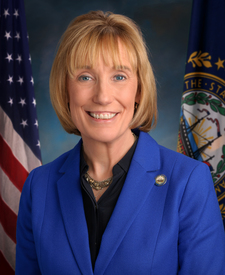
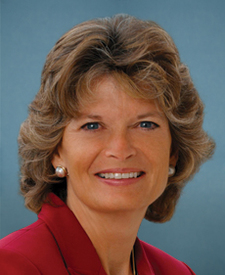
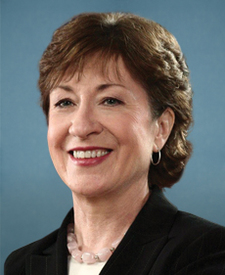
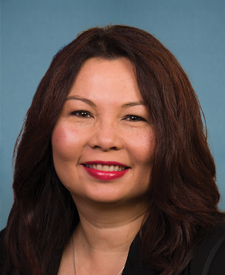
Legislative Progress
In CommitteeMs. Hassan (for herself, Ms. Murkowski, Ms. Duckworth, and Ms. …
Read twice and referred to the Committee on Finance.
Introduced in Senate
Impact analysis is available but no clear stakeholder effects identified. View clause-level analysis →
Bill Structure & Actor Mappings
Who is "The Secretary" in each section?
- "the_secretary"
- → Secretary of Health and Human Services
- "physician_or_practitioner"
- → Physician or practitioner as defined in section 1842(b)(18)(C) of the Social Security Act
- "the_secretary"
- → Secretary of Health and Human Services
- "comptroller_general"
- → Comptroller General of the United States (GAO)
- "comptroller_general"
- → Comptroller General of the United States (GAO)
Note: {'note': 'Refers to Secretary of HHS in sections 2-3; the Comptroller General appears in sections 4-5', 'term': 'the_secretary'}
Key Definitions
Terms defined in this bill
Items and services furnished by a physician or practitioner that align with ACA preventive care guidance as of January 12, 2022, may be furnished for contraception, or are ancillary clinical services
Clinical services related to contraceptive items including consultations, examinations, procedures, device insertion, ultrasound, pain management, patient education, referrals, counseling, and follow-up services including management of side effects, counseling for continued adherence, and device removal
We use a combination of our own taxonomy and classification in addition to large language models to assess meaning and potential beneficiaries. High confidence means strong textual evidence. Always verify with the original bill text.
Learn more about our methodology