Sunset Section 230 Act
Analysis under review: This bill has generated analysis that may be too generic or incomplete. Clause-level evidence remains available below.
Summary
What This Bill Does
This bill repeals Section 230 of the Communications Act of 1934, the landmark internet law that shields online platforms from liability for content posted by their users and protects platforms that voluntarily moderate content in good faith. The repeal takes effect 2 years after enactment to allow a transition period. The bill also makes extensive conforming amendments to over a dozen federal statutes that reference Section 230, updating cross-references to use Section 223 of the Communications Act instead and removing provisions that relied on Section 230 protections.
Who Benefits and How
Individuals harmed by defamatory, illegal, or harmful content posted on internet platforms would gain new legal avenues to sue platforms directly. State attorneys general and regulators would gain the ability to enforce state laws against platforms without Section 230 preemption. Content creators and small publishers may benefit if platforms become more cautious about hosting competing or infringing content. Traditional media companies benefit from a more level legal playing field with online platforms.
Who Bears the Burden and How
Internet platforms and social media companies bear the greatest burden, losing their primary legal shield against liability for user-generated content, potentially facing massive litigation costs. Smaller platforms and startups face disproportionate risk since they lack the legal resources of large tech companies. Users may experience more restricted speech if platforms over-moderate to avoid liability. Internet service providers face new legal uncertainty. The court system would likely face a surge of litigation against online platforms.
Key Provisions
- Full repeal of Section 230 of the Communications Act of 1934 (47 U.S.C. 230)
- 2-year delayed effective date from enactment
- Preserves the definition of "interactive computer service" by relocating it to Section 223
- Conforming amendments to the Trademark Act, Copyright Act, Criminal Code (Titles 17 and 18 U.S.C.), Controlled Substances Act, Webb-Kenyon Act, Daniel Anderl Judicial Security Act, and Unlawful Internet Gambling Enforcement Act
- Removes the NTIA (National Telecommunications and Information Administration) provision tied to Section 230
- Removes Section 230-based carve-outs from judicial proceedings under 28 U.S.C. 4102
Evidence Chain:
This summary is generated from the full bill text using AI analysis. Expand "Detailed Analysis" below for identified beneficiaries/burden bearers.
At a Glance
What This Bill Does
Repeals Section 230 of the Communications Act of 1934, which provides legal immunity to internet platforms for third-party content, and makes conforming amendments across multiple federal statutes to remove references to Section 230, with a 2-year delayed effective date.
Key Policy Areas
Technology, Telecommunications, Legal Liability
Primary Purpose
Repeals Section 230 of the Communications Act of 1934, which provides legal immunity to internet platforms for third-party content, and makes conforming amendments across multiple federal statutes to remove references to Section 230, with a 2-year delayed effective date.
Policy Domains
Whole Bill
Identified Gains
Contextual inference, no direct clause citation- Individuals harmed by online content
- State regulators and attorneys general
- Traditional media companies
- Content creators
Contextual inference, no direct clause citation
Identified Costs
Contextual inference, no direct clause citation- Internet platforms and social media companies
- Small and startup tech companies
- Internet users (potential over-moderation)
- Federal court system
Contextual inference, no direct clause citation
Sponsors



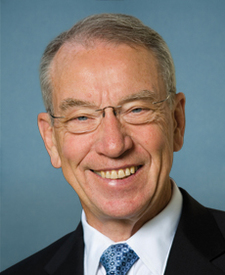

Legislative Progress
In CommitteeMr. Graham (for himself, Mr. Durbin, Mr. Grassley, Mr. Whitehouse, …
Read twice and referred to the Committee on Commerce, Science, …
Introduced in Senate
Impact analysis is available but no clear stakeholder effects identified. View clause-level analysis →
Bill Structure & Actor Mappings
Who is "The Secretary" in each section?
Key Definitions
Terms defined in this bill
We use a combination of our own taxonomy and classification in addition to large language models to assess meaning and potential beneficiaries. High confidence means strong textual evidence. Always verify with the original bill text.
Learn more about our methodology