Marijuana in Federally Assisted Housing Parity Act of 2025
Analysis under review: This bill has generated analysis that may be too generic or incomplete. Clause-level evidence remains available below.
Summary
What This Bill Does
This bill prevents federally assisted housing programs from penalizing residents for marijuana-related activities that are legal under state law. It amends the United States Housing Act of 1937 and the Quality Housing and Work Responsibility Act of 1998 to exclude state-legal marijuana use from the definition of "drug-related criminal activity" that can trigger eviction or denial of housing. The bill also prohibits HUD from discouraging state-legal marijuana activity in federally assisted housing, while requiring the Secretary to issue smoke-free zone regulations for marijuana that mirror existing tobacco smoking restrictions.
Who Benefits and How
Residents of federally assisted housing in states where marijuana is legal benefit by no longer facing eviction, denial of admission, or other penalties for state-legal marijuana activity. Public housing agencies and owners of federally assisted housing gain legal clarity on how to treat marijuana use in states with legalization. The marijuana industry in legalized states benefits from reduced stigma and barriers for potential customers in public housing.
Who Bears the Burden and How
The Department of Housing and Urban Development bears the administrative burden of issuing new smoke-free zone regulations within 90 days. Public housing agencies must update their policies to comply with the new state-law exceptions. Neighbors in federally assisted housing who object to marijuana use may face increased exposure, though the smoke-free zone provisions provide some mitigation.
Key Provisions
- Excludes state-legal marijuana activity from the definition of drug-related criminal activity across multiple federal housing statutes
- Prohibits public housing agencies from denying admission based on state-legal marijuana use
- Prevents HUD from prohibiting or discouraging state-legal marijuana activity in federally assisted housing
- Requires HUD to issue smoke-free zone regulations for marijuana consistent with existing tobacco restrictions within 90 days
- Defines "State" broadly to include territories, the District of Columbia, and freely associated states
Evidence Chain:
This summary is generated from the full bill text using AI analysis. Expand "Detailed Analysis" below for identified beneficiaries/burden bearers.
At a Glance
What This Bill Does
Amends federal housing laws to prohibit denying or terminating federally assisted housing based on marijuana activity that is legal under state law, while requiring smoke-free zone regulations for marijuana consistent with existing tobacco restrictions.
Key Policy Areas
Housing, Drug Policy, Federalism
Primary Purpose
Amends federal housing laws to prohibit denying or terminating federally assisted housing based on marijuana activity that is legal under state law, while requiring smoke-free zone regulations for marijuana consistent with existing tobacco restrictions.
Policy Domains
Whole Bill
Identified Gains
Contextual inference, no direct clause citation- Residents of federally assisted housing in marijuana-legal states
- Public housing agencies (legal clarity)
- State-legal marijuana industry
Contextual inference, no direct clause citation
Identified Costs
Contextual inference, no direct clause citation- Department of Housing and Urban Development
- Public housing agencies (policy updates)
- Neighbors opposed to marijuana use in housing
Contextual inference, no direct clause citation
Sponsors

Legislative Progress
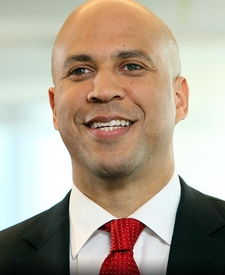
In CommitteeMr. Booker (for himself and Mr. Hickenlooper) introduced the following …
Read twice and referred to the Committee on Banking, Housing, …
Introduced in Senate
Impact analysis is available but no clear stakeholder effects identified. View clause-level analysis →
Bill Structure & Actor Mappings
Who is "The Secretary" in each section?
- "the_secretary"
- → Secretary of Housing and Urban Development
Key Definitions
Terms defined in this bill
We use a combination of our own taxonomy and classification in addition to large language models to assess meaning and potential beneficiaries. High confidence means strong textual evidence. Always verify with the original bill text.
Learn more about our methodology