Stay in Your Lane Act
Analysis under review: This bill has generated analysis that may be too generic or incomplete. Clause-level evidence remains available below.
Summary
What This Bill Does
This bill adds a new section (30130) to federal motor vehicle safety law requiring manufacturers of driving automation systems -- essentially self-driving vehicle technology -- to define the specific conditions under which their systems are designed to operate safely (called the "operational design domain" or ODD). Manufacturers must submit these declarations to the National Highway Traffic Safety Administration and publish the exact same declarations on their public websites. The bill prohibits driving automation systems from operating outside their declared operational design domain. It integrates these requirements into the existing motor vehicle safety enforcement framework, making violations subject to the same civil penalties as other motor vehicle safety violations. The law takes effect 180 days after enactment.
Who Benefits and How
The general public and other road users benefit from transparency about where and when self-driving systems are designed to operate safely, and from legal prohibitions on operation outside those conditions. Traditional automotive manufacturers who have been more conservative about autonomous driving claims may benefit from a level regulatory playing field. NHTSA gains clear regulatory authority over driving automation system boundaries. The bill defines "safely" as presenting "no more than an inconsequential risk," setting a high safety bar.
Who Bears the Burden and How
Autonomous vehicle manufacturers (such as Tesla, Waymo, Cruise, GM, and others developing self-driving technology) must formally declare their systems''' operational limits and ensure systems cannot operate outside those limits. This could restrict the rollout of features that currently operate in conditions not fully validated. Companies face existing motor vehicle safety penalties (under Section 30165) for violations. The public declaration requirement also creates reputational and legal exposure, as any incident outside a declared domain would be a clear regulatory violation.
Evidence Chain:
This summary is generated from the full bill text using AI analysis. Expand "Detailed Analysis" below for identified beneficiaries/burden bearers.
At a Glance
What This Bill Does
Requires manufacturers of driving automation systems (self-driving vehicles) to define and publicly declare their operational design domains, prohibits operation outside those domains, and establishes civil penalties for violations
Key Policy Areas
Transportation, Technology, Consumer Protection, Automotive Safety
Primary Purpose
Requires manufacturers of driving automation systems (self-driving vehicles) to define and publicly declare their operational design domains, prohibits operation outside those domains, and establishes civil penalties for violations
Policy Domains
Stay in Your Lane Act - Driving Automation Domain Restrictions
Identified Gains
Contextual inference, no direct clause citation- General public and road users
- Traditional automotive manufacturers
- Auto insurance companies
- NHTSA (expanded regulatory authority)
Contextual inference, no direct clause citation
Identified Costs
Contextual inference, no direct clause citation- Autonomous vehicle manufacturers (Tesla, Waymo, Cruise, etc.)
- Driving automation system developers
- Ride-hailing companies using autonomous vehicles
Contextual inference, no direct clause citation
Sponsors
Legislative Progress
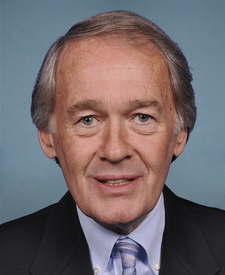
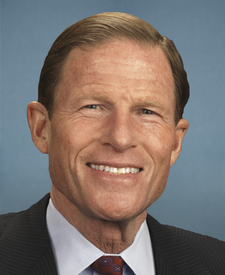
In CommitteeMr. Markey (for himself and Mr. Blumenthal) introduced the following …
Read twice and referred to the Committee on Commerce, Science, …
Introduced in Senate
Impact analysis is available but no clear stakeholder effects identified. View clause-level analysis →
Bill Structure & Actor Mappings
Who is "The Secretary" in each section?
- "the_administrator"
- → Administrator of the National Highway Traffic Safety Administration (NHTSA)
Key Definitions
Terms defined in this bill
With respect to motor vehicle safety, means presenting no more than an inconsequential risk.
This Act may be cited as the Stay in Your Lane Act.
The hardware and software that are collectively capable of simultaneously performing all of the lateral and longitudinal vehicle motor control subtasks of the dynamic driving task of a motor vehicle on a sustained basis.
Operating conditions, as defined by the manufacturer, under which a driving automation system is specifically designed to function safely, including environmental, geographical, and time-of-day restrictions, and the requisite presence or absence of certain traffic, road users, or roadway characteristics.
We use a combination of our own taxonomy and classification in addition to large language models to assess meaning and potential beneficiaries. High confidence means strong textual evidence. Always verify with the original bill text.
Learn more about our methodology