Shadow Docket Sunlight Act of 2025
Analysis under review: This bill has generated analysis that may be too generic or incomplete. Clause-level evidence remains available below.
Summary
What This Bill Does
The Shadow Docket Sunlight Act of 2025 adds a new section to title 28 of the United States Code requiring the Supreme Court to provide written explanations and disclose individual justice votes whenever it issues orders on preliminary injunctive relief or stays of such relief. For injunctive relief orders, the Court must evaluate the four traditional factors: likelihood of success on the merits, irreparable harm, balance of equities, and public interest. For stay orders, the Court must evaluate similar criteria specific to stays. The bill also requires the Federal Judicial Center to submit biennial compliance reports to Congress.
Who Benefits and How
The public benefits from greater transparency into how the Supreme Court exercises significant power through emergency orders. Legal scholars, journalists, and advocacy organizations gain documented reasoning and vote records to analyze the Court's emergency docket. Litigants benefit from knowing the legal basis for decisions affecting their cases. Congress gains oversight through mandatory compliance reporting from the Federal Judicial Center.
Who Bears the Burden and How
The Supreme Court bears the primary burden, as justices must draft written explanations for emergency orders that are currently often decided without public reasoning. This increases the workload for a court that handles emergency applications under tight time constraints. The Federal Judicial Center bears the administrative burden of biennial compliance assessments and reporting to Congress.
Key Provisions
- Requires written explanation and vote disclosure for all Supreme Court orders on preliminary injunctive relief or stays
- Mandates evaluation of the four traditional injunctive relief factors (likelihood of success, irreparable harm, balance of equities, public interest)
- Allows multiple opinions but requires a majority of participating justices to provide written explanations
- Excludes administrative, scheduling, and certiorari orders
- Applies specifically to claims under chapters 5 or 7 of title 5 (Administrative Procedure Act cases)
- Requires biennial compliance reports from the Federal Judicial Center to Congress
- Includes a severability clause
Evidence Chain:
This summary is generated from the full bill text using AI analysis. Expand "Detailed Analysis" below for identified beneficiaries/burden bearers.
At a Glance
What This Bill Does
Requires the Supreme Court to publish written explanations evaluating established legal criteria and to disclose individual justice votes for all orders granting, denying, or vacating preliminary injunctive relief or stays of preliminary injunctive relief, bringing transparency to what is commonly known as the 'shadow docket.'
Key Policy Areas
Judicial Reform, Government Transparency, Constitutional Law
Primary Purpose
Requires the Supreme Court to publish written explanations evaluating established legal criteria and to disclose individual justice votes for all orders granting, denying, or vacating preliminary injunctive relief or stays of preliminary injunctive relief, bringing transparency to what is commonly known as the 'shadow docket.'
Policy Domains
Whole Bill
Identified Gains
Contextual inference, no direct clause citation- The general public (transparency)
- Legal scholars, journalists, and advocacy organizations
- Litigants before the Supreme Court
- Congress (oversight)
Contextual inference, no direct clause citation
Identified Costs
Contextual inference, no direct clause citation- The Supreme Court (increased workload for emergency orders)
- Federal Judicial Center (biennial compliance reporting)
Contextual inference, no direct clause citation
Sponsors
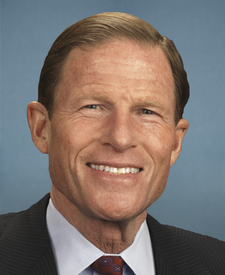
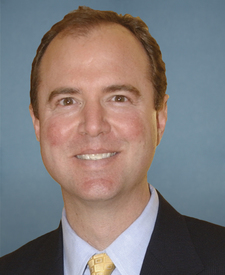
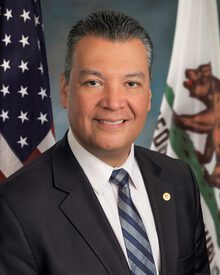
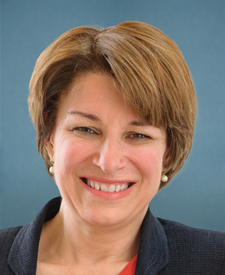
Legislative Progress
In CommitteeMr. Blumenthal (for himself, Mr. Booker, Mr. Durbin, Ms. Klobuchar, …
Read twice and referred to the Committee on the Judiciary.
Introduced in Senate
Impact analysis is available but no clear stakeholder effects identified. View clause-level analysis →
Bill Structure & Actor Mappings
Who is "The Secretary" in each section?
- "director"
- → The Director of the Federal Judicial Center
- "supreme_court"
- → The Supreme Court of the United States, including any individual justice or set of justices acting on its behalf
Key Definitions
Terms defined in this bill
We use a combination of our own taxonomy and classification in addition to large language models to assess meaning and potential beneficiaries. High confidence means strong textual evidence. Always verify with the original bill text.
Learn more about our methodology