Producing Real Opportunities for Technology and Entrepreneurs Investing in Nutrition Act
Analysis under review: This bill has generated analysis that may be too generic or incomplete. Clause-level evidence remains available below.
Summary
What This Bill Does
This bill, the Producing Real Opportunities for Technology and Entrepreneurs Investing in Nutrition Act (PROTEIN Act), creates a comprehensive federal program to advance food biomanufacturing, bioprocessing, and alternative protein development. It establishes at least 3 USDA-recognized centers of excellence (one led by an 1890 Institution), adds alternative protein research to the competitive AFRI grant program, creates an Agricultural Research Service national program on protein security, establishes a $50M/year production grant program for domestic biomanufacturing facilities (minimum $10M per grant), creates a $25M/year workforce development program, and mandates a whole-of-government national strategy on protein security within one year. The bill authorizes $100M per year for fiscal years 2026-2030 across all programs. It explicitly excludes insect production for food or feed.
Who Benefits and How
U.S. food biomanufacturing companies benefit from major federal production grants requiring minimum awards of $10M, with eligibility restricted to U.S.-headquartered, majority U.S.-owned entities deploying U.S.-owned IP. 1890 Institutions (historically Black land-grant universities) are guaranteed leadership of at least one center of excellence. Agricultural researchers gain new competitive grant funding through AFRI. Workers benefit from a dedicated biomanufacturing workforce development program including scholarships, training centers, and community college programs. Domestic farmers benefit from expanded demand for crops supporting protein diversification.
Who Bears the Burden and How
The federal budget bears $100M annually across five program authorizations over five years (FY2026-2030). The USDA bears significant administrative burden across multiple new programs: centers of excellence, ARS national program, two grant programs, and annual congressional reporting. Ten federal agencies must coordinate on the national protein strategy within one year. The explicit exclusion of insect production means the insect protein industry is excluded from all federal support under this act.
Key Provisions
- Establishes at least 3 USDA centers of excellence for food and agriculture innovation ($15M/yr)
- Adds alternative protein to AFRI competitive grant program
- Creates ARS national program on protein security ($10M/yr)
- Production grants for domestic biomanufacturing: minimum $10M per award, $50M/yr authorized
- Workforce development grants: $25M/yr for training, scholarships, and community programs
- National protein security strategy within 1 year, coordinated across 10 agencies
- Eligibility restricted to U.S.-headquartered, majority U.S.-owned entities
- Explicitly excludes insect production for food or animal feed
- Authorized for fiscal years 2026-2030
Evidence Chain:
This summary is generated from the full bill text using AI analysis. Expand "Detailed Analysis" below for identified beneficiaries/burden bearers.
At a Glance
What This Bill Does
Establishes a comprehensive federal program to advance food biomanufacturing and alternative protein research, development, and commercialization through USDA research centers of excellence, competitive grants, workforce development, a production grant program, and a national strategy on protein security
Key Policy Areas
Agriculture, Science & Technology, Biotechnology, Workforce Development, National Security
Primary Purpose
Establishes a comprehensive federal program to advance food biomanufacturing and alternative protein research, development, and commercialization through USDA research centers of excellence, competitive grants, workforce development, a production grant program, and a national strategy on protein security
Policy Domains
Research Centers and Competitive Grants
Identified Gains
Contextual inference, no direct clause citation- Food biomanufacturing and bioprocessing companies
- 1890 Institutions (historically Black land-grant universities)
- Agricultural researchers and universities
- Alternative protein startups
Contextual inference, no direct clause citation
Identified Costs
Contextual inference, no direct clause citation- USDA (program administration and reporting)
- Federal budget ($15M/yr for centers, $10M/yr for ARS program)
Contextual inference, no direct clause citation
National Strategy on Alternative Proteins
Identified Gains
Contextual inference, no direct clause citation- U.S. bioeconomy and food security infrastructure
- Military readiness (protein supply for warfighters)
- International competitiveness of U.S. food sector
Contextual inference, no direct clause citation
Identified Costs
Contextual inference, no direct clause citation- Multiple federal agencies (whole-of-government coordination mandate)
- USDA (lead strategy development within 1 year)
Contextual inference, no direct clause citation
Food Biomanufacturing Production and Workforce Grants
Identified Gains
Contextual inference, no direct clause citation- U.S.-headquartered food biomanufacturing companies
- Domestic farmers producing crops for protein diversification
- Workers seeking biomanufacturing careers
- Community colleges (workforce training role)
Contextual inference, no direct clause citation
Identified Costs
Contextual inference, no direct clause citation- Federal budget ($50M/yr for production grants, $25M/yr for workforce)
- USDA (grant administration)
Contextual inference, no direct clause citation
Sponsors

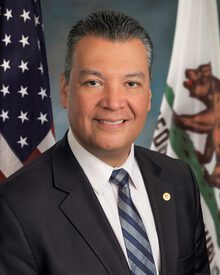

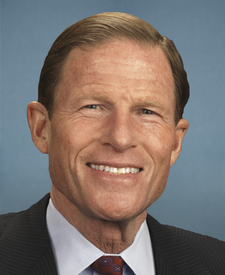
Legislative Progress
In CommitteeMr. Schiff (for himself and Mr. Padilla) introduced the following …
Read twice and referred to the Committee on Agriculture, Nutrition, …
Introduced in Senate
Impact analysis is available but no clear stakeholder effects identified. View clause-level analysis →
Bill Structure & Actor Mappings
Who is "The Secretary" in each section?
- "the_secretary"
- → Secretary of Agriculture
- "the_secretary"
- → Secretary of Agriculture
- "the_secretary"
- → Secretary of Agriculture
- "secretaries_concerned"
- → Secretaries of Defense, Energy, Commerce, plus Directors of NSF, NIH, FDA, CDC, EPA, and OSTP
Key Definitions
Terms defined in this bill
Secretary of Defense, Secretary of Energy, Secretary of Commerce, Director of NSF, Director of NIH, Commissioner of FDA, Director of CDC, Administrator of EPA, and Director of OSTP
We use a combination of our own taxonomy and classification in addition to large language models to assess meaning and potential beneficiaries. High confidence means strong textual evidence. Always verify with the original bill text.
Learn more about our methodology