American Franchise Act
Analysis under review: This bill has generated analysis that may be too generic or incomplete. Clause-level evidence remains available below.
Summary
What This Bill Does
The American Franchise Act amends the National Labor Relations Act and the Fair Labor Standards Act to establish a clear legal standard for when a franchisor can be considered a joint employer of a franchisee's employees. Under this bill, a franchisor is only a joint employer if it exercises "direct and immediate control" over essential terms of employment such as wages, benefits, hours, hiring, firing, discipline, and supervision. Routine franchise quality controls, brand standards, and operational guidelines do not trigger joint employer status.
Who Benefits and How
Franchisors benefit by gaining legal certainty that maintaining brand standards and operational consistency will not make them liable as joint employers of their franchisees' workers. The franchise industry broadly benefits from reduced legal uncertainty, which has deterred franchise expansion. Franchisees benefit from continued access to franchisor support systems, benefit plans, and training programs that might otherwise be withdrawn to avoid joint employer liability.
Who Bears the Burden and How
Franchisee employees bear the primary burden, as they lose the ability to hold franchisors jointly liable for labor violations in most circumstances. This narrows their legal recourse to the franchisee alone, who may have fewer resources. Labor unions and worker advocacy organizations lose leverage they had gained from broader joint employer interpretations.
Key Provisions
- Defines "direct and immediate control" across seven employment categories: wages, benefits, hours, hiring, discharge, discipline, and supervision
- Explicitly excludes routine franchise operations (setting operating hours, brand standards, quality controls, training programs) from triggering joint employer status
- Applies the same standard to both the National Labor Relations Act and the Fair Labor Standards Act
- Does not apply retroactively to proceedings commenced before enactment
Evidence Chain:
This summary is generated from the full bill text using AI analysis. Expand "Detailed Analysis" below for identified beneficiaries/burden bearers.
At a Glance
What This Bill Does
Clarifies that franchisors are not joint employers of their franchisees' employees under federal labor law unless the franchisor exercises direct and immediate control over essential employment terms, protecting the franchise business model from expanded joint employer liability.
Key Policy Areas
Labor and Employment, Business Regulation, Franchising
Primary Purpose
Clarifies that franchisors are not joint employers of their franchisees' employees under federal labor law unless the franchisor exercises direct and immediate control over essential employment terms, protecting the franchise business model from expanded joint employer liability.
Policy Domains
Whole Bill
Identified Gains
Contextual inference, no direct clause citation- Franchisors
- Franchise industry
- Franchisees
Contextual inference, no direct clause citation
Identified Costs
Contextual inference, no direct clause citation- Franchisee employees
- Labor unions and worker advocacy organizations
Contextual inference, no direct clause citation
Sponsors

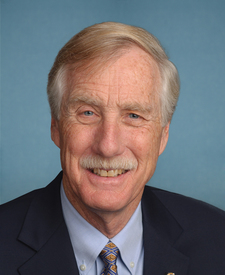



Legislative Progress
In CommitteeCommittee on Health, Education, Labor, and Pensions. Hearings held.
Mr. Marshall (for himself, Mr. King, Mr. Lankford, Mr. Sheehy, …
Read twice and referred to the Committee on Health, Education, …
Introduced in Senate
Impact analysis is available but no clear stakeholder effects identified. View clause-level analysis →
Bill Structure & Actor Mappings
Who is "The Secretary" in each section?
Key Definitions
Terms defined in this bill
We use a combination of our own taxonomy and classification in addition to large language models to assess meaning and potential beneficiaries. High confidence means strong textual evidence. Always verify with the original bill text.
Learn more about our methodology