Wildfire Emergency Act of 2025
Analysis under review: This bill has generated analysis that may be too generic or incomplete. Clause-level evidence remains available below.
Summary
What This Bill Does
The bill defines key terms for the conservation finance agreement framework in Title I, including conservation finance agreement, conservation finance project, conservation finance project beneficiary, conservation finance, creates states the purpose of Title I: increasing the pace and scale of forest restoration across the National Forest System through conservation finance agreements, landscape-level planning, prescribed fire, ecological, and establishes a pilot program for the Secretary of Agriculture to enter into up to 20 conservation finance agreements totaling no more than $250M (max $50M each) with public or private entities for forest restoration. It relies on grants, procurement rules, appropriations, and compliance mandates. The main policy areas are Workforce Development, Energy, Agriculture, and Technology.
Who Benefits and How
Satellite and remote sensing data providers could gain revenue opportunities, Wildfire detection technology companies (sensors, cameras, remote sensing) could gain revenue opportunities, and Wildfire detection technology companies could gain revenue opportunities.
Who Bears the Burden and How
U.S. Forest Service would take on compliance duties, U.S. Forest Service and Department of Interior would take on compliance duties, and State weatherization program administrators would take on compliance duties.
Key Provisions
- Defines key terms for the conservation finance agreement framework in Title I, including conservation finance agreement, conservation finance project, conservation finance project beneficiary, conservation finance...
- Creates states the purpose of Title I: increasing the pace and scale of forest restoration across the National Forest System through conservation finance agreements, landscape-level planning, prescribed fire, ecological...
- Establishes a pilot program for the Secretary of Agriculture to enter into up to 20 conservation finance agreements totaling no more than $250M (max $50M each) with public or private entities for forest restoration...
- Requires the Secretary of Agriculture to submit a report to Congress within 4 years evaluating the conservation finance agreement pilot program, including accomplishments and whether the authority increased non-Federal...
- Establishes a $100M program for the Secretary of Energy to improve energy resilience of critical facilities (hospitals, fire stations, police stations, schools, utilities) through microgrids, renewable energy, energy...
Evidence Chain:
This summary is generated from the full bill text using AI analysis. Expand "Detailed Analysis" below for identified beneficiaries/burden bearers with clause-level evidence links.
At a Glance
What This Bill Does
The bill defines key terms for the conservation finance agreement framework in Title I, including conservation finance agreement, conservation finance project, conservation finance project beneficiary, conservation finance, creates states the purpose of Title I: increasing the pace and scale of forest restoration across the National Forest System through conservation finance agreements, landscape-level planning, prescribed fire, ecological, and establishes a pilot program for the Secretary of Agriculture to enter into up to 20 conservation finance agreements totaling no more than $250M (max $50M each) with public or private entities for forest restoration.
Key Policy Areas
Workforce Development, Energy, Agriculture, Technology
Primary Purpose
The bill defines key terms for the conservation finance agreement framework in Title I, including conservation finance agreement, conservation finance project, conservation finance project beneficiary, conservation finance, creates states the purpose of Title I: increasing the pace and scale of forest restoration across the National Forest System through conservation finance agreements, landscape-level planning, prescribed fire, ecological, and establishes a pilot program for the Secretary of Agriculture to enter into up to 20 conservation finance agreements totaling no more than $250M (max $50M each) with public or private entities for forest restoration.
Policy Domains
Whole bill
Identified Gains
- Satellite and remote sensing data providers
- Wildfire detection technology companies (sensors, cameras, remote sensing)
- Wildfire detection technology companies
- Western institutions of higher education
- Nonprofit organizations in disadvantaged communities near National Forests
Identified Costs
- U.S. Forest Service
- U.S. Forest Service and Department of Interior
- State weatherization program administrators
Sponsors
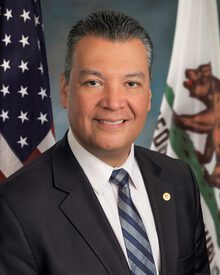

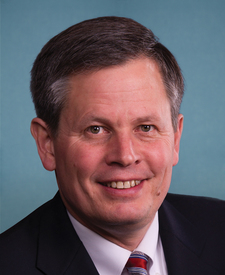
Legislative Progress
In CommitteeCommittee discharged; rereferred to the Committee on Agriculture, Nutrition, and …
Referred to the Committee on Agriculture, Nutrition, and Forestry.
Senate Committee on Energy and Natural Resources discharged by Unanimous …
Mr. Padilla (for himself and Mr. Daines) introduced the following …
Mr. Padilla (for himself, Mr. Daines, and Ms. Rosen) introduced …
Read twice and referred to the Committee on Energy and …
Introduced in Senate
Stakeholder Effects
cui bono?How this legislation distributes effects. Mention counts reflect frequency, not effect magnitude.
Forest Service, U.S. Forest Service and Department of Interior
Forest restoration and timber companies, Forestry and fire management workers (trainees and apprentices), Prescribed fire professionals and wildfire researchers
Microgrid technology and renewable energy companies, Wildfire detection technology companies, Wildfire detection technology companies (sensors, cameras, remote sensing)
Nonprofit forestry and fire management training organizations, Nonprofit organizations in disadvantaged communities near National Forests
Conservation finance project developers (nonprofit and for-profit intermediaries), Conservation finance project developers and investors
Satellite and remote sensing data providers
Community colleges and training institutions offering forestry programs, Western institutions of higher education
Bill Structure & Actor Mappings
Who is "The Secretary" in each section?
We use a combination of our own taxonomy and classification in addition to large language models to assess meaning and potential beneficiaries. High confidence means strong textual evidence. Always verify with the original bill text.
Learn more about our methodology