To amend the Internal Revenue Code of 1986 to establish requirements for the clean vehicle credit and the qualifying advanced energy project credit to prevent offshoring by manufacturers, and for other purposes.
Analysis under review: This bill has generated analysis that may be too generic or incomplete. Clause-level evidence remains available below.
Summary
What This Bill Does
This bill prevents auto manufacturers who move production overseas from receiving federal clean energy incentives. It amends the clean vehicle tax credit, advanced energy project credit, and 9 other federal programs to disqualify manufacturers that offshore vehicle or component production from the United States.
Who Benefits and How
Domestic U.S. autoworkers benefit from employment protections as manufacturers face a strong disincentive to offshore production. U.S.-based vehicle manufacturers that maintain domestic production remain eligible for all federal clean energy incentives. Auto parts suppliers located in the United States gain a competitive advantage over foreign suppliers.
Who Bears the Burden and How
Vehicle manufacturers face significant restrictions: if they move any production, manufacturing, or final assembly outside the U.S. during a 10-year period, they lose eligibility for the clean vehicle credit, advanced energy project credit, DOE loans, bus grants, and other programs. Manufacturers must also submit annual certifications and may face clawback of benefits if they offshore after receiving federal funds.
Key Provisions
- Disqualifies manufacturers from the clean vehicle tax credit (Section 30D) if they offshore vehicle or component production
- Bars offshoring manufacturers from the qualifying advanced energy project credit (Section 48C)
- Excludes offshoring manufacturers from DOE advanced technology vehicle manufacturing loans and domestic manufacturing conversion grants
- Prohibits federal bus grants and clean school bus program funds from going to manufacturers that offshore
- Requires 10-year commitment to domestic production and annual certification to the Secretary
Evidence Chain:
This summary is generated from the full bill text using AI analysis. Expand "Detailed Analysis" below for identified beneficiaries/burden bearers.
At a Glance
What This Bill Does
Bars vehicle manufacturers that offshore production from receiving clean energy tax credits, loans, grants, and other federal incentives under multiple programs including the clean vehicle credit, advanced energy project credit, bus grants, and clean school bus program.
Key Policy Areas
Manufacturing, Energy, Tax Policy, Labor
Primary Purpose
Bars vehicle manufacturers that offshore production from receiving clean energy tax credits, loans, grants, and other federal incentives under multiple programs including the clean vehicle credit, advanced energy project credit, bus grants, and clean school bus program.
Policy Domains
Putting American Autoworkers First Act
Identified Gains
Contextual inference, no direct clause citation- Domestic U.S. autoworkers
- U.S.-based vehicle manufacturers with domestic production
- U.S. auto parts suppliers
Contextual inference, no direct clause citation
Identified Costs
Contextual inference, no direct clause citation- Vehicle manufacturers considering offshoring
- Foreign auto parts suppliers
- Multinational automakers with global supply chains
Contextual inference, no direct clause citation
Sponsors
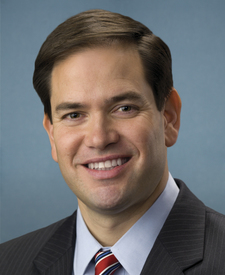
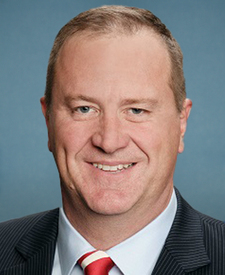

Legislative Progress
IntroducedMr. Rubio (for himself, Mr. Vance, and Mr. Schmitt) introduced …
Stakeholder Effects
cui bono?How this legislation distributes effects. Mention counts reflect frequency, not effect magnitude.
Bus manufacturers seeking federal grants, Domestic bus manufacturers, Domestic clean energy manufacturing facilities
Positive-direction: Domestic bus manufacturers, Domestic clean energy manufacturing facilities, Domestic clean vehicle manufacturers, Domestic heavy-duty clean vehicle manufacturers, Domestic school bus and infrastructure manufacturers, Domestic vehicle and equipment manufacturers, Domestic vehicle manufacturers committed to U.S. production, Domestic-focused manufacturing operations, U.S. auto parts suppliers, U.S. autoworkers, U.S. manufacturing workers in heavy-duty vehicle sector, U.S.-based vehicle manufacturers maintaining domestic production
Negative-direction: Bus manufacturers seeking federal grants, EV charging infrastructure manufacturers with offshore production, Electric and low-emission bus manufacturers, Heavy-duty vehicle manufacturers seeking clean air grants, Manufacturers with advanced energy projects considering offshoring, School bus manufacturers with offshore production, Vehicle manufacturers considering offshoring, Vehicle manufacturers contracting with schools for energy improvements, Vehicle manufacturers seeking DOE loans who may offshore, Vehicle manufacturers seeking conversion grants, Vehicle manufacturers seeking state energy program contracts
Bill Structure & Actor Mappings
Who is "The Secretary" in each section?
- "manufacturer"
- → Vehicle manufacturer that produces, manufactures, or carries out final assembly of motor vehicles
- "the_secretary"
- → Secretary of the Treasury (for tax credits); Secretary of Energy (for DOE programs)
- "covered_entity"
- → Entity that produces or assembles vehicles and receives federal assistance
Note: 'The Secretary' refers to Secretary of the Treasury in Sections 2-3 (tax credits) but Secretary of Energy in Sections 4-7 (DOE programs)
Key Definitions
Terms defined in this bill
Period beginning on date of enactment and ending 10 years after termination of agreement with Secretary or receipt of full federal assistance
Entity that produces, manufactures, or carries out final assembly of motor vehicles and receives federal facility funding awards or direct loans
Moving production outside the U.S. or reducing domestic production and subsequently obtaining vehicles or parts from foreign producers
We use a combination of our own taxonomy and classification in addition to large language models to assess meaning and potential beneficiaries. High confidence means strong textual evidence. Always verify with the original bill text.
Learn more about our methodology