Cargo Security Innovation Act
Summary
What This Bill Does
This bill creates a TSA pilot program with grants to test cargo-security and law-enforcement technologies at high-theft transportation hubs and rail yards.
Who Benefits and How
Transportation operators, law-enforcement partners, and cargo owners could benefit from pilot funding and improved theft-prevention technology at vulnerable freight sites.
Who Bears the Burden and How
TSA would need to design and administer the pilot, select sites, oversee grants, collect records, and report results, while certain foreign-linked technology providers would be excluded.
Key Provisions
- Directs TSA, in consultation with the Transportation Department, to establish a pilot project and provide grants to eligible consortia.
- Limits the pilot to up to 6 geographically diverse intermodal hubs or rail yards and bars technology produced by a foreign entity of concern.
- Requires TSA and the Comptroller General to report on effectiveness, lessons learned, costs, and options for scaling the program.
Evidence Chain:
This summary is generated from the full bill text using AI analysis. Expand "Detailed Analysis" below for identified beneficiaries/burden bearers.
At a Glance
What This Bill Does
This bill creates a TSA pilot program with grants to test cargo-security and law-enforcement technologies at high-theft transportation hubs and rail yards.
Key Policy Areas
Transportation, Public Safety, Government Administration
Primary Purpose
This bill creates a TSA pilot program with grants to test cargo-security and law-enforcement technologies at high-theft transportation hubs and rail yards.
Policy Domains
Main Provisions
Identified Gains
Contextual inference, no direct clause citation- Eligible transportation and law-enforcement consortia that can receive pilot grants and deploy cargo-security technology
Contextual inference, no direct clause citation
Identified Costs
Contextual inference, no direct clause citation- TSA administrators and excluded foreign-linked technology providers affected by the pilot's grant and sourcing rules
Contextual inference, no direct clause citation
Sponsors
Legislative Progress
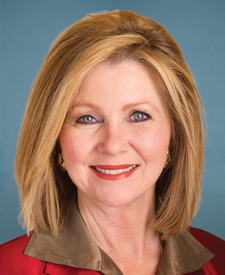
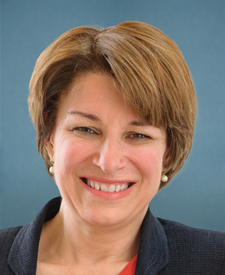
In CommitteeMrs. Blackburn (for herself and Ms. Klobuchar) introduced the following …
Read twice and referred to the Committee on Commerce, Science, …
Introduced in Senate
Stakeholder Effects
cui bono?How this legislation distributes effects. Mention counts reflect frequency, not effect magnitude.
Eligible transportation and law-enforcement consortia that can receive pilot grants to deploy cargo-security technologies
TSA officials responsible for administering the pilot, grants, audits, and reports
Technology providers tied to foreign entities of concern that are barred from pilot-site deployment
Bill Structure & Actor Mappings
Who is "The Secretary" in each section?
- "the_administrator"
- → Administrator of the Transportation Security Administration
We use a combination of our own taxonomy and classification in addition to large language models to assess meaning and potential beneficiaries. High confidence means strong textual evidence. Always verify with the original bill text.
Learn more about our methodology