Investing in All of America Act of 2025
Analysis under review: This bill has generated analysis that may be too generic or incomplete. Clause-level evidence remains available below.
Summary
What This Bill Does
Expands and reshapes Small Business Investment Company leverage rules by revising what counts as private capital, adjusting leverage caps, and broadening leverage exclusions for rural, critical-technology, and manufacturing investments.
Who Benefits and How
SBICs and qualifying small businesses can access more leverage flexibility and more favorable treatment for targeted investments, especially in rural, critical-technology, and manufacturing businesses.
Who Bears the Burden and How
SBICs that rely on government-sourced capital for leverage approval face tighter limits on what can count as private capital, and SBA administrators must apply more detailed leverage rules.
Key Provisions
- Excludes additional government-sourced funds from private capital for leverage-approval purposes.
- Adjusts SBIC leverage caps, including higher caps for some payment structures and commonly controlled groups.
- Expands leverage-exclusion treatment to certain rural, critical-technology, and manufacturing investments.
Evidence Chain:
This summary is generated from the full bill text using AI analysis. Expand "Detailed Analysis" below for identified beneficiaries/burden bearers.
At a Glance
What This Bill Does
Expands and reshapes Small Business Investment Company leverage rules by revising what counts as private capital, adjusting leverage caps, and broadening leverage exclusions for rural, critical-technology, and manufacturing investments.
Key Policy Areas
Finance, Technology, Government Operations
Primary Purpose
Expands and reshapes Small Business Investment Company leverage rules by revising what counts as private capital, adjusting leverage caps, and broadening leverage exclusions for rural, critical-technology, and manufacturing investments.
Policy Domains
Main Provisions
Identified Gains
Contextual inference, no direct clause citation- Small business investment companies
- Small businesses in rural and strategic sectors
Contextual inference, no direct clause citation
Identified Costs
Contextual inference, no direct clause citation- SBICs relying on government-sourced capital
- Small Business Administration administrators
Contextual inference, no direct clause citation
Sponsors

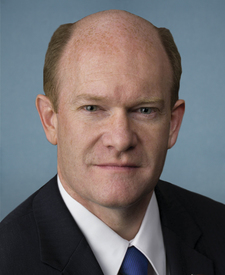
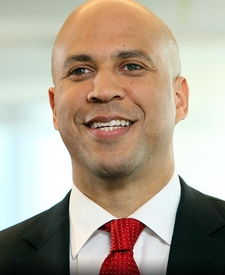


Legislative Progress
In CommitteeMr. Hickenlooper (for himself, Mr. Marshall, Mr. Young, and Mr. …
Read twice and referred to the Committee on Small Business …
Introduced in Senate
Stakeholder Effects
cui bono?How this legislation distributes effects. Mention counts reflect frequency, not effect magnitude.
Rural, critical-technology, and manufacturing small businesses seeking SBIC capital, SBICs relying on government-sourced capital for leverage approval, Small Business Investment Companies with qualifying investments
Positive-direction: Rural, critical-technology, and manufacturing small businesses seeking SBIC capital, Small Business Investment Companies with qualifying investments
Negative-direction: SBICs relying on government-sourced capital for leverage approval
Bill Structure & Actor Mappings
Who is "The Secretary" in each section?
- "the administrator"
- → Administrator of the Small Business Administration
We use a combination of our own taxonomy and classification in addition to large language models to assess meaning and potential beneficiaries. High confidence means strong textual evidence. Always verify with the original bill text.
Learn more about our methodology