Reliable Artificial Intelligence Research Act of 2025
Analysis under review: This bill has generated analysis that may be too generic or incomplete. Clause-level evidence remains available below.
Summary
What This Bill Does
Requires the Department of Homeland Security to run prize competitions on AI interpretability and adversarial robustness, report the results to Congress, and use authorized funding for that work.
Who Benefits and How
AI researchers and organizations working on safety, robustness, and interpretability gain federal prize opportunities, and high-risk AI users benefit from stronger evaluation methods.
Who Bears the Burden and How
DHS must design, administer, and report on the competitions, and federal funds are committed to support the program.
Key Provisions
- Defines adversarial robustness, interpretability, red-teaming, and related terms.
- Requires DHS to start at least one interpretability prize competition and at least one adversarial-robustness competition within 270 days.
- Requires a follow-up report to Congress and authorizes $10 million for fiscal years 2026 through 2030.
Evidence Chain:
This summary is generated from the full bill text using AI analysis. Expand "Detailed Analysis" below for identified beneficiaries/burden bearers.
At a Glance
What This Bill Does
Requires the Department of Homeland Security to run prize competitions on AI interpretability and adversarial robustness, report the results to Congress, and use authorized funding for that work.
Key Policy Areas
Technology, Science & Space, Government Operations
Primary Purpose
Requires the Department of Homeland Security to run prize competitions on AI interpretability and adversarial robustness, report the results to Congress, and use authorized funding for that work.
Policy Domains
Main Provisions
Identified Gains
Contextual inference, no direct clause citation- AI safety researchers
- Government and industry users of high-risk AI
Contextual inference, no direct clause citation
Identified Costs
Contextual inference, no direct clause citation- Department of Homeland Security
- Federal budget
Contextual inference, no direct clause citation
Sponsors
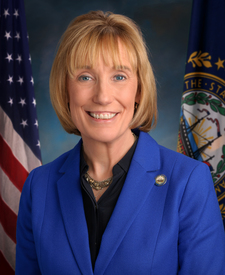

Legislative Progress
In CommitteeMs. Hassan (for herself and Mr. Banks) introduced the following …
Read twice and referred to the Committee on Homeland Security …
Introduced in Senate
Stakeholder Effects
cui bono?How this legislation distributes effects. Mention counts reflect frequency, not effect magnitude.
Congressional oversight committees, Department of Homeland Security, Federal budget
Positive-direction: Congressional oversight committees
Negative-direction: Department of Homeland Security, Federal budget
AI interpretability researchers and developers, AI robustness researchers and developers, AI safety prize competition participants
Bill Structure & Actor Mappings
Who is "The Secretary" in each section?
- "the secretary"
- → Secretary of Homeland Security
We use a combination of our own taxonomy and classification in addition to large language models to assess meaning and potential beneficiaries. High confidence means strong textual evidence. Always verify with the original bill text.
Learn more about our methodology