S3333-119

Reported

Emergency Savings Enhancement Act of 2025

119th Congress Introduced Dec 3, 2025

Summary

What This Bill Does

The Emergency Savings Enhancement Act of 2025 changes parallel ERISA and tax-code rules for pension-linked emergency savings accounts. It replaces the narrower eligible-participant standard with the plan's ordinary age, service, and other eligibility requirements; under the tax provision, a worker may qualify even if not otherwise participating in the defined-contribution plan. It doubles the statutory account threshold from $2,500 to $5,000 and removes a related clause in each statute. These changes apply for taxable years beginning after December 31, 2026.

The Senate-reported version adds a separate employee-ownership funding package. It extends inflation adjustment of the Employee Ownership Initiative's grant amount through fiscal 2035. It provides $78 million in mandatory appropriations for fiscal years 2027-2032, rising from $8 million to $18 million, and authorizes up to $113 million in discretionary appropriations for fiscal years 2025-2029 and 2033-2035. The Secretary of Labor may reserve no more than 5 percent of annual appropriations for planning, oversight, monitoring, personnel, training, and other administration.

Who Benefits and How

Workers meeting their employer plan's age and service rules gain broader access to pension-linked emergency savings, including workers not otherwise enrolled in the defined-contribution plan. Participating workers can accumulate up to the new $5,000 statutory threshold before contribution restrictions apply, increasing liquid savings available for emergencies. Employee-ownership organizations, state and local programs, worker cooperatives, and businesses exploring employee ownership may receive more sustained federal grant support. The Department of Labor gains a defined allowance to administer and oversee those grants.

Who Bears the Burden and How

Retirement plan sponsors, recordkeepers, payroll providers, and benefits administrators must update eligibility, contribution-limit, disclosure, and tax-reporting systems for 2027. Employers that offer these accounts may experience larger participant balances and related cash-management obligations. Treasury supplies the $78 million mandatory appropriation, and future Congresses would bear the cost of any discretionary amounts enacted. Labor Department grant staff must award, monitor, and report on a larger program while keeping administrative reservations within 5 percent.

Key Provisions

  • Expands pension-linked emergency savings eligibility to workers meeting a plan's ordinary age, service, and other conditions.
  • Modifies the statutory emergency-savings threshold from $2,500 to $5,000 in ERISA and the Internal Revenue Code.
  • Establishes a taxable-year effective date beginning after December 31, 2026.
  • Appropriates $78 million for Employee Ownership Initiative grants over fiscal years 2027-2032 and authorizes additional discretionary funding.
  • Extends inflation indexing through fiscal 2035 and limits grant-program administration reserves to 5 percent.

Evidence Chain:

This summary is generated from the full bill text using AI analysis. Expand "Detailed Analysis" below for identified beneficiaries/burden bearers with clause-level evidence links.

At a Glance

What This Bill Does

Expands pension-linked emergency savings accounts by broadening eligible workers and doubling the statutory balance threshold to $5,000, while the reported version also finances and extends the Department of Labor's Employee Ownership Initiative grant program.

Key Policy Areas

Retirement Savings, Employee Benefits, Employee Ownership, Federal Grants

Primary Purpose

Expands pension-linked emergency savings accounts by broadening eligible workers and doubling the statutory balance threshold to $5,000, while the reported version also finances and extends the Department of Labor's Employee Ownership Initiative grant program.

Policy Domains

Retirement Savings Employee Benefits Employee Ownership Federal Grants

Pension-linked emergency savings accounts

Identified Gains
  • Workers not otherwise enrolled in defined-contribution plans
  • Workers with emergency-savings accounts
  • Households facing short-term expenses
  • Retirement plan service providers offering emergency-savings products
Model: codex-gpt-5 | Version: bill_summary_v2 | Source: rs
Households facing short-term expenses: , ,
Workers with emergency-savings accounts: , ,
Workers not otherwise enrolled in defined-contribution plans: ,
Retirement plan service providers offering emergency-savings products: , ,
Identified Costs
  • Defined-contribution plan sponsors
  • Retirement plan recordkeepers
  • Employer payroll departments
  • Federal retirement and tax administrators
Model: codex-gpt-5 | Version: bill_summary_v2 | Source: rs
Employer payroll departments: , , ,
Retirement plan recordkeepers: , , ,
Defined-contribution plan sponsors: , , ,
Federal retirement and tax administrators: , , ,

Employee Ownership Initiative grants

Identified Gains
  • Employee Ownership Initiative grantees
  • Worker cooperatives
  • Businesses converting to employee ownership
  • Workers in employee-owned businesses
  • Department of Labor grant administrators
Model: codex-gpt-5 | Version: bill_summary_v2 | Source: rs
Worker cooperatives:
Workers in employee-owned businesses:
Employee Ownership Initiative grantees:
Department of Labor grant administrators:
Businesses converting to employee ownership:
Identified Costs
  • United States Treasury
  • Future congressional appropriators
  • Department of Labor grant oversight staff
Model: codex-gpt-5 | Version: bill_summary_v2 | Source: rs
United States Treasury:
Future congressional appropriators:
Department of Labor grant oversight staff:

Legislative Progress

Reported
Introduced Committee Passed
Aug 5, 2026

Placed on Senate Legislative Calendar under General Orders. Calendar No. …

Aug 5, 2026

Committee on Health, Education, Labor, and Pensions. Reported by Senator …

Jul 30, 2026

Committee on Health, Education, Labor, and Pensions. Ordered to be …

Dec 3, 2025

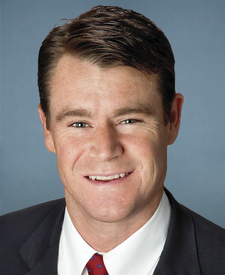
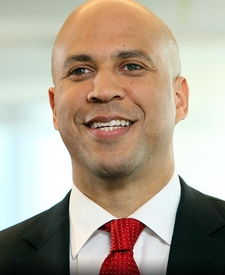
Mr. Young (for himself and Mr. Booker) introduced the following …

Dec 3, 2025

Read twice and referred to the Committee on Health, Education, …

Dec 3, 2025

Introduced in Senate

Dec 3, 2025

Mr. Young (for himself, Mr. Booker, Mr. Cassidy, and Mr. …

Stakeholder Effects

cui bono?

How this legislation distributes effects. Mention counts reflect frequency, not effect magnitude.

Finance
16 mentions across 7 clauses
+10 positive -2 negative ~4 mixed

Businesses considering employee ownership, Defined-contribution plan administrators, ERISA plan sponsors and administrators

Positive-direction: Businesses considering employee ownership, ERISA plan sponsors and administrators, Emergency savings account holders, Employee Ownership Initiative grant recipients, Pension-linked emergency savings account holders, Retirement plan recordkeepers

Negative-direction: Defined-contribution plan administrators

Government
6 mentions across 5 clauses
-3 negative ~1 mixed ?2 uncertain

Congressional benefits counsel, Department of Labor grant administrators, Internal Revenue Service

General Public
5 mentions across 5 clauses
+1 positive ?4 uncertain

Workers in employee-owned businesses, Workers meeting individual-account plan eligibility rules, Workers not otherwise participating in a defined-contribution plan

Professional Services
2 mentions across 2 clauses
?2 uncertain

Retirement plan legal staff, Tax-qualified plan counsel

6/9
sections analyzed
Full impact breakdown

Bill Structure & Actor Mappings

Who is "The Secretary" in each section?

Domains
Retirement Savings Employee Benefits Tax Administration
Actor Mappings
"irs"
→ Internal Revenue Service
"workers"
→ Workers meeting employer plan eligibility conditions
"dol_ebsa"
→ Department of Labor employee-benefits administrators
"plan_sponsors"
→ Defined-contribution plan sponsors
"recordkeepers"
→ Retirement plan recordkeepers and payroll providers
Domains
Employee Ownership Federal Grants Government Administration
Actor Mappings
"workers"
→ Workers participating in employee-owned firms
"treasury"
→ United States Treasury
"businesses"
→ Businesses considering employee ownership
"labor_secretary"
→ Secretary of Labor
"grant_recipients"
→ Employee-ownership initiative grant recipients

Key Definitions

Terms defined in this bill

2 terms
"Eligible participant under ERISA" §2

An individual who meets the individual-account plan's age, service, and other eligibility requirements.

"Eligible participant under the tax code" §3

An individual meeting a defined-contribution plan's age, service, and other eligibility requirements, whether or not otherwise a participant in that plan.

We use a combination of our own taxonomy and classification in addition to large language models to assess meaning and potential beneficiaries. High confidence means strong textual evidence. Always verify with the original bill text.

Learn more about our methodology