To provide a framework for artificial intelligence innovation and accountability, and for other purposes.
Analysis under review: This bill has generated analysis that may be too generic or incomplete. Clause-level evidence remains available below.
Summary
What This Bill Does
This bill, To provide a framework for artificial intelligence innovation and accountability, and for other purposes., changes federal law or congressional policy affecting federal agencies and legislative administrators. The main policy domain is Government Operations, Technology, Labor.
Who Benefits and How
federal agencies and legislative administrators may benefit from new authority, funding, eligibility, regulatory clarity, or reduced risk created by the bill.
Who Bears the Burden and How
federal implementing agencies may take on implementation duties, reporting obligations, compliance costs, or oversight responsibilities.
Key Provisions
- Section S1: 1. Short title This Act may be cited as the Artificial Intelligence Research, Innovation, and Accountability Act of 2023.
- Section id267c0c21a5bf4e9f9d86a40ab7643305: 2. Table of contents The table of contents for this Act is as follows:
- Section idb4ed39ac6c4b44499b9574354ddde13a: 101. Open data policy amendments Section 3502 of title 44, United States Code, is amended— in paragraph (22)— by inserting or data model after a data asset;...
- Section idf42cea67bc50443db938998b13e6eedb: 102. Online content authenticity and provenance standards research and development Not later than 180 days after the date of the enactment of this Act, the...
- Section id7994ad94064b4822a4c9ea652822ab3b: 103. Standards for detection of emergent and anomalous behavior and AI-generated media Section 22A(b)(1) of the National Institute of Standards and Technology...
Evidence Chain:
This summary is generated from the full bill text using AI analysis. Expand "Detailed Analysis" below for identified beneficiaries/burden bearers.
At a Glance
What This Bill Does
This bill, To provide a framework for artificial intelligence innovation and accountability, and for other purposes., changes federal law or congressional policy affecting federal agencies and legislative administrators.
Key Policy Areas
Government Operations, Technology, Labor
Primary Purpose
This bill, To provide a framework for artificial intelligence innovation and accountability, and for other purposes., changes federal law or congressional policy affecting federal agencies and legislative administrators.
Policy Domains
Whole bill
Identified Gains
Contextual inference, no direct clause citation- federal agencies and legislative administrators
Contextual inference, no direct clause citation
Identified Costs
Contextual inference, no direct clause citation- federal implementing agencies
Contextual inference, no direct clause citation
Sponsors


Legislative Progress
ReportedReported by Ms. Cantwell, with an amendment
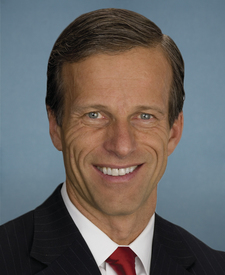
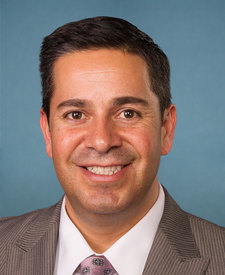
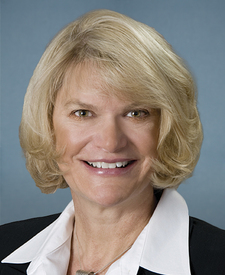
Mr. Thune (for himself, Ms. Klobuchar, Mr. Wicker, Mr. Hickenlooper, …
Mr. Thune (for himself, Ms. Klobuchar, Mr. Wicker, Mr. Hickenlooper, …
Stakeholder Effects
cui bono?How this legislation distributes effects. Mention counts reflect frequency, not effect magnitude.
AI safety and detection technology companies, AI systems affecting housing, employment, credit, education, healthcare, insurance decisions, AI systems making consequential decisions about individuals
Positive-direction: AI safety and detection technology companies, AI vendors to federal government, AI-generated content detection companies
Negative-direction: AI systems affecting housing, employment, credit, education, healthcare, insurance decisions, AI systems making consequential decisions about individuals, AI technology vendors to federal government, Companies deploying AI systems, Companies deploying high-impact AI (housing, employment, credit, education, healthcare, insurance), Companies deploying high-impact AI in regulated sectors, Critical-impact AI organizations, Critical-impact AI organizations violating requirements, Deployers of high-impact AI systems, Deployers of high-impact AI systems violating requirements, Financial services AI (credit, insurance), Internet platforms using generative AI, Large technology companies, Social media platforms
Department of Commerce, Federal agencies overseeing AI in their sectors, Federal agencies receiving NIST AI recommendations
Positive-direction: Federal agencies seeking to use AI
Negative-direction: Department of Commerce, Federal agencies overseeing AI in their sectors, Federal agencies receiving NIST AI recommendations, Federal agencies using AI systems, GAO, NIST, OMB, Secretary of Commerce
Consumers, Consumers and individuals affected by AI systems, Consumers and internet users
Small technology companies (under 500 employees)
Bill Structure & Actor Mappings
Who is "The Secretary" in each section?
- "the_commission"
- → The commission identified in the operative section
- "the_administrator"
- → The Administrator identified in the operative section
- "secretary_of_commerce"
- → Secretary of Commerce
- "secretary_of_homeland_security"
- → Secretary of Homeland Security
Key Definitions
Terms defined in this bill
the Secretary of Commerce. The term significant risk means the risk of— high-impact, severe, high-intensity, or long-duration harm to individuals
an artificial intelligence system— deployed for purposes other than those solely for use by the Department of Defense or an element of the intelligence community (as defined in section 3 of the National Security Act of 1947 (50 U.S.C. 3003))
a mathematical, economic, or statistical representation of a system or process used to assist in making calculations and predictions, including through the use of algorithms, computer programs, or artificial intelligence systems
an engineered system that— generates outputs, such as content, predictions, recommendations, or decisions for a given set of objectives
an artificial intelligence system— deployed for purposes other than those solely for use by the Department of Defense or an element of the intelligence community (as defined in section 3 of the National Security Act of 1947 (50 U.S.C. 3003))
an artificial intelligence system— deployed for purposes other than those solely for use by the Department of Defense or an element of the intelligence community (as defined in section 3 of the National Security Act of 1947 (50 U.S.C. 3003))
an artificial intelligence system— deployed for purposes other than those solely for use by the Department of Defense or an element of the intelligence community (as defined in section 3 of the National Security Act of 1947 (50 U.S.C. 3003))
an artificial intelligence system— deployed for a purpose other than solely for use by the Department of Defense or an intelligence agency (as defined in section 3094(e) of the National Security Act of 1947 (50 U.S.C. 3094(3)))
We use a combination of our own taxonomy and classification in addition to large language models to assess meaning and potential beneficiaries. High confidence means strong textual evidence. Always verify with the original bill text.
Learn more about our methodology