Energy and Water Development and Related Agencies Appropriations Act, 2026
Sponsors
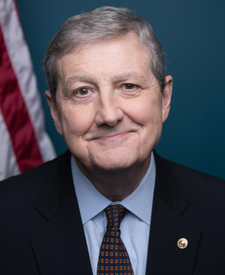
Legislative Progress
In CommitteeMr. Kennedy introduced the following bill; which was read twice …
Summary
What This Bill Does
This is the fiscal year 2026 appropriations bill for energy and water development agencies, providing funding to the Department of Energy, Army Corps of Engineers, Bureau of Reclamation, and Nuclear Regulatory Commission. The bill establishes spending levels, sets oversight requirements for agency spending, and makes significant policy changes including redirecting $2.4 billion from carbon capture programs to nuclear energy projects and authorizing new federal consolidated storage facilities for spent nuclear fuel.
Who Benefits and How
Nuclear energy industry receives the largest benefits, with $2.4 billion redirected from carbon capture programs to fund advanced reactor demonstrations (like TerraPower and X-energy), commercial nuclear deployment, and advanced nuclear fuel manufacturing. The bill also authorizes new consolidated interim storage for spent nuclear fuel, reducing costs for nuclear plant operators with stranded waste.
Transformer and electrical grid component manufacturers benefit from $75 million transferred to support domestic manufacturing of power transformers and grid components, addressing current supply chain shortages.
Western Area Power Administration customers benefit from a provision preventing funds from being transferred to the Treasury, keeping electricity rates lower for customers in Western states.
North Dakota water users receive an additional $50 million authorization for Garrison Diversion water projects with inflation indexing.
Non-federal sponsors of major flood projects can receive advance federal payments to complete flood risk management projects exceeding $700 million.
DOE grant recipients gain new protections requiring 120-day notice and 90-day restructuring period before any award termination.
Who Bears the Burden and How
Carbon capture and CO2 transportation projects lose $1.5 billion in previously appropriated IIJA funding, which is redirected to nuclear energy.
Hydrogen hub demonstration projects lose $75 million to grid deployment programs.
Defense Nuclear Nonproliferation programs face a $39 million permanent rescission from unobligated balances.
Federal agencies (Corps, Reclamation, DOE, NRC) face increased compliance burdens with extensive Congressional notification requirements for reprogramming funds, making grants, and award decisions.
San Luis Unit agricultural water users in California must fully reimburse the federal government for drainage service costs.
Key Provisions
-
$2.4B Nuclear Energy Boost: Redirects funds from CO2 transportation ($1.5B) and consolidates nuclear energy funds ($900M) for advanced reactor demonstrations, commercial deployment, and advanced nuclear fuel programs
-
Spent Nuclear Fuel Storage: Authorizes DOE to establish consolidated interim storage facilities for spent nuclear fuel using consent-based siting, with priority for sites without operating reactors
-
Grid Infrastructure: Transfers $75M for domestic manufacturing of power transformers and grid components to address supply chain shortages
-
Congressional Oversight: Requires 3-day advance notice for DOE grants over $1M, 30-day notice for creating or eliminating programs, and extensive reporting requirements
-
Award Termination Protection: Requires 120-day notice and 90-day restructuring opportunity before DOE can terminate discretionary awards
-
Lake Erie Dredging: Prohibits open lake placement of dredged material unless approved under state water quality certification
Evidence Chain:
This summary is derived from the structured analysis below. See "Detailed Analysis" for per-title beneficiaries/burden bearers with clause-level evidence links.
Primary Purpose
Appropriates funds for energy and water development and related agencies for fiscal year 2026, including the Department of Energy, Army Corps of Engineers, Bureau of Reclamation, and Nuclear Regulatory Commission.
Policy Domains
Legislative Strategy
"Standard appropriations bill with significant emphasis on nuclear energy and infrastructure, including major reprogramming of IIJA funds toward nuclear projects and establishment of consolidated interim storage for nuclear waste."
Likely Beneficiaries
- Nuclear energy industry (major funding redirects and new programs)
- Army Corps of Engineers contractors
- Bureau of Reclamation water project beneficiaries
- National Nuclear Security Administration
- DOE National Laboratories
- Small businesses (SBIR/STTR allocations)
- Navajo-Gallup Water Supply Project (increased authorization)
- Fort Peck Reservation Rural Water System
Likely Burden Bearers
- Carbon Dioxide Transportation Infrastructure Finance Program (loses .5B in funding)
- Defense Nuclear Nonproliferation programs (M rescission)
- Clean Energy Demonstrations Office (loses M to nuclear)
- Environmental regulators (increased nuclear waste storage authority)
- Taxpayers (substantial appropriations)
Bill Structure & Actor Mappings
Who is "The Secretary" in each section?
- "the_secretary"
- → Secretary of the Army
- "chief_of_engineers"
- → Chief of Engineers, U.S. Army Corps of Engineers
- "the_secretary"
- → Secretary of the Interior
- "the_administrator"
- → Administrator of the Environmental Protection Agency
- "the_secretary"
- → Secretary of Energy
- "the_commission"
- → Nuclear Regulatory Commission
Note: 'The Secretary' refers to Secretary of the Army in Title I (Corps of Engineers), Secretary of the Interior in Title II (Bureau of Reclamation), and Secretary of Energy in Title III.
Key Definitions
Terms defined in this bill
Has the meaning given in section 2 of the Nuclear Waste Policy Act of 1982 (42 U.S.C. 10101)
Has the meaning given in section 2 of the Nuclear Waste Policy Act of 1982 (42 U.S.C. 10101)
The Nuclear Waste Fund established under section 302(c) of the Nuclear Waste Policy Act of 1982 (42 U.S.C. 10222(c))
Has the meaning given in section 2 of the Nuclear Waste Policy Act of 1982 (42 U.S.C. 10101)
We use a combination of our own taxonomy and classification in addition to large language models to assess meaning and potential beneficiaries. High confidence means strong textual evidence. Always verify with the original bill text.
Learn more about our methodology