Platform Accountability and Transparency Act
Analysis under review: This bill has generated analysis that may be too generic or incomplete. Clause-level evidence remains available below.
Summary
What This Bill Does
This bill creates a government-supervised program allowing academic researchers to access internal data from large social media platforms (those with 50+ million US users). The National Science Foundation reviews research proposals, while the FTC sets privacy/security safeguards and enforces compliance.
Who Benefits and How
Academic researchers and universities gain unprecedented access to platform data for studying misinformation, algorithmic amplification, and social media's effects on society. Journalists benefit from a safe harbor protecting them when scraping publicly available platform data. The public benefits from increased transparency into how platforms operate and target content.
Who Bears the Burden and How
Large social media platforms (Facebook, TikTok, YouTube, X, etc.) must build data-sharing infrastructure and comply with researcher data requests - a significant operational and compliance burden. Platforms lose exclusive control over their internal data and face FTC enforcement penalties for non-compliance.
Key Provisions
- Requires platforms with 50M+ US users to share data with qualified researchers approved by NSF
- Creates liability immunity for platforms that comply with data-sharing requirements
- Establishes safe harbor for researchers and journalists collecting publicly available platform data
- Makes violations enforceable as unfair/deceptive practices under FTC Act with civil and criminal penalties
Evidence Chain:
This summary is generated from the full bill text using AI analysis. Expand "Detailed Analysis" below for identified beneficiaries/burden bearers.
At a Glance
What This Bill Does
Establishes a framework requiring large social media platforms to provide data access to qualified researchers for independent public interest research, while creating safe harbors for platform transparency research.
Who Benefits
- Academic researchers
- Universities
- Journalists
Who Bears Costs
- Large social media platforms (Meta, TikTok, Google/YouTube, X)
- Platform users (data subjects)
Key Policy Areas
Technology, Consumer Protection, Privacy, Research
Primary Purpose
Establishes a framework requiring large social media platforms to provide data access to qualified researchers for independent public interest research, while creating safe harbors for platform transparency research.
Policy Domains
Legislative Strategy
"Create government-supervised research access to platform data while providing liability shields to encourage compliance"
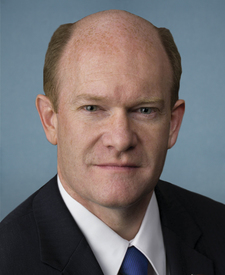
Sponsors


Legislative Progress
In CommitteeMr. Coons (for himself and Mr. Cassidy) introduced the following …
Read twice and referred to the Committee on Commerce, Science, …
Introduced in Senate
Stakeholder Effects
cui bono?How this legislation distributes effects. Mention counts reflect frequency, not effect magnitude.
Congress, Federal Trade Commission, Law enforcement and intelligence agencies
Positive-direction: Congress, Federal Trade Commission, National Science Foundation
Negative-direction: Law enforcement and intelligence agencies
AI/ML companies training large language models, Large social media platforms, Large social media platforms (Meta, TikTok, YouTube, X)
Positive-direction: Large social media platforms (for liability protection), Smaller social media platforms under 50M users
Negative-direction: AI/ML companies training large language models, Large social media platforms, Large social media platforms (Meta, TikTok, YouTube, X), Large social media platforms (Meta, TikTok, YouTube, X, etc.)
Academic researchers accessing platform data, Academic researchers and universities, Academic researchers seeking platform data
Positive-direction: Academic researchers and universities, Academic researchers studying platforms, University-affiliated researchers
Negative-direction: Academic researchers accessing platform data, Academic researchers seeking platform data, Researchers who violate privacy safeguards
Bill Structure & Actor Mappings
Who is "The Secretary" in each section?
- "NSF"
- → National Science Foundation
- "the_commission"
- → Federal Trade Commission
- "NSF"
- → National Science Foundation
- "the_commission"
- → Federal Trade Commission
- "the_commission"
- → Federal Trade Commission
- "NSF"
- → National Science Foundation
- "the_commission"
- → Federal Trade Commission
Key Definitions
Terms defined in this bill
Entity subject to FTC jurisdiction that operates a website/app allowing user-generated content, with 50M+ unique monthly US users
Data from platforms that NSF determines necessary for qualified research, excluding private messages, biometric info, and precise location data
Publicly available information including targeted/amplified content and information about advertisements shown on platforms
We use a combination of our own taxonomy and classification in addition to large language models to assess meaning and potential beneficiaries. High confidence means strong textual evidence. Always verify with the original bill text.
Learn more about our methodology