Financial Services and General Government Appropriations Act, 2026
Analysis under review: This bill has generated analysis that may be too generic or incomplete. Clause-level evidence remains available below.
Summary
What This Bill Does
This bill provides annual funding for financial services and general government operations for fiscal year 2026. It appropriates money to the Treasury Department (including the IRS), the Executive Office of the President, federal courts, independent regulatory agencies like the FCC and Consumer Product Safety Commission, and the District of Columbia government.
Who Benefits and How
- IRS and Treasury employees receive continued funding for operations, taxpayer services, and the 1-800 help line
- Taxpayers benefit from provisions requiring IRS employee training on taxpayer rights and protections against identity theft
- DC residents benefit from increased tuition assistance caps (from $10,000 to $15,000 annually) for college attendance
- Small businesses receive additional funding for development and entrepreneurship programs
- Rural telecom carriers are protected from rule changes affecting universal service support
Who Bears the Burden and How
- Federal agencies face restrictions on conference spending (capped at $500,000), first-class travel, and contractor incentive fees
- IRS is prohibited from transferring funds into enforcement and faces multiple spending restrictions
- Executive branch employees face limits on office redecoration ($5,000 cap) and official vehicle use
- District of Columbia is prohibited from using federal funds for marijuana legalization, most abortions, and needle exchange in certain areas
- SEC is barred from requiring disclosure of political contributions
Key Provisions
- Prohibits IRS from targeting citizens based on political beliefs, ideological viewpoints, or exercising First Amendment rights (Sections 106-107)
- Bans Consumer Product Safety Commission from banning gas stoves (Section 502)
- Rescinds $250 million from Treasury Forfeiture Fund (Section 634)
- Increases DC college tuition assistance from $10,000 to $15,000 per year (Section 820)
- Requires agencies to block pornography on computer networks (Section 625)
Evidence Chain:
This summary is generated from the full bill text using AI analysis. Expand "Detailed Analysis" below for identified beneficiaries/burden bearers.
At a Glance
What This Bill Does
Appropriates funds for financial services and general government operations for fiscal year 2026, including the Treasury Department, IRS, Executive Office of the President, the Judiciary, independent agencies, and the District of Columbia.
Key Policy Areas
Appropriations, Taxation, Government Operations, Consumer Protection, Financial Regulation, District of Columbia
Primary Purpose
Appropriates funds for financial services and general government operations for fiscal year 2026, including the Treasury Department, IRS, Executive Office of the President, the Judiciary, independent agencies, and the District of Columbia.
Policy Domains
Title I - Department of the Treasury
Identified Gains
Contextual inference, no direct clause citation- Taxpayers
- IRS employees
- Tax-exempt organizations
Contextual inference, no direct clause citation
Identified Costs
Contextual inference, no direct clause citation- IRS Enforcement Division
Contextual inference, no direct clause citation
Title V - Independent Agencies
Identified Gains
Contextual inference, no direct clause citation- Gas stove manufacturers
- Recreational off-highway vehicle industry
- Rural telecommunications carriers
- Small businesses
Contextual inference, no direct clause citation
Identified Costs
Contextual inference, no direct clause citation- Consumer Product Safety Commission
- Federal Communications Commission
Contextual inference, no direct clause citation
Title II - Executive Office of the President
Identified Gains
Contextual inference, no direct clause citation- Office of National Drug Control Policy
Contextual inference, no direct clause citation
Identified Costs
Contextual inference, no direct clause citation- Federal departments receiving federal financial assistance
Contextual inference, no direct clause citation
Title VI - General Provisions (This Act)
Identified Gains
Contextual inference, no direct clause citation- Corporations
- Electronic service providers
Contextual inference, no direct clause citation
Identified Costs
Contextual inference, no direct clause citation- Federal agencies
- Securities and Exchange Commission
- Treasury Forfeiture Fund
Contextual inference, no direct clause citation
Title III - The Judiciary
Identified Gains
Contextual inference, no direct clause citation- Federal judiciary
- US Marshals Service
Contextual inference, no direct clause citation
Title VII - General Provisions (Government-wide)
Identified Gains
Contextual inference, no direct clause citation- Federal whistleblowers
- Health insurance contractors
- Breastfeeding mothers
Contextual inference, no direct clause citation
Identified Costs
Contextual inference, no direct clause citation- Federal agencies
- Federal employees
- Contractors with unpaid taxes or felony convictions
Contextual inference, no direct clause citation
Title VIII - District of Columbia
Identified Gains
Contextual inference, no direct clause citation- DC college students
- DC government operations
Contextual inference, no direct clause citation
Identified Costs
Contextual inference, no direct clause citation- DC government
- DC residents seeking certain services
Contextual inference, no direct clause citation
Sponsors
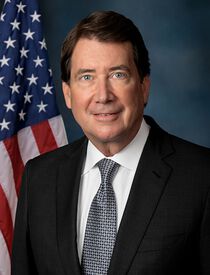
Legislative Progress
In CommitteeMr. Hagerty introduced the following bill; which was read twice …
Read twice and referred to the Committee on Appropriations.
Introduced in Senate
Stakeholder Effects
cui bono?How this legislation distributes effects. Mention counts reflect frequency, not effect magnitude.
Agencies funded under this Act, Bureau of Engraving and Printing, Bureau of Land Management
Agencies funded under this Act, Department of the Treasury, Executive Office of the President, Federal agencies, Federal agencies funded under this Act, Federal employees, General Services Administration, Internal Revenue Service face effects in multiple directions
Positive-direction: Bureau of Land Management, Bureau of the Fiscal Service, Coast Guard Congressional Fellowship Program, Department of the Treasury IT systems, Department of the Treasury intelligence activities, Federal Accounting Standards Advisory Board, Federal agencies purchasing IT, Federal agencies with recycling programs, Federal agencies with travel needs, Federal agency CIOs, Federal employees and whistleblowers, Federal employees serving abroad, Federal judiciary, Federal medical research programs, Federal telecommunications programs, Government corporations, IRS Commissioner, Inspectors General, Judicial retirement funds, National Marine Fisheries Service, National Science and Technology Council, Office of Evaluation Sciences, Office of National Drug Control Policy, Office of Personnel Management, Small Business Administration, Small Business Administration IT systems, Treasury Department offices, Treasury Inspector General for Tax Administration, U.S. Marshals Service, US Fish and Wildlife Service
Negative-direction: Bureau of Engraving and Printing, Consumer Financial Protection Bureau, Consumer Product Safety Commission, Executive agencies seeking new space, Executive branch agencies, Federal Communications Commission, Federal Law Enforcement Training Centers, Federal Trade Commission, Federal agencies collecting internet data, Federal agencies producing news content, Federal agencies seeking electronic communications, Federal agencies using GSA buildings, Federal agency employees, Federal agency employees handling personal data, Federal agency records managers, Federal and D.C. agencies, Federal prevailing rate employees, IRS customer service operations, Internal Revenue Service employees, Judicial Conference of the United States, Office of Financial Research, Office of Management and Budget, Presidential appointees, Regulatory agencies and commissions, Securities and Exchange Commission, United States Mint, Vice President of the United States
Breastfeeding mothers, Citizens with personal data held by federal agencies, DC residents seeking congressional representation
Positive-direction: Breastfeeding mothers, Citizens with personal data held by federal agencies, Internet users accessing government sites, Public seeking access to government records, Taxpayers, Taxpayers and organizations with political views, Taxpayers exercising First Amendment rights, Taxpayers seeking IRS assistance, Users of electronic communications, Victims of tax-related identity theft, Whistleblowers
Negative-direction: DC residents seeking congressional representation, Debtors owing money to the federal government, People who inject drugs in restricted locations
DC Attorney General office, DC public health agencies, District of Columbia CFO
District of Columbia government faces effects in multiple directions
Consultants and expert witnesses, Contractors convicted of procurement fraud, Federal contractors
Positive-direction: Consultants and expert witnesses, Federal contractors
Negative-direction: Contractors convicted of procurement fraud, Federal contractors and grantees, Private contractors seeking federal work, Underperforming federal contractors
FEHBP health insurance carriers, FEHBP health insurers, Federal Employees Health Benefits Program insurers
Positive-direction: FEHBP health insurance carriers, Publicly traded companies
Negative-direction: FEHBP health insurers, Federal Employees Health Benefits Program insurers
Domestic manufacturers and suppliers, Foreign manufacturers seeking federal contracts, Gas stove manufacturers
Positive-direction: Domestic manufacturers and suppliers, Gas stove manufacturers, Recreational off-highway vehicle manufacturers
Negative-direction: Foreign manufacturers seeking federal contracts
501(c) organizations, 501(c)(4) social welfare organizations, Federal grantees
Positive-direction: 501(c) organizations, 501(c)(4) social welfare organizations
Negative-direction: Federal grantees, Non-federal earmark recipients
Competitive eligible telecommunications carriers, Electronic communication service providers, Telecommunications carriers receiving universal service support
Bill Structure & Actor Mappings
Who is "The Secretary" in each section?
- "the_secretary"
- → Secretary of the Treasury
- "the_commissioner"
- → Commissioner of the Internal Revenue Service
- "the_director"
- → Director of the Office of Management and Budget
- "the_director"
- → Director of the Administrative Office of the United States Courts
- "the_administrator"
- → Administrator of General Services
- "the_president"
- → President of the United States
- "the_cfo"
- → Chief Financial Officer for the District of Columbia
- "the_mayor"
- → Mayor of the District of Columbia
Note: 'The Director' refers to OMB Director in Title II but Director of Administrative Office of US Courts in Title III
We use a combination of our own taxonomy and classification in addition to large language models to assess meaning and potential beneficiaries. High confidence means strong textual evidence. Always verify with the original bill text.
Learn more about our methodology