HONOR Act
Summary
What This Bill Does
The HONOR Act amends section 901(j) of the Internal Revenue Code so the Russian Federation is treated as a country for which U.S. taxpayers cannot claim the foreign tax credit. The denial begins 30 days after enactment and ends only when normal trade relations tariff treatment for Russian products resumes under the Suspending Normal Trade Relations with Russia and Belarus Act. It also blocks treaty arguments that would otherwise preserve the credit.
Who Benefits and How
The main policy beneficiary is U.S. sanctions and trade leverage against Russia: the bill raises the after-tax cost of Russia-related activity for U.S. taxpayers and reduces the value of Russian taxes for U.S. tax planning. Domestic businesses competing with Russia-linked commerce may benefit indirectly if the tax penalty discourages U.S. firms from maintaining Russian operations.
Who Bears the Burden and How
U.S. corporations and investors with Russian-source income or Russian tax exposure lose a credit that would normally offset U.S. tax liability, so the same Russian taxes become more expensive after the effective date. Russian government and business interests are harmed because the bill reduces the tax efficiency of U.S. investment or commercial activity tied to Russia until trade normalization resumes.
Key Provisions
- Adds a special Russia rule to the foreign-tax-credit denial regime in section 901(j).
- Tightens U.S. tax treatment for Russian-source income beginning 30 days after enactment.
- Restricts treaty-based credit claims by applying the provision without regard to U.S. treaty obligations.
- Modifies effective-date rules for taxes paid, accrued, or deemed paid after 90 days.
Evidence Chain:
This summary is generated from the full bill text using AI analysis. Expand "Detailed Analysis" below for identified beneficiaries/burden bearers with clause-level evidence links.
At a Glance
What This Bill Does
Denies U.S. foreign tax credits for taxes paid to or accrued with respect to the Russian Federation during the period when normal trade relations tariff treatment for Russia remains suspended.
Key Policy Areas
Tax, Foreign Affairs, Trade
Primary Purpose
Denies U.S. foreign tax credits for taxes paid to or accrued with respect to the Russian Federation during the period when normal trade relations tariff treatment for Russia remains suspended.
Policy Domains
Section 2 - Russian foreign tax credit denial
Identified Gains
- Internal Revenue Service
- Treasury Department tax administrators
- Domestic firms competing with Russia-linked commerce
Identified Costs
- U.S. corporations with Russian-source income
- U.S. investors with Russian tax exposure
- Russian Federation
- Russian businesses
Sponsors

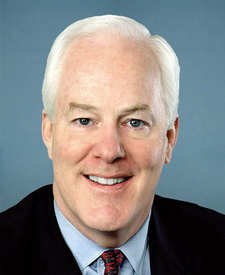
Legislative Progress
Passed SenateMessage on Senate action sent to the House.
Held at the desk.
Received in the House.
Passed Senate without amendment by Unanimous Consent. (consideration: CR S953; …
Passed/agreed to in Senate: Passed Senate without amendment by Unanimous …
Senate Committee on Finance discharged by Unanimous Consent.
Ms. Cortez Masto (for herself and Mr. Cornyn) introduced the …
Read twice and referred to the Committee on Finance.
Introduced in Senate
Stakeholder Effects
cui bono?How this legislation distributes effects. Mention counts reflect frequency, not effect magnitude.
Russian businesses seeking U.S.-tax-efficient activity
Bill Structure & Actor Mappings
Who is "The Secretary" in each section?
- "irs"
- → Internal Revenue Service
- "russia"
- → Russian Federation
We use a combination of our own taxonomy and classification in addition to large language models to assess meaning and potential beneficiaries. High confidence means strong textual evidence. Always verify with the original bill text.
Learn more about our methodology