Improve and Enhance the Work Opportunity Tax Credit Act
Analysis under review: This bill has generated analysis that may be too generic or incomplete. Clause-level evidence remains available below.
Summary
What This Bill Does
The Improve and Enhance the Work Opportunity Tax Credit Act makes several significant changes to the existing Work Opportunity Tax Credit (WOTC) under IRC Section 51. It extends the credit from its December 31, 2025 expiration to December 31, 2030. It increases the base credit rate from 40% to 50% of qualified first-year wages up to \,000, and adds a second tier of 50% credit on wages between \,000 and \,000 for employees who work at least 400 hours. It adds inflation indexing to wage caps starting in 2026. It increases wage limits for qualified veterans to 200-400% of the base amount depending on veteran status. It adds military spouses as a new targeted group. It removes the age-40 cap for SNAP/food stamp recipients. It also directs federal agencies to promote WOTC-eligible hiring to businesses in manufacturing, infrastructure, energy, healthcare, and construction.
Who Benefits and How
Employers who hire from targeted groups receive significantly larger tax credits. The maximum first-year credit per employee roughly doubles from \,400 (40% of \,000) to \,000 (50% of \,000) for employees working 400+ hours. Veterans generate even larger credits.
Targeted group members (veterans, SNAP recipients, ex-felons, vocational rehabilitation referrals, etc.) benefit from stronger employer incentives to hire them. Military spouses are newly eligible.
Employers hiring qualified veterans see especially large credit increases, with wage caps rising to 200-400% of the base \,000.
SNAP recipients over age 40 are newly eligible, as the previous age cap is removed.
Who Bears the Burden and How
Federal Treasury / taxpayers bear the cost through reduced tax revenue from larger and extended credits. The five-year extension combined with roughly doubled credit amounts represents a substantial revenue cost.
IRS and designated local agencies face increased administrative burden from the new military spouse category, inflation adjustments, and expanded eligibility.
Key Provisions
- Extension: WOTC extended from Dec 31, 2025 to Dec 31, 2030 (Section 2)
- Increased credit: Base rate raised to 50% of first \,000 in wages, plus 50% of next \,000 for 400+ hour employees (Section 2)
- Inflation indexing: \,000 and \,000 wage caps indexed to CPI starting 2026 (Section 2)
- Enhanced veteran credits: Wage caps of 200%, 250%, or 400% of base depending on veteran category (Section 2)
- Military spouse eligibility: Spouses of Armed Forces members added as new targeted group (Section 3)
- Age cap removal: Eliminates "but not age 40" restriction for SNAP/food stamp recipients (Section 2)
- Long-term family assistance: First-year credit at 40% of wages up to \,000, second-year credit at 50% of wages up to \,000 (Section 2)
- Interagency hiring promotion: Treasury, Commerce, Labor, and SBA directed to promote WOTC hiring in critical industries (Section 4)
Evidence Chain:
This summary is generated from the full bill text using AI analysis. Expand "Detailed Analysis" below for identified beneficiaries/burden bearers.
At a Glance
What This Bill Does
Extends the Work Opportunity Tax Credit through 2030, increases credit amounts and wage caps, adds inflation indexing, expands eligibility to military spouses, removes age cap for food stamp recipients, and directs interagency promotion of targeted hiring across critical industries.
Key Policy Areas
Taxation, Labor & Employment, Defense
Primary Purpose
Extends the Work Opportunity Tax Credit through 2030, increases credit amounts and wage caps, adds inflation indexing, expands eligibility to military spouses, removes age cap for food stamp recipients, and directs interagency promotion of targeted hiring across critical industries.
Policy Domains
WOTC Improvements and Enhancements
Identified Gains
Contextual inference, no direct clause citation- Employers hiring from targeted groups
- Qualified veterans
- SNAP recipients
- Long-term family assistance recipients
- Workforce development organizations
Contextual inference, no direct clause citation
Identified Costs
Contextual inference, no direct clause citation- Federal Treasury
- IRS
Contextual inference, no direct clause citation
Military Spouse Eligibility
Identified Gains
Contextual inference, no direct clause citation- Military spouses
- Employers near military installations
Contextual inference, no direct clause citation
Identified Costs
Contextual inference, no direct clause citation- Federal Treasury
- Designated local agencies (certification workload)
Contextual inference, no direct clause citation
Interagency Hiring Promotion
Identified Gains
Contextual inference, no direct clause citation- Targeted group members
- Businesses in manufacturing, infrastructure, energy, healthcare, and construction
Contextual inference, no direct clause citation
Identified Costs
Contextual inference, no direct clause citation- Treasury, Commerce, Labor, and SBA (outreach coordination costs)
Contextual inference, no direct clause citation
Sponsors

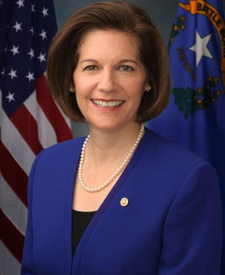
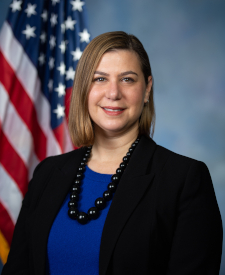


Legislative Progress
In CommitteeMr. Cassidy (for himself, Ms. Hassan, Mr. Boozman, Mr. Kaine, …
Read twice and referred to the Committee on Finance.
Introduced in Senate
Stakeholder Effects
cui bono?How this legislation distributes effects. Mention counts reflect frequency, not effect magnitude.
General public, Long-term family assistance recipients, SNAP recipients
Federal Treasury, Treasury, Commerce, Labor, and SBA
Employers hiring from targeted groups, Employers near military installations
Bill Structure & Actor Mappings
Who is "The Secretary" in each section?
- "sba_administrator"
- → Administrator of the Small Business Administration
- "secretary_of_labor"
- → Secretary of Labor
- "secretary_of_commerce"
- → Secretary of Commerce
- "secretary_of_treasury"
- → Secretary of the Treasury
Key Definitions
Terms defined in this bill
Any individual certified by the designated local agency as being, as of the hiring date, a spouse of a member of the Armed Forces of the United States.
We use a combination of our own taxonomy and classification in addition to large language models to assess meaning and potential beneficiaries. High confidence means strong textual evidence. Always verify with the original bill text.
Learn more about our methodology