To improve the lead time, accuracy, and dissemination of forecasts of atmospheric rivers throughout the United States, and for other purposes.
Analysis under review: This bill has generated analysis that may be too generic or incomplete. Clause-level evidence remains available below.
Summary
What This Bill Does
This bill establishes an atmospheric river forecast improvement program within NOAA to enhance the accuracy, lead time, and communication of forecasts for atmospheric rivers - powerful weather phenomena that transport large amounts of water vapor from the tropics to other regions, causing both beneficial rainfall and destructive flooding. The program aims to reduce loss of life, property damage, and economic losses through better prediction and warning systems.
Who Benefits and How
Communities in the Western United States benefit most, particularly those in California, Oregon, Washington, and Alaska who face regular atmospheric river events. Improved forecasts with longer lead times allow residents and emergency managers more time to prepare for floods, mudslides, and extreme precipitation. Water resource managers and reservoir operators gain better seasonal-to-short-range predictions that help balance flood control with water storage during droughts. The weather forecasting industry and academic research institutions benefit through mandated partnerships with NOAA for research and technology development.
Who Bears the Burden and How
NOAA (National Oceanic and Atmospheric Administration) bears the primary implementation burden, being required to establish the program, acquire and maintain reconnaissance aircraft, establish atmospheric river observatories along the entire West Coast, and develop a detailed program plan within 270 days. The Air Force Reserve Command (53rd Weather Reconnaissance Squadron) must coordinate with NOAA on reconnaissance activities. Federal taxpayers fund the program, including costs for aircraft acquisition, personnel, scientific equipment, and maintaining observatories in multiple states.
Key Provisions
- Establishes atmospheric river observatories with radar, water vapor analysis, and snow level monitoring in all West Coast states including Alaska
- Requires NOAA to acquire and maintain crewed and uncrewed aircraft for atmospheric river reconnaissance from November through March each year
- Mandates development of improved forecast models using AI/machine learning, satellite data, and ocean observations
- Requires research into public communication strategies to help communities understand and respond to atmospheric river forecasts
- Orders NOAA to submit a detailed program plan to Congress within 270 days of enactment
Evidence Chain:
This summary is generated from the full bill text using AI analysis. Expand "Detailed Analysis" below for identified beneficiaries/burden bearers.
At a Glance
What This Bill Does
The bill aims to enhance atmospheric river forecasts, reducing loss of life, property, and economic damage by improving accuracy, lead time, and dissemination.
Key Policy Areas
Weather Forecasting, Climate Adaptation
Primary Purpose
The bill aims to enhance atmospheric river forecasts, reducing loss of life, property, and economic damage by improving accuracy, lead time, and dissemination.
Policy Domains
Sponsors
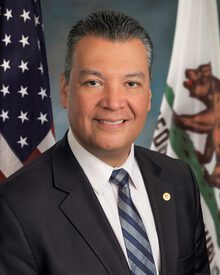

Legislative Progress
IntroducedMr. Padilla (for himself and Ms. Murkowski) introduced the following …
Stakeholder Effects
cui bono?How this legislation distributes effects. Mention counts reflect frequency, not effect magnitude.
Bill Structure & Actor Mappings
Who is "The Secretary" in each section?
- "the_under_secretary"
- → Under Secretary of Commerce for Oceans and Atmosphere
We use a combination of our own taxonomy and classification in addition to large language models to assess meaning and potential beneficiaries. High confidence means strong textual evidence. Always verify with the original bill text.
Learn more about our methodology