Transgender Health Care Access Act
Analysis under review: This bill has generated analysis that may be too generic or incomplete. Clause-level evidence remains available below.
Summary
What This Bill Does
This bill authorizes a total of $45 million per year (2026-2030) in federal grants across four programs to improve medical education and training in gender-affirming care for transgender patients. It targets medical schools, residency programs, community health centers, and rural providers to address a documented gap in health professional training.
Who Benefits and How
Transgender patients benefit from expanded access to culturally competent health care providers. Medical schools, teaching health centers, and residency programs receive grants of up to $10 million/year for curriculum development. Community health centers (including FQHCs, rural clinics, and Indian Health Service facilities) receive up to $15 million/year to build capacity for gender-affirming care. Rural health care providers receive $5 million/year for collaborative training networks.
Who Bears the Burden and How
The federal government bears the cost of $45 million per year in authorized appropriations. The Department of Health and Human Services (HRSA, NIH, NLM) must administer multiple grant programs and submit a congressional report within 2 years. No private entities face mandates or penalties.
Key Provisions
- $10M/year for medical education curricula on gender-affirming care (Section 4)
- $15M/year each for training demonstration programs and community health center capacity (Sections 5-6)
- $5M/year for rural provider training networks (Section 7)
Evidence Chain:
This summary is generated from the full bill text using AI analysis. Expand "Detailed Analysis" below for identified beneficiaries/burden bearers.
At a Glance
What This Bill Does
Authorizes $45 million per year in federal grants for medical education, training programs, and community health center capacity-building to expand access to gender-affirming health care for transgender populations.
Key Policy Areas
Healthcare, Medical Education, LGBTQ Rights, Rural Health
Primary Purpose
Authorizes $45 million per year in federal grants for medical education, training programs, and community health center capacity-building to expand access to gender-affirming health care for transgender populations.
Policy Domains
Transgender Health Care Access Act
Identified Gains
Contextual inference, no direct clause citation- Transgender patients seeking gender-affirming care
- Medical schools and teaching health centers
- Community health centers (FQHCs, rural clinics, IHS facilities)
- Rural health care providers
- Medical education and training organizations
Contextual inference, no direct clause citation
Identified Costs
Contextual inference, no direct clause citation- Department of Health and Human Services (HRSA, NIH, NLM)
- Federal taxpayers
Contextual inference, no direct clause citation
Sponsors
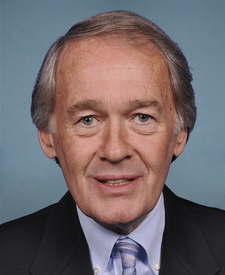




Legislative Progress
In CommitteeMr. Markey (for himself, Mr. Blumenthal, Mr. Merkley, Mr. Schiff, …
Read twice and referred to the Committee on Health, Education, …
Introduced in Senate
Stakeholder Effects
cui bono?How this legislation distributes effects. Mention counts reflect frequency, not effect magnitude.
Health care delivery sites with residency programs, Rural health care providers (critical access hospitals, clinics), Teaching health centers and residency programs
Federally-qualified health centers, Federally-qualified health centers (FQHCs), Federally-qualified health centers in rural areas
Health professions schools partnering on rural networks, Medical schools and health professions schools, Schools of medicine, nursing, pharmacy, and social work
Community mental health centers
Indian Health Service and Tribal health facilities, Indian Health Service facilities and Tribal health organizations
Transgender patients, Transgender patients in rural areas
Medical education accrediting organizations
Bill Structure & Actor Mappings
Who is "The Secretary" in each section?
- "the_secretary"
- → Secretary of Health and Human Services
Key Definitions
Terms defined in this bill
Secretary of Health and Human Services
Health care designed to treat gender dysphoria, including medical, behavioral, mental health, surgical, psychiatric, therapeutic, diagnostic, preventative, rehabilitative, or supportive services and medication; excludes conversion therapy.
We use a combination of our own taxonomy and classification in addition to large language models to assess meaning and potential beneficiaries. High confidence means strong textual evidence. Always verify with the original bill text.
Learn more about our methodology