National Earthquake Hazards Reduction Program Reauthorization Act of 2025
Sponsors

Legislative Progress
IntroducedReported by Mr. Cruz, with an amendment
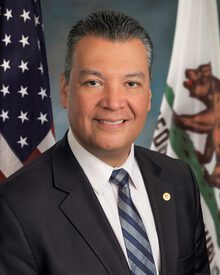
Mr. Padilla (for himself and Ms. Murkowski) introduced the following …
Summary
What This Bill Does
This bill reauthorizes and modernizes the National Earthquake Hazards Reduction Program (NEHRP), which coordinates federal earthquake research and preparedness efforts. It updates a 1977 law to reflect current earthquake science, expand early warning systems, and help communities recover faster after earthquakes.
Who Benefits and How
Federal agencies (FEMA, NIST, USGS, NSF) receive increased funding authorizations totaling over $175 million annually and expanded mandates to develop earthquake preparedness resources.
State, local, and Tribal governments gain access to technical assistance for creating building inventories, conducting seismic evaluations, and developing evacuation plans. Tribal governments are explicitly included throughout the bill for the first time.
Engineering and construction firms benefit from increased demand for seismic evaluations and retrofitting services as the bill encourages building assessments.
Research institutions and universities (particularly minority-serving institutions) receive continued funding for earthquake research and hazard mapping.
Communities in high seismic risk areas benefit from expanded earthquake early warning systems and improved safety standards.
Who Bears the Burden and How
Federal taxpayers fund the program at approximately $175+ million per year across the four lead agencies.
Federal agencies face new reporting requirements, coordination mandates, and must develop additional guidelines and technical assistance programs.
Building and infrastructure owners may face future retrofit expectations, though requirements remain voluntary for now. The bill lays groundwork for potential mandatory retrofit programs by requiring inventories of high-risk buildings.
Key Provisions
- Expands earthquake early warning system: Requires coordination with the FCC for faster emergency alerts and expansion to additional high-risk areas
- Adds Tribal government inclusion: Systematically adds Tribal governments throughout the law for technical assistance, coordination, and resources
- Introduces "functional recovery" standard: Creates a new performance standard focused on how quickly buildings can resume operations after an earthquake
- Authorizes building inventories: Directs development of best practices for identifying and evaluating high seismic risk buildings and infrastructure
- Updates hazard assessments: Requires updated tsunami and liquefaction risk maps and improved understanding of multiple earthquake-related hazards
- Increases funding authorizations: Authorizes specific appropriations for FEMA ($12.75M), NIST ($6M), USGS ($90.4M), and NSF ($67.5M) for fiscal years 2025-2029
Evidence Chain:
This summary is derived from the structured analysis below. See "Detailed Analysis" for per-title beneficiaries/burden bearers with clause-level evidence links.
Primary Purpose
Reauthorizes and modernizes the National Earthquake Hazards Reduction Program to improve earthquake preparedness, early warning systems, and post-earthquake functional recovery for buildings and infrastructure
Policy Domains
Legislative Strategy
"Expand earthquake preparedness and mitigation programs, improve coordination between federal agencies, tribal governments, and state/local entities, and authorize significant funding increases for earthquake research and early warning systems"
Likely Beneficiaries
- Federal agencies (FEMA, NIST, USGS, NSF) - increased funding and expanded mandates
- State, local, and Tribal governments - technical assistance and resources for earthquake preparedness
- Engineering and construction firms - demand for seismic evaluations and retrofitting
- Research institutions and universities - funding for earthquake research
- Technology companies - earthquake early warning system expansion
- Communities in high seismic risk areas - improved safety and early warning capabilities
Likely Burden Bearers
- Federal taxpayers - funding $175+ million annually in new appropriations
- Federal agencies - new reporting requirements and coordination mandates
- Building and infrastructure owners - potential future retrofit requirements (currently voluntary but groundwork being laid)
Bill Structure & Actor Mappings
Who is "The Secretary" in each section?
- "the_director"
- → Director of the National Institute of Standards and Technology (NIST)
- "the_chair_fcc"
- → Chair of the Federal Communications Commission
- "the_director_nsf"
- → Director of the National Science Foundation (NSF)
- "the_administrator"
- → Administrator of the Federal Emergency Management Agency (FEMA)
- "the_director_usgs"
- → Director of the United States Geological Survey (USGS)
- "the_administrator_noaa"
- → Administrator of the National Oceanic and Atmospheric Administration
Note: Multiple agency administrators are referenced throughout (FEMA, NIST, USGS, NSF) - context determines which administrator is meant in each section
Key Definitions
Terms defined in this bill
Has the meaning given the term tribal government in section 421 of the Congressional Budget Act of 1974 (2 U.S.C. 658)
A post-earthquake performance state in which a building or lifeline infrastructure system is maintained, or restored, to safely and adequately support the basic intended functions associated with the pre-earthquake use or occupancy of a building, or the pre-earthquake service level of a lifeline infrastructure system
A statement of probabilities that 1 or more earthquakes within a clearly specified magnitude range may occur within a specified time interval and geographic region
We use a combination of our own taxonomy and classification in addition to large language models to assess meaning and potential beneficiaries. High confidence means strong textual evidence. Always verify with the original bill text.
Learn more about our methodology