988 Lifeline Location Improvement Act of 2026
Summary
What This Bill Does
The 988 Lifeline Location Improvement Act studies how geolocation information, including dispatchable location, could be transmitted with calls to the 988 Suicide and Crisis Lifeline. One saved version requires the FCC to open a notice of inquiry within 270 days and requires GAO to report to Congress within 180 days. Another version creates an FCC-HHS advisory committee to study the same issues and recommend possible legislation.
The bill does not itself mandate live location sharing for every 988 call. It focuses on legal authority, consumer privacy, technical implementation standards, cost recovery, and funding needs for telecommunications providers, 911 system service providers, public safety answering points, the 988 Lifeline, the Veterans Crisis Line, and local crisis centers.
Who Benefits and How
People calling 988 in suicidal or mental health crisis, Veterans Crisis Line callers, local crisis centers, emergency communications centers, public safety answering points, crisis-response agencies, and congressional oversight committees benefit from a clearer record on whether geolocation could improve emergency response. Families of callers may benefit if better location tools help responders find a person in crisis when intervention is needed.
Who Bears the Burden and How
The Federal Communications Commission, Department of Health and Human Services, SAMHSA, GAO, telecommunications service providers, 911 system service providers, public safety answering points, handset manufacturers, local crisis centers, and advisory committee members must study technical standards, privacy limits, legal authority, cost recovery, and implementation needs. Privacy advocates and callers may face concerns if future policy moves toward mandatory location transmission.
Key Provisions
- Defines 911 system service providers, dispatchable location, emergency communications centers, local crisis centers, and telecommunications service providers.
- Requires an FCC notice of inquiry on geolocation transmission with 988 calls in one version.
- Requires GAO to study opportunities and challenges for 988 geolocation implementation.
- Creates an FCC-HHS advisory committee in another version.
- Requires the study to address consumer privacy, legal authority, technical standards, and cost recovery.
- Requires recommendations or reports to congressional committees.
- Uses existing appropriations and authorizes no new funding in the committee version.
Evidence Chain:
This summary is generated from the full bill text using AI analysis. Expand "Detailed Analysis" below for identified beneficiaries/burden bearers with clause-level evidence links.
At a Glance
What This Bill Does
Studies legal, privacy, technical, and funding issues for transmitting geolocation information with calls to the 988 Suicide and Crisis Lifeline through FCC, GAO, or advisory-committee processes.
Key Policy Areas
Healthcare, Telecommunications, Public Safety, Privacy
Primary Purpose
Studies legal, privacy, technical, and funding issues for transmitting geolocation information with calls to the 988 Suicide and Crisis Lifeline through FCC, GAO, or advisory-committee processes.
Policy Domains
Whole bill
Identified Gains
- 988 Lifeline callers
- Veterans Crisis Line callers
- Local crisis centers
- Emergency communications centers
- Public safety answering points
- Crisis-response agencies
- Congressional oversight committees
Identified Costs
- Federal Communications Commission
- Department of Health and Human Services
- SAMHSA
- Government Accountability Office
- Telecommunications service providers
- 911 system service providers
- Handset manufacturers
- Local crisis centers
Sponsors

Legislative Progress
Passed SenateHeld at the desk.
Received in the House.
Message on Senate action sent to the House.
Passed Senate with an amendment and an amendment to the …
Passed/agreed to in Senate: Passed Senate with an amendment and …
Placed on Senate Legislative Calendar under General Orders. Calendar No. …
Committee on Commerce, Science, and Transportation. Reported by Senator Cruz …
Reported by Mr. Cruz, with an amendment and an amendment …
Committee on Commerce, Science, and Transportation. Ordered to be reported …
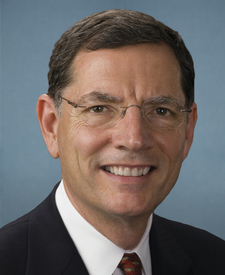
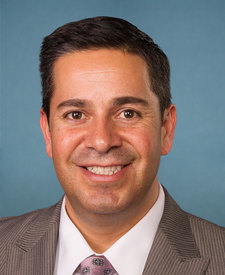
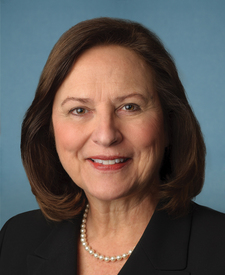
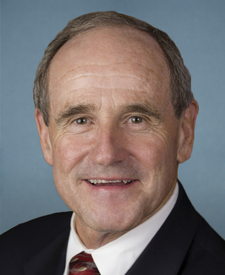
Mr. Barrasso (for himself, Mr. Luján, Mrs. Blackburn, Mrs. Capito, …
Stakeholder Effects
cui bono?How this legislation distributes effects. Mention counts reflect frequency, not effect magnitude.
Advisory committee members, Committee staff, Congressional oversight committees
Advisory committee members faces effects in multiple directions
Positive-direction: Committee staff, Congressional oversight committees
Negative-direction: Department of Health and Human Services, Federal Communications Commission, Federal agencies, Government Accountability Office
Federal Communications Commission, Telecommunications service providers
Bill Structure & Actor Mappings
Who is "The Secretary" in each section?
- "secretary"
- → Secretary of Health and Human Services
- "commission"
- → Federal Communications Commission
- "comptroller"
- → Comptroller General
We use a combination of our own taxonomy and classification in addition to large language models to assess meaning and potential beneficiaries. High confidence means strong textual evidence. Always verify with the original bill text.
Learn more about our methodology