ANCHOR Act
Summary
What This Bill Does
Requires the NSF Director to submit a plan within one year to improve cybersecurity and telecommunications for the U.S. Academic Research Fleet, the university and laboratory-operated oceanographic vessels funded by NSF and administered through the University-National Oceanographic Laboratory System. The plan must assess fleet networking needs, cybersecurity needs, equipment and personnel costs, implementation timelines under different funding scenarios, common solutions such as consortial licenses, centralized cybersecurity or data management, and a funding plan involving NSF, the Office of Naval Research, non-Federal vessel owners, fleet users, or a mix of those parties.
Who Benefits and How
Oceanographers, research universities, laboratory vessel operators, shore-based researchers, telemedicine users at sea, NSF major-facility managers, and U.S. Academic Research Fleet users benefit from a plan for better bandwidth, satellite communications, shipboard and shoreside high-performance computing, data backup, remote scientific participation, and remote maintenance support. CISA and NIST cybersecurity guidance gets built into planning for encryption, incident detection, incident handling, and operational technology protection.
Who Bears the Burden and How
NSF must lead the plan, consult Federal agencies and non-Federal vessel owners, estimate costs, and propose funding responsibilities. U.S. Academic Research Fleet vessel operators, research universities, laboratories, ONR, CISA, NIST, and non-Federal owners must provide technical input. The spending plan may shift future costs to NSF, ONR, vessel owners, fleet users, or shared arrangements for satellite equipment, software, hardware, personnel training, logistics, and cybersecurity operations.
Key Provisions
- Defines the U.S. Academic Research Fleet as active UNOLS vessels operated by research universities and laboratories with NSF funding.
- Requires NSF to submit a cybersecurity and telecommunications improvement plan within one year.
- Requires assessments of fleet networking needs, cybersecurity needs, equipment costs, personnel costs, and implementation timing under multiple funding scenarios.
- Directs NSF to consider satellite communications, telemedicine, disaster-recovery data uploads, real-time streaming, remote seafloor mapping, and remote maintenance support.
- Requires consultation with CISA, NIST, Federal agencies, universities, laboratories, non-Federal vessel owners, and fleet users.
- Provides for a spending plan involving NSF, ONR, non-Federal owners, fleet users, or combinations of those funders.
Evidence Chain:
This summary is generated from the full bill text using AI analysis. Expand "Detailed Analysis" below for identified beneficiaries/burden bearers with clause-level evidence links.
At a Glance
What This Bill Does
Requires the National Science Foundation to plan cybersecurity, telecommunications, networking, data-management, and funding upgrades for the U.S. Academic Research Fleet in consultation with vessel owners, CISA, NIST, ONR, and research institutions.
Key Policy Areas
Science and Technology, Cybersecurity, Maritime Research
Primary Purpose
Requires the National Science Foundation to plan cybersecurity, telecommunications, networking, data-management, and funding upgrades for the U.S. Academic Research Fleet in consultation with vessel owners, CISA, NIST, ONR, and research institutions.
Policy Domains
Substantive provisions
Identified Gains
- Oceanographic researchers
- Research university vessel operators
- Laboratory vessel operators
- U.S. Academic Research Fleet users
- NSF major-facility managers
- Satellite communications equipment providers
- High-performance computing vendors
Identified Costs
- National Science Foundation
- U.S. Academic Research Fleet vessel operators
- Research universities
- Laboratories
- Office of Naval Research
- Cybersecurity and Infrastructure Security Agency
- National Institute of Standards and Technology
Sponsors
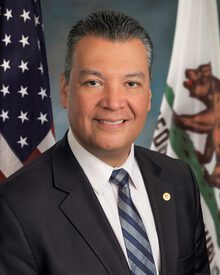
Alex Padilla
D-CA | Primary Sponsor
Legislative Progress
Passed SenateHeld at the desk.
Received in the House.
Message on Senate action sent to the House.
Passed Senate with an amendment by Unanimous Consent. (consideration: CR …
Passed/agreed to in Senate: Passed Senate with an amendment by …
Reported by Mr. Cruz, with an amendment
Passed Senate (inferred from es version)
Placed on Senate Legislative Calendar under General Orders. Calendar No. …
Committee on Commerce, Science, and Transportation. Reported by Senator Cruz …
Committee on Commerce, Science, and Transportation. Ordered to be reported …
Stakeholder Effects
cui bono?How this legislation distributes effects. Mention counts reflect frequency, not effect magnitude.
Oceanic research institutions, Oceanographic researchers, Research universities and laboratories operating oceanographic research vessels
Positive-direction: Oceanic research institutions, Oceanographic researchers
Negative-direction: U.S. Academic Research Fleet vessel operators
High-performance computing vendors, Maritime cybersecurity contractors
Satellite communications equipment providers
Bill Structure & Actor Mappings
Who is "The Secretary" in each section?
- "onr"
- → Office of Naval Research
- "cisa"
- → Cybersecurity and Infrastructure Security Agency
- "nist"
- → National Institute of Standards and Technology
- "director"
- → Director of the National Science Foundation
Key Definitions
Terms defined in this bill
U.S.-flagged UNOLS oceanographic research vessels operated by research universities and laboratories, funded by NSF, and accepted as fleet members.
We use a combination of our own taxonomy and classification in addition to large language models to assess meaning and potential beneficiaries. High confidence means strong textual evidence. Always verify with the original bill text.
Learn more about our methodology