To amend the Public Works and Economic Development Act of 1965 to establish university centers to encourage certain economic development, and for other purposes.
Analysis under review: This bill has generated analysis that may be too generic or incomplete. Clause-level evidence remains available below.
Summary
What This Bill Does
This bill establishes a network of "university centers" at colleges and universities across the country to support regional economic development. It requires the Secretary of Commerce to make grants to higher education institutions so they can provide technical assistance, business development services, and technology transfer to local businesses and communities.
Who Benefits and How
Higher education institutions benefit directly through federal grants of $500,000 to $1,000,000 per year to operate these university centers. The bill specifically prioritizes funding for Historically Black Colleges and Universities (HBCUs), Tribal colleges, Hispanic-Serving Institutions, and other minority-serving institutions, giving them a competitive advantage in receiving awards.
Local and regional businesses benefit from free or subsidized technical assistance, business development services, and access to university research and technology transfer programs. These services could help businesses expand, innovate, and create jobs.
Who Bears the Burden and How
The Department of Commerce bears the administrative burden of implementing this program, including making awards to at least one university center in each state and overseeing their operations. With minimum grants of $500,000 per center and 50+ states, this represents at least $25 million annually in new federal spending.
Taxpayers ultimately fund this program through the Department of Commerce appropriations, though the bill does not specify a funding source.
Key Provisions
- Requires at least one university center in every state, ensuring nationwide geographic coverage
- Sets grant amounts between $500,000 and $1,000,000 per center annually
- Mandates prioritization of minority-serving institutions (HBCUs, Tribal colleges, Hispanic-Serving Institutions)
- Requires centers to partner with existing federal economic development programs including Manufacturing Extension Partnership Centers and Minority Business Development Agency centers
- Directs centers to assist with regional economic data collection, job creation strategies, and innovation cluster development
Evidence Chain:
This summary is generated from the full bill text using AI analysis. Expand "Detailed Analysis" below for identified beneficiaries/burden bearers.
At a Glance
What This Bill Does
Amends the Public Works and Economic Development Act of 1965 to establish university centers aimed at fostering economic development through collaboration with various federal agencies and institutions.
Key Policy Areas
Education, Economics
Primary Purpose
Amends the Public Works and Economic Development Act of 1965 to establish university centers aimed at fostering economic development through collaboration with various federal agencies and institutions.
Policy Domains
Sponsors
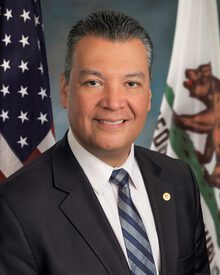
Legislative Progress
IntroducedMr. Padilla introduced the following bill; which was read twice …
Stakeholder Effects
cui bono?How this legislation distributes effects. Mention counts reflect frequency, not effect magnitude.
Institutions of higher education, including historically Black colleges and universities, Tribal colleges and universities, Hispanic-Serving institutions, and minority-serving institutions
Bill Structure & Actor Mappings
Who is "The Secretary" in each section?
- "the_secretary"
- → Secretary of Commerce
We use a combination of our own taxonomy and classification in addition to large language models to assess meaning and potential beneficiaries. High confidence means strong textual evidence. Always verify with the original bill text.
Learn more about our methodology