To amend the Indian Health Care Improvement Act to improve the recruitment and retention of employees in the Indian Health Service, restore accountability in the Indian Health Service, improve health services, and for other purposes.
Analysis under review: This bill has generated analysis that may be too generic or incomplete. Clause-level evidence remains available below.
Summary
What This Bill Does
This bill comprehensively reforms the Indian Health Service (IHS) to address chronic staffing shortages, hold bad actors accountable, and improve healthcare quality for Native Americans. It creates new pay systems comparable to VA hospitals, establishes a centralized credentialing system, and provides liability protection for volunteer healthcare providers.
Who Benefits and How
Native American patients benefit from improved access to care through better-staffed facilities, mandatory timeliness standards, patient advocates, and medical chaperone rights. Healthcare professionals willing to work in underserved IHS facilities receive competitive pay comparable to VA rates, rental assistance, and streamlined credentialing. Tribal governments gain stronger consultation rights and oversight mechanisms.
Who Bears the Burden and How
IHS senior executives face expedited removal procedures (15 business days max) for misconduct, with reduced appeal rights compared to standard civil service protections. IHS administrative staff must comply with new reporting requirements, whistleblower protection rules, and fiscal accountability measures that restrict bonuses if housing/staffing plans are not submitted. State medical boards must respond to IHS information requests about provider disciplinary history.
Key Provisions
- Creates VA-comparable pay system for IHS physicians, dentists, and nurses (Section 101)
- Establishes expedited removal authority for senior executives and employees guilty of misconduct (Sections 106-107)
- Requires mandatory tribal consultation policy updates every 5 years (Section 109)
- Creates Office of Patient Advocacy with patient advocates at each Service unit (Section 112)
- Requires CMS surveys of IHS hospitals every 36 months with public posting of results (Section 305)
Evidence Chain:
This summary is generated from the full bill text using AI analysis. Expand "Detailed Analysis" below for identified beneficiaries/burden bearers.
At a Glance
What This Bill Does
Reforms the Indian Health Service (IHS) to improve healthcare worker recruitment and retention, strengthen accountability for senior executives and employees, enhance patient safety protections, and require better tribal consultation.
Key Policy Areas
Healthcare, Native American Affairs, Federal Personnel, Government Accountability
Primary Purpose
Reforms the Indian Health Service (IHS) to improve healthcare worker recruitment and retention, strengthen accountability for senior executives and employees, enhance patient safety protections, and require better tribal consultation.
Policy Domains
Title I - Recruitment, Retention, and Health Services
Identified Gains
Contextual inference, no direct clause citation- Native American patients
- Healthcare professionals seeking IHS employment
- Indian tribes
- Health professional volunteers
Contextual inference, no direct clause citation
Identified Costs
Contextual inference, no direct clause citation- IHS administrators
- State medical boards
Contextual inference, no direct clause citation
Title II - Accountability
Identified Gains
Contextual inference, no direct clause citation- IHS whistleblowers
- Native American patients
- Congressional oversight
Contextual inference, no direct clause citation
Identified Costs
Contextual inference, no direct clause citation- IHS senior executives
- IHS employees who retaliate against whistleblowers
Contextual inference, no direct clause citation
Title III - Reports
Identified Gains
Contextual inference, no direct clause citation- Congressional oversight
- Native American patients
- GAO
Contextual inference, no direct clause citation
Identified Costs
Contextual inference, no direct clause citation- Secretary of HHS
- IHS Area offices
- CMS
Contextual inference, no direct clause citation
Sponsors
Legislative Progress
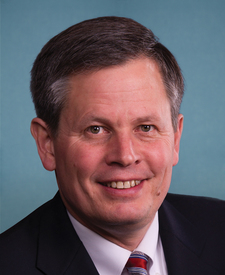
IntroducedMr. Barrasso (for himself, Mr. Thune, Ms. Lummis, Mr. Daines, …
Stakeholder Effects
cui bono?How this legislation distributes effects. Mention counts reflect frequency, not effect magnitude.
Centers for Medicare and Medicaid Services, Department of Health and Human Services, Health professional volunteers at IHS facilities
IHS Service units, IHS employees, Indian Health Service face effects in multiple directions
Positive-direction: Health professional volunteers at IHS facilities, Healthcare administrators with MBA or MHA degrees, IHS Service units in health professional shortage areas, IHS Service units meeting demonstration criteria, IHS Service units serving tribes that contributed funds for facilities, IHS employees and tribal health program employees, IHS employees who report misconduct (whistleblowers), IHS facilities needing administrative staff, IHS whistleblowers, Indian Health Service hiring managers, Indian tribes and Native American patients, Licensed health professionals seeking IHS employment, Native American patients, Native American patients and general public, Native American patients and public, Native American patients at specific Service units, Native American patients at understaffed facilities, Native American patients in underserved areas, Part-time healthcare professionals seeking loan repayment, Physicians, dentists, nurses, and healthcare professionals employed by Indian Health Service, Qualified healthcare job candidates
Negative-direction: Centers for Medicare and Medicaid Services, Department of Health and Human Services, Healthcare providers seeking IHS employment, Healthcare providers seeking IHS positions, Healthcare providers under investigation, IHS Area offices, IHS Senior Executive Service members, IHS Service unit governing boards, IHS Service units and Area offices, IHS employees (non-senior executives), IHS employees and managers who might retaliate, IHS hospitals and skilled nursing facilities, IHS managers who might suppress employee communications to Congress, IHS senior executives (career appointees), IHS senior officials, IHS senior officials (Executive Schedule positions), Indian Health Service administration, Indian Health Service leadership, Locum tenens staffing agencies serving IHS, Secretary of HHS, Secretary of Health and Human Services
Congress, Congress and GAO, Government Accountability Office
Positive-direction: Congress, Congress and GAO, Indian tribes, Indian tribes in states with favorable Medicaid policies, Indian tribes with Medicaid-favorable state policies, Merit Systems Protection Board
Negative-direction: Government Accountability Office, HHS Inspector General
State medical boards, State medical licensing boards
Bill Structure & Actor Mappings
Who is "The Secretary" in each section?
- "the_service"
- → Indian Health Service
- "the_director"
- → Director of Indian Health Service
- "the_secretary"
- → Secretary of Health and Human Services
- "the_service"
- → Indian Health Service
- "the_secretary"
- → Secretary of Health and Human Services
- "the_secretary"
- → Secretary of Health and Human Services
- "the_inspector_general"
- → Inspector General of the Department of Health and Human Services
- "the_comptroller_general"
- → Comptroller General of the United States
Key Definitions
Terms defined in this bill
Healthcare services purchased from or referred to non-IHS providers (replaces 'contract health service')
A career appointee as defined in section 3132(a) of title 5, United States Code
An individual occupying a position at the Service, excluding senior executives, probationary employees, and political appointees
An employee of the Service who discloses information the employee reasonably believes evidences a violation of law, rule, regulation, or Service policy, or gross mismanagement, waste, abuse of authority, or danger to public health or safety
Includes neglect of duty, malfeasance, failure to accept a directed reassignment, and failure to accompany a position in a transfer of function
We use a combination of our own taxonomy and classification in addition to large language models to assess meaning and potential beneficiaries. High confidence means strong textual evidence. Always verify with the original bill text.
Learn more about our methodology