To amend the Adult Education and Family Literacy Act and the Workforce Innovation and Opportunity Act to strengthen adult education.
Analysis under review: This bill has generated analysis that may be too generic or incomplete. Clause-level evidence remains available below.
Summary
What This Bill Does
This bill modernizes adult education and workforce training programs by updating skills definitions to include digital and information literacy, creating 'college and career navigator' positions to help job seekers access training and education, and enabling public libraries to serve as workforce development service points. It also increases federal funding for adult education from $15 million to $25 million and authorizes $135 million annually for library-based career navigator programs.
Who Benefits and How
Public libraries receive new authority and funding ($135 million/year for 5 years) to hire career navigators and provide workforce services, expanding their role beyond traditional functions. Adult education providers benefit from increased funding reservations and flexibility to pilot innovative performance measurement systems. Job seekers and adult learners gain improved access to career guidance through libraries and community organizations, with updated programs that include digital literacy training.
Who Bears the Burden and How
State education agencies face new transparency requirements, including maintaining public websites documenting non-federal funding contributions for adult education programs. Adult education providers participating in accountability pilots must collect and report additional performance data to the Secretary of Education. Local workforce boards must make board membership information publicly available on government websites.
Key Provisions
- Creates 'college and career navigator' role and authorizes $135 million/year for library and community-based navigator programs
- Adds digital literacy and information literacy as core skills throughout workforce and adult education programs
- Increases reservation of funds for national adult education programs from $15 million to $25 million
- Establishes pilot program for states to test innovative performance accountability systems
Evidence Chain:
This summary is generated from the full bill text using AI analysis. Expand "Detailed Analysis" below for identified beneficiaries/burden bearers.
At a Glance
What This Bill Does
Modernizes adult education and workforce development programs by adding digital literacy requirements, creating college and career navigator positions in libraries and community organizations, and authorizing new funding and innovative performance accountability pilot programs
Key Policy Areas
Education, Labor & Employment, Libraries, Community Development
Primary Purpose
Modernizes adult education and workforce development programs by adding digital literacy requirements, creating college and career navigator positions in libraries and community organizations, and authorizing new funding and innovative performance accountability pilot programs
Policy Domains
Title I - Workforce Development Activities
Identified Gains
Contextual inference, no direct clause citation- Public libraries
- Community-based organizations
- Job seekers
- Adult learners
Contextual inference, no direct clause citation
Identified Costs
Contextual inference, no direct clause citation- Local workforce boards
- State workforce agencies
Contextual inference, no direct clause citation
Title II - Adult Education and Family Literacy
Identified Gains
Contextual inference, no direct clause citation- Adult education providers
- English language learners
- Adult literacy programs
Contextual inference, no direct clause citation
Identified Costs
Contextual inference, no direct clause citation- State education agencies
- Eligible providers participating in pilots
Contextual inference, no direct clause citation
Sponsors
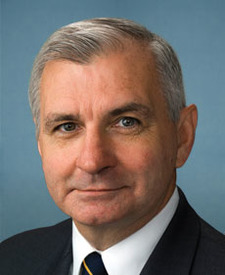
Jack Reed
D-RI | Primary Sponsor

Legislative Progress
IntroducedMr. Reed (for himself and Mr. Young) introduced the following …
Stakeholder Effects
cui bono?How this legislation distributes effects. Mention counts reflect frequency, not effect magnitude.
Department of Education adult education office, Eligible agencies applying for pilot programs, Institute of Education Sciences
Positive-direction: Department of Education adult education office, State adult education agencies receiving leadership funds, State adult education agencies seeking flexibility, States implementing innovative accountability systems
Negative-direction: Eligible agencies applying for pilot programs, Institute of Education Sciences, Local workforce development boards, Secretary of Education responsible for pilot oversight, State education agencies administering adult education
Adult education providers in pilot states, Adult education providers receiving technical assistance, Adult education providers required to teach digital literacy
Positive-direction: Adult education providers in pilot states, Adult education providers receiving technical assistance, Adult educators seeking credentialing support, Adult educators seeking professional development, English literacy and civics education providers, Family literacy programs
Negative-direction: Adult education providers required to teach digital literacy
Adult learners seeking digital skills, Adult learners with learning differences, English language learners (immigrants, refugees)
Public libraries eligible for navigator grants, Public libraries providing workforce services
College and career navigators (new position)
Community-based organizations providing workforce services
Bill Structure & Actor Mappings
Who is "The Secretary" in each section?
- "the_secretary"
- → Secretary of Labor
- "the_secretary"
- → Secretary of Education
- "eligible_agency"
- → State agency responsible for adult education
Note: 'The Secretary' refers to the Secretary of Labor in Title I workforce provisions but Secretary of Education in Title II adult education provisions
Key Definitions
Terms defined in this bill
An individual with knowledge of workforce programs, postsecondary services, and financial aid who supports jobseekers with career guidance, facilitates co-enrollment in programs, and promotes digital literacy and job readiness
The level required for placement in college-level course work rather than developmental education, as demonstrated by a placement test score or other measure
Intentional, simultaneous enrollment in more than one one-stop partner program to leverage resources and eliminate duplication
Skills for using technology to find, evaluate, organize, create, and communicate information, and developing digital citizenship
Skills needed to find, retrieve, understand, evaluate, analyze, discern reliability of, and use information across all formats
We use a combination of our own taxonomy and classification in addition to large language models to assess meaning and potential beneficiaries. High confidence means strong textual evidence. Always verify with the original bill text.
Learn more about our methodology