Prison Staff Safety Enhancement Act
Summary
What This Bill Does
Responds to a 2023 DOJ Inspector General report finding that inmate-on-staff sexual harassment and sexual assault in the Bureau of Prisons is widespread, that BOP data collection is inadequate, and that BOP lacks systems to evaluate mitigation strategies. The bill gives BOP 90 days to fully implement every recommendation from that report or submit a failure explanation and implementation timeline to Congress. After implementation, the IG must collect updated fiscal year 2022-2025 data, analyze prevalence, scope, mitigation steps, and punishments, and send recommendations to Congress and the Attorney General.
Who Benefits and How
BOP correctional officers, prison employees, union representatives, prison staff families, and future staff victims benefit from enforceable deadlines for data collection, mitigation, punishment review, and national standards. DOJ Inspector General investigators gain a statutory mandate to obtain updated BOP data and evaluate whether reforms are sufficient. Congress and the Attorney General receive the analysis needed to set national prevention and punishment rules.
Who Bears the Burden and How
The Bureau of Prisons must implement IG recommendations within 90 days or explain noncompliance, provide updated data on inmate sexual harassment and assault against staff for fiscal years 2022 through 2025, and support IG review of punishments over the prior five years. The Attorney General must promulgate national standards within one year after receiving the IG analysis. Incarcerated individuals who commit sexual harassment or assault face clearer and potentially stronger prevention, reduction, and punishment standards.
Key Provisions
- Requires BOP to implement each 2023 DOJ Inspector General recommendation within 90 days.
- Requires BOP to report to Congress if any recommendation is not fully implemented by the deadline.
- Requires updated fiscal year 2022-2025 incident data on sexual harassment and assault by incarcerated individuals against correctional officers and employees.
- Directs the Inspector General to analyze data, mitigation steps, punishment practices, and additional recommendations.
- Requires the Attorney General to promulgate national prevention, reduction, and punishment standards within one year of receiving the IG analysis.
Evidence Chain:
This summary is generated from the full bill text using AI analysis. Expand "Detailed Analysis" below for identified beneficiaries/burden bearers with clause-level evidence links.
At a Glance
What This Bill Does
Forces the Bureau of Prisons to implement DOJ Inspector General recommendations on inmate-on-staff sexual harassment and assault, requires updated incident data and IG analysis, and directs the Attorney General to issue national prevention and punishment standards.
Key Policy Areas
Criminal Justice, Federal Workforce, Prison Administration
Primary Purpose
Forces the Bureau of Prisons to implement DOJ Inspector General recommendations on inmate-on-staff sexual harassment and assault, requires updated incident data and IG analysis, and directs the Attorney General to issue national prevention and punishment standards.
Policy Domains
Sections 2-3 - BOP staff sexual harassment and assault reforms
Identified Gains
- BOP correctional officers
- Bureau of Prisons employees
- Prison staff families
- DOJ Inspector General investigators
- Congressional oversight committees
Identified Costs
- Bureau of Prisons
- Attorney General
- DOJ Inspector General
- Incarcerated individuals who commit staff sexual harassment
- Incarcerated individuals who commit staff sexual assault
Sponsors



Legislative Progress
Passed SenateHeld at the desk.
Received in the House.
Message on Senate action sent to the House.
Passed Senate without amendment by Unanimous Consent. (consideration: CR S2643; …
Passed/agreed to in Senate: Passed Senate without amendment by Unanimous …
Senate Committee on the Judiciary discharged by Unanimous Consent.
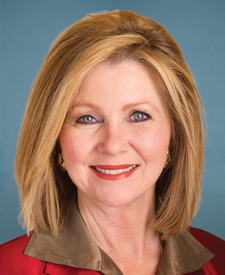
Mrs. Blackburn (for herself and Mr. Ossoff) introduced the following …
Passed Senate (inferred from es version)
Read twice and referred to the Committee on the Judiciary.
Introduced in Senate
Stakeholder Effects
cui bono?How this legislation distributes effects. Mention counts reflect frequency, not effect magnitude.
BOP correctional officers, Bureau of Prisons, Bureau of Prisons employees
Positive-direction: BOP correctional officers, Bureau of Prisons employees
Negative-direction: Bureau of Prisons, DOJ Inspector General
Incarcerated individuals who commit staff sexual harassment
Bill Structure & Actor Mappings
Who is "The Secretary" in each section?
- "bureau"
- → Bureau of Prisons
- "attorney_general"
- → Attorney General
- "inspector_general"
- → DOJ Inspector General
Key Definitions
Terms defined in this bill
Sexual harassment is unwelcome sexual conduct affecting employment or work environment; sexual assault references specified Uniform Code of Military Justice offenses.
We use a combination of our own taxonomy and classification in addition to large language models to assess meaning and potential beneficiaries. High confidence means strong textual evidence. Always verify with the original bill text.
Learn more about our methodology