ENFORCE Act
Summary
What This Bill Does
Amends federal criminal statutes to close enforcement gaps around child sexual abuse material and obscene visual depictions of child sexual abuse. Section 2 rewrites 18 U.S.C. 2252A(a)(7) so production is covered when the material will be transported in interstate or foreign commerce, was produced using materials that moved in commerce, or actually moved in commerce. Section 3 adds 18 U.S.C. 1466A offenses to several enforcement tools: no statute of limitations, Adam Walsh Act sex offender registration, pretrial detention presumptions, supervised release provisions, and evidence custody rules.
Who Benefits and How
Child exploitation victims, identifiable minors depicted in illegal material, federal prosecutors, FBI and Homeland Security Investigations child-exploitation agents, U.S. Marshals supervising sex offender registration, and federal courts benefit from clearer charging authority and stronger procedural tools. Victims benefit specifically because visual depictions in section 1466A cases must remain in government or court custody, and identifiable minors get the same access pathway that child-pornography victims have under section 3509(m)(3).
Who Bears the Burden and How
Defendants charged with section 1466A offenses face no limitations period, sex offender registration, pretrial detention eligibility, and supervised release consequences that previously applied to other child-exploitation crimes. Defendants charged with producing child sexual abuse material face a clarified interstate-commerce basis for prosecution. Federal courts, federal prosecutors, and government evidence custodians must keep covered visual depictions under court or government control rather than allowing reproduction during criminal proceedings.
Key Provisions
- Amends 18 U.S.C. 2252A(a)(7) to clarify three interstate-commerce links for production of child sexual abuse material.
- Adds section 1466A offenses to the no-statute-of-limitations rule in 18 U.S.C. 3299.
- Adds section 1466A offenses to Adam Walsh Act sex offender registration coverage.
- Requires visual depictions in section 1466A criminal proceedings to remain in government or court custody.
- Provides identifiable minors depicted in section 1466A material access rights mirroring section 3509(m)(3).
- Expands pretrial detention and supervised release provisions to section 1466A offenses.
Evidence Chain:
This summary is generated from the full bill text using AI analysis. Expand "Detailed Analysis" below for identified beneficiaries/burden bearers with clause-level evidence links.
At a Glance
What This Bill Does
Strengthens federal criminal enforcement for child sexual abuse material and obscene visual depictions of child sexual abuse by clarifying production jurisdiction, adding section 1466A offenses to enforcement tools, and preserving custody controls for visual evidence.
Key Policy Areas
Criminal Justice, Child Protection, Federal Courts
Primary Purpose
Strengthens federal criminal enforcement for child sexual abuse material and obscene visual depictions of child sexual abuse by clarifying production jurisdiction, adding section 1466A offenses to enforcement tools, and preserving custody controls for visual evidence.
Policy Domains
Sections 2-3 - Child exploitation production and section 1466A enforcement
Identified Gains
- Child exploitation victim advocacy organizations
- Families of identifiable minors depicted in illegal material
- Federal courts handling section 1466A cases
- FBI child-exploitation investigators
- Homeland Security Investigations agents
- U.S. Marshals Service registration officials
Identified Costs
- Defense attorneys representing section 1466A defendants
- Defense attorneys representing production defendants
- Federal courts
- Federal prosecutors
- Government evidence custody staff
- U.S. Marshals Service registration officials
Sponsors
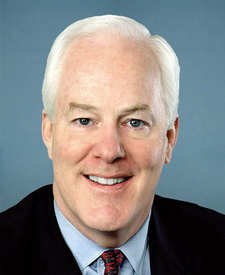
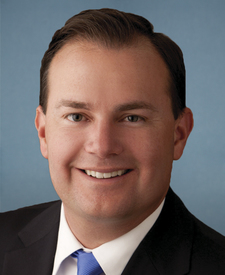
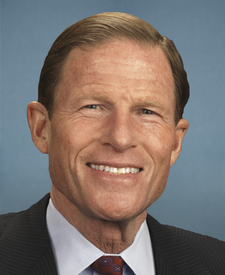
Legislative Progress
Passed SenateHeld at the desk.
Received in the House.
Message on Senate action sent to the House.
Passed Senate without amendment by Unanimous Consent. (consideration: CR S8754-8755; …
Passed/agreed to in Senate: Passed Senate without amendment by Unanimous …
Senate Committee on the Judiciary discharged by Unanimous Consent.
Mr. Cornyn (for himself, Mr. Blumenthal, Mr. Lee, and Mr. …
Passed Senate (inferred from es version)
Read twice and referred to the Committee on the Judiciary.
Introduced in Senate
Stakeholder Effects
cui bono?How this legislation distributes effects. Mention counts reflect frequency, not effect magnitude.
Federal courts handling section 1466A cases, Federal prosecutors handling child exploitation cases, Federal prosecutors handling obscenity cases
Positive-direction: Federal prosecutors handling child exploitation cases, Federal prosecutors handling obscenity cases
Negative-direction: Federal courts handling section 1466A cases, Government evidence custodians
Child exploitation offenders, Defendants charged with producing child sexual abuse material, Defendants charged with section 1466A offenses
Child exploitation victims, Identifiable minors depicted in illegal material
Bill Structure & Actor Mappings
Who is "The Secretary" in each section?
- "government"
- → Federal prosecutors and courts
- "attorney_general"
- → Attorney General
Key Definitions
Terms defined in this bill
Production is covered if the producer knows material will move in commerce, used materials that moved in commerce, or the material did move in commerce.
Federal offenses involving obscene visual representations of child sexual abuse.
We use a combination of our own taxonomy and classification in addition to large language models to assess meaning and potential beneficiaries. High confidence means strong textual evidence. Always verify with the original bill text.
Learn more about our methodology