To increase the number of judgeships for the United States Court of Appeals for the Ninth Circuit and certain district courts of the United States, and for other purposes.
Analysis under review: This bill has generated analysis that may be too generic or incomplete. Clause-level evidence remains available below.
Summary
What This Bill Does
The Judicial Efficiency Improvement Act splits the current Ninth Circuit Court of Appeals (the largest and most backlogged federal circuit) into two circuits. The new Ninth Circuit would cover California, Hawaii, Guam, and the Northern Mariana Islands, while a new Twelfth Circuit would cover Alaska, Arizona, Idaho, Montana, Nevada, Oregon, and Washington. The bill also creates approximately 66 new federal district court judgeships phased in over six rounds from 2025 to 2035.
Who Benefits and How
Litigants in the current Ninth Circuit benefit from reduced caseloads and faster case resolution. The legal profession in the affected states benefits from more judges and expanded court capacity. The states assigned to the new Twelfth Circuit (including conservative-leaning Alaska, Idaho, Montana, Arizona, and Nevada) gain a separate circuit court, potentially shifting the ideological composition of rulings affecting those states. Construction and legal support industries benefit from new court facilities and judicial staff hiring.
Who Bears the Burden and How
U.S. taxpayers bear the cost of new judgeships (authorized appropriations growing from M to M annually by 2035), new court facilities, and administrative costs. The Administrative Office of the U.S. Courts faces major organizational restructuring. Existing Ninth Circuit judges face reassignment and administrative disruption during the transition.
Key Provisions
- Splits the Ninth Circuit into a new Ninth (CA, HI, Guam, CNMI) and Twelfth (AK, AZ, ID, MT, NV, OR, WA) circuits with headquarters in Seattle
- Creates 2 new circuit judgeships for the new Ninth Circuit and appoints approximately 66 new district judges across six phased rounds through 2035
- Authorizes appropriations growing from M/year to M/year (inflation-adjusted) for new court positions and facilities
Evidence Chain:
This summary is generated from the full bill text using AI analysis. Expand "Detailed Analysis" below for identified beneficiaries/burden bearers with clause-level evidence links.
At a Glance
What This Bill Does
Splits the Ninth Circuit Court of Appeals into a new Ninth Circuit (California, Hawaii, Guam, Northern Mariana Islands) and a new Twelfth Circuit (Alaska, Arizona, Idaho, Montana, Nevada, Oregon, Washington), and creates dozens of new district court judgeships phased in over 10 years.
Key Policy Areas
Judiciary, Federal Government Administration
Primary Purpose
Splits the Ninth Circuit Court of Appeals into a new Ninth Circuit (California, Hawaii, Guam, Northern Mariana Islands) and a new Twelfth Circuit (Alaska, Arizona, Idaho, Montana, Nevada, Oregon, Washington), and creates dozens of new district court judgeships phased in over 10 years.
Policy Domains
Judicial Efficiency Improvement Act
Identified Gains
- Litigants in the current Ninth Circuit (faster resolution)
- Legal profession in affected states
- Federal court construction and support industries
- Conservative-leaning states gaining a new circuit
Identified Costs
- U.S. taxpayers (appropriations for new judges and facilities)
- Administrative Office of the U.S. Courts (restructuring)
- Existing Ninth Circuit judges and staff (transition disruption)
Sponsors


Legislative Progress
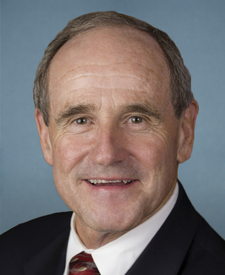
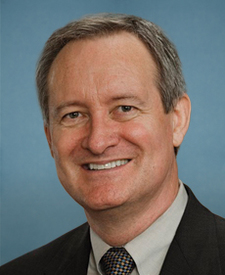
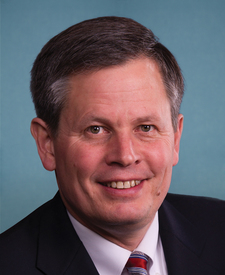
IntroducedMr. Sullivan (for himself, Mr. Crapo, Mr. Daines, Ms. Murkowski, …
Stakeholder Effects
cui bono?How this legislation distributes effects. Mention counts reflect frequency, not effect magnitude.
Administrative Office of the U.S. Courts, Court administrative staff and clerks, Existing Ninth Circuit judges
Positive-direction: Court administrative staff and clerks
Negative-direction: Administrative Office of the U.S. Courts, Taxpayers
Litigants in overburdened federal districts, Litigants in the new Ninth Circuit, Litigants with pending Ninth Circuit cases
Legal profession in California, Legal profession in affected districts
Federal courthouse construction and support firms, Federal courthouse construction contractors
Bill Structure & Actor Mappings
Who is "The Secretary" in each section?
- "the_director"
- → Director of the Administrative Office of the United States Courts
- "the_president"
- → President of the United States
Key Definitions
Terms defined in this bill
The twelfth judicial circuit established by the amendment (covering Alaska, Arizona, Idaho, Montana, Nevada, Oregon, Washington)
The ninth judicial circuit established by the amendment (covering California, Guam, Hawaii, Northern Mariana Islands)
The ninth judicial circuit as in existence on the day before the effective date of this Act
We use a combination of our own taxonomy and classification in addition to large language models to assess meaning and potential beneficiaries. High confidence means strong textual evidence. Always verify with the original bill text.
Learn more about our methodology