Right to Override Act
Summary
What This Bill Does
The bill defines key terms including adverse employment action (broad list covering termination, discipline, schedule changes, privilege revocation), AI/CDSS, covered entity (hospitals, insurers, PBMs), and health care, requires covered entities to adopt policies ensuring AI/CDSS does not substitute for clinical judgment, allowing timely overrides, providing feedback mechanisms, prohibiting use of individual override data, and requires grants HHS Office for Civil Rights authority to investigate and impose civil monetary penalties for Title I violations using same procedures as HIPAA enforcement. It relies on compliance mandates, definition changes, product standards, and liability protections. The main policy areas are Healthcare, Labor and Employment, Finance, and Labor.
Who Benefits and How
Health care professionals using AI/CDSS could face reduced risk, Health care professionals overriding AI recommendations could face reduced risk, and Health care workers filing complaints could face reduced risk.
Who Bears the Burden and How
HHS Office for Civil Rights would take on compliance duties, Department of Labor would take on compliance duties, and Hospitals implementing AI clinical tools would take on compliance duties.
Key Provisions
- Defines key terms including adverse employment action (broad list covering termination, discipline, schedule changes, privilege revocation), AI/CDSS, covered entity (hospitals, insurers, PBMs), and health care...
- Requires covered entities to adopt policies ensuring AI/CDSS does not substitute for clinical judgment, allowing timely overrides, providing feedback mechanisms, prohibiting use of individual override data...
- Requires grants HHS Office for Civil Rights authority to investigate and impose civil monetary penalties for Title I violations using same procedures as HIPAA enforcement.
- Authorizes HHS Secretary to prescribe regulations for Title I, with mandatory consultation with DOL and optional consultation with AI experts and employment agencies.
- Prohibits adverse employment actions against health care professionals for overriding AI/CDSS outputs when done consistent with Section 101 requirements.
Evidence Chain:
This summary is generated from the full bill text using AI analysis. Expand "Detailed Analysis" below for identified beneficiaries/burden bearers with clause-level evidence links.
At a Glance
What This Bill Does
The bill defines key terms including adverse employment action (broad list covering termination, discipline, schedule changes, privilege revocation), AI/CDSS, covered entity (hospitals, insurers, PBMs), and health care, requires covered entities to adopt policies ensuring AI/CDSS does not substitute for clinical judgment, allowing timely overrides, providing feedback mechanisms, prohibiting use of individual override data, and requires grants HHS Office for Civil Rights authority to investigate and impose civil monetary penalties for Title I violations using same procedures as HIPAA enforcement.
Key Policy Areas
Healthcare, Labor and Employment, Finance, Labor
Primary Purpose
The bill defines key terms including adverse employment action (broad list covering termination, discipline, schedule changes, privilege revocation), AI/CDSS, covered entity (hospitals, insurers, PBMs), and health care, requires covered entities to adopt policies ensuring AI/CDSS does not substitute for clinical judgment, allowing timely overrides, providing feedback mechanisms, prohibiting use of individual override data, and requires grants HHS Office for Civil Rights authority to investigate and impose civil monetary penalties for Title I violations using same procedures as HIPAA enforcement.
Policy Domains
Title I - AI/CDSS Override Policies and HHS Enforcement
Identified Gains
- Health care professionals using AI/CDSS
- Health care professionals overriding AI recommendations
- Health care workers filing complaints
- Health care professionals with override complaints
- Health care professionals subject to AI-related discipline
Identified Costs
- HHS Office for Civil Rights
- Department of Labor
- Hospitals implementing AI clinical tools
- Health care employers violating worker protections
- Pharmacy benefit managers using AI for prior auth
Sponsors

Legislative Progress
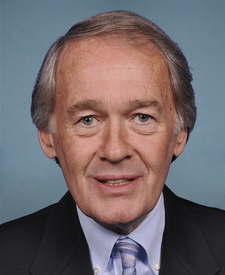
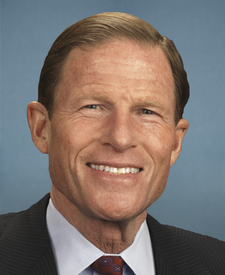
In CommitteeMr. Markey (for himself and Mr. Blumenthal) introduced the following …
Read twice and referred to the Committee on Health, Education, …
Introduced in Senate
Stakeholder Effects
cui bono?How this legislation distributes effects. Mention counts reflect frequency, not effect magnitude.
Covered entities facing multi-state enforcement, Covered entities seeking compliance guidance, Covered entities violating AI/CDSS requirements
Positive-direction: Covered entities seeking compliance guidance, Health care professionals overriding AI recommendations, Health care professionals seeking rights information, Health care professionals subject to AI-related discipline, Health care professionals using AI/CDSS, Health care professionals with override complaints, Health care workers filing complaints
Negative-direction: Covered entities facing multi-state enforcement, Covered entities violating AI/CDSS requirements, Health care employers seeking to discipline override behavior, Health care employers violating worker protections, Hospitals and health systems using AI/CDSS, Hospitals implementing AI clinical tools
Health insurers using AI for coverage decisions, Pharmacy benefit managers using AI for prior auth
State attorneys general, State privacy regulators
Bill Structure & Actor Mappings
Who is "The Secretary" in each section?
- "the_secretary"
- → Secretary of Health and Human Services
- "covered_entity"
- → Health care organization using AI/CDSS (hospital, insurer, PBM, etc.)
- "the_secretary"
- → Secretary of Labor
- "covered_entity"
- → Health care organization using AI/CDSS
- "the_secretary"
- → Secretary of Health and Human Services
Note: 'The Secretary' refers to Secretary of HHS in Title I but Secretary of Labor in Title II
Key Definitions
Terms defined in this bill
Termination, suspension, demotion, discipline, schedule changes, denial of benefits, revocation of privileges, adverse performance reviews, or other materially adverse modifications
Technology supporting clinical decisions using algorithms or ML models that produces outputs relevant to patient treatment
Hospitals, health plans, insurers, PBMs, or other entities using AI/CDSS (excludes developers and researchers)
Licensed individuals providing health care services including physicians, nurses, pharmacists, therapists, etc.
We use a combination of our own taxonomy and classification in addition to large language models to assess meaning and potential beneficiaries. High confidence means strong textual evidence. Always verify with the original bill text.
Learn more about our methodology