To develop economic tools to deter aggression by the People's Republic of China against Taiwan.
Sponsors
Legislative Progress
ReportedReported by Mr. Risch with an amendment
Mr. Risch introduced the following bill; which was read twice …
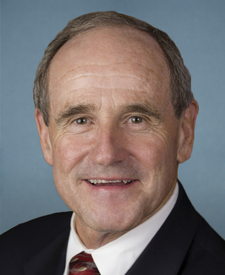
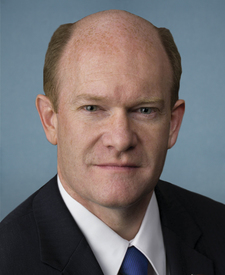
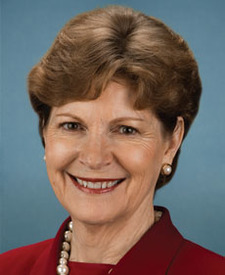
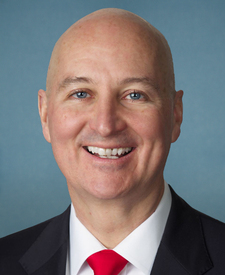
Mr. Risch (for himself, Mrs. Shaheen, Mr. Coons, and Mr. …
Summary
What This Bill Does
This bill creates a government task force to plan economic sanctions against China in case it attacks or invades Taiwan. The task force won't actually impose any sanctions - it just develops a detailed playbook identifying which Chinese companies and industries would be targeted and how to coordinate with U.S. allies. Think of it as "war-gaming" economic warfare before it happens.
Who Benefits and How
Taiwan benefits from deterrence - the act signals to China that the U.S. is ready to hit back economically if Taiwan is threatened. U.S. allies in the Indo-Pacific region benefit from having a coordinated response plan that could protect them from Chinese aggression. Defense contractors and national security consultants may gain from supporting the sanctions planning effort. Companies trying to reduce their dependence on China may benefit as this accelerates supply chain diversification discussions.
Who Bears the Burden and How
Chinese state-owned enterprises, financial institutions, and companies in shipping, logistics, energy, aviation, ground transportation, and technology sectors face increased regulatory risk - they could be future sanctions targets, which affects their ability to do business globally. U.S. companies with significant operations in China or heavy reliance on Chinese suppliers face uncertainty and potential future disruptions. The State Department and Treasury Department bear the administrative burden of creating the task force, conducting extensive research, and producing annual classified reports to Congress.
Key Provisions
- Requires the State Department and Treasury to establish a "PRC Sanctions Task Force" within 180 days of enactment
- Task force must identify Chinese military and civilian entities that could be sanctioned if China attacks Taiwan, with special focus on shipping, logistics, energy, maritime, aviation, ground transportation, and technology sectors
- Task force must analyze the economic consequences for the U.S., China, and allies of imposing various types of sanctions
- Requires annual classified reports to eight congressional committees on identified targets, economic impacts, mitigation strategies, and coordination with allies
- Explicitly states that no sanctions are "self-executing" - they must be authorized by separate legislation
Evidence Chain:
This summary is derived from the structured analysis below. See "Detailed Analysis" for per-title beneficiaries/burden bearers with clause-level evidence links.
Primary Purpose
Establishes a task force to develop economic sanctions and deterrence tools to prevent Chinese military aggression against Taiwan.
Policy Domains
Legislative Strategy
"Pre-emptive deterrence through sanctions planning - creates planning infrastructure without immediately imposing sanctions, signaling readiness to respond to Chinese aggression"
Likely Beneficiaries
- Taiwan (benefits from deterrence and potential economic support)
- Defense contractors and military strategists (sanctions planning creates strategic advantage)
- U.S. allies in Indo-Pacific region (benefits from coordinated response planning)
- Companies seeking to decouple from China (sanctions planning may accelerate supply chain diversification)
Likely Burden Bearers
- Chinese state-owned enterprises (identified as potential sanctions targets)
- Chinese shipping, logistics, energy, maritime, aviation, ground transportation, and technology sectors (explicitly named as target sectors)
- Chinese government officials and CCP members (identified as potential sanctions targets)
- Chinese financial institutions (identified as potential sanctions targets)
- U.S. and allied companies with significant PRC exposure (face potential economic disruption from future sanctions)
- Global financial system (potential stability concerns from sanctions on major economy)
Bill Structure & Actor Mappings
Who is "The Secretary" in each section?
- "dni"
- → Director of National Intelligence
- "the_director"
- → Director of the Office of Foreign Assets Control (OFAC) of the Department of the Treasury
- "the_task_force"
- → PRC Sanctions Task Force (led by Coordinator for Sanctions of State Dept and Director of OFAC)
- "the_coordinator"
- → Coordinator for Sanctions of the Department of State
- "appropriate_congressional_committees"
- → Foreign Relations, Banking, Commerce, Finance (Senate); Foreign Affairs, Financial Services, Energy & Commerce, Ways & Means (House)
Key Definitions
Terms defined in this bill
Committee on Foreign Relations of the Senate; Committee on Banking, Housing, and Urban Affairs of the Senate; Committee on Commerce, Science, and Transportation of the Senate; Committee on Finance of the Senate; Committee on Foreign Affairs of the House; Committee on Financial Services of the House; Committee on Energy and Commerce of the House; Committee on Ways and Means of the House
People's Republic of China
The interagency task force established pursuant to section 4
We use a combination of our own taxonomy and classification in addition to large language models to assess meaning and potential beneficiaries. High confidence means strong textual evidence. Always verify with the original bill text.
Learn more about our methodology