Health Care Workforce Expansion Act of 2025
Summary
What This Bill Does
The bill establishes new grant programs under the Higher Education Act to cover tuition and fees for medical, dental, and nursing students, with service obligations for medical (primary care) and dental (rural) graduates, defines eligible institutions for MED Grants as medical schools and osteopathic schools, and medical school candidates as students pursuing MD or DO degrees, and establishes the MED Grant program requiring the Secretary of Education to pay tuition and required fees for qualifying medical school candidates, with 85% of funds advanced to institutions before each payment period. It relies on grants, appropriations, definition changes, and compliance mandates. The main policy areas are Education, Healthcare Workforce, and Healthcare.
Who Benefits and How
Nursing students could see lower costs, Medical school students could see lower costs, and Dental school students could see lower costs.
Who Bears the Burden and How
Federal taxpayers could face higher costs, Federal budget/taxpayers could face higher costs, and Department of Education would take on compliance duties.
Key Provisions
- Establishes new grant programs under the Higher Education Act to cover tuition and fees for medical, dental, and nursing students, with service obligations for medical (primary care) and dental (rural) graduates.
- Defines eligible institutions for MED Grants as medical schools and osteopathic schools, and medical school candidates as students pursuing MD or DO degrees.
- Establishes the MED Grant program requiring the Secretary of Education to pay tuition and required fees for qualifying medical school candidates, with 85% of funds advanced to institutions before each payment period.
- Sets application requirements for MED Grants and establishes 10-year primary care service obligation for recipients.
- Establishes mandatory appropriations starting July 1, 2026 for MED Grants in whatever sums are necessary to fund all eligible applicants.
Evidence Chain:
This summary is generated from the full bill text using AI analysis. Expand "Detailed Analysis" below for identified beneficiaries/burden bearers with clause-level evidence links.
At a Glance
What This Bill Does
The bill establishes new grant programs under the Higher Education Act to cover tuition and fees for medical, dental, and nursing students, with service obligations for medical (primary care) and dental (rural) graduates, defines eligible institutions for MED Grants as medical schools and osteopathic schools, and medical school candidates as students pursuing MD or DO degrees, and establishes the MED Grant program requiring the Secretary of Education to pay tuition and required fees for qualifying medical school candidates, with 85% of funds advanced to institutions before each payment period.
Key Policy Areas
Education, Healthcare Workforce, Healthcare
Primary Purpose
The bill establishes new grant programs under the Higher Education Act to cover tuition and fees for medical, dental, and nursing students, with service obligations for medical (primary care) and dental (rural) graduates, defines eligible institutions for MED Grants as medical schools and osteopathic schools, and medical school candidates as students pursuing MD or DO degrees, and establishes the MED Grant program requiring the Secretary of Education to pay tuition and required fees for qualifying medical school candidates, with 85% of funds advanced to institutions before each payment period.
Policy Domains
Section 1 - Short Title
Identified Gains
- Nursing students
- Medical school students
- Dental school students
- Nursing schools
- Medical schools and osteopathic schools
Identified Costs
- Federal taxpayers
- Federal budget/taxpayers
- Department of Education
- Medicare Trust Fund
- Medical students who do not complete service obligation
Sponsors
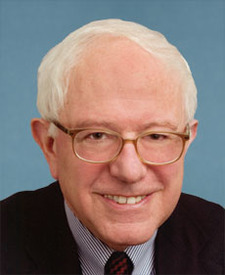
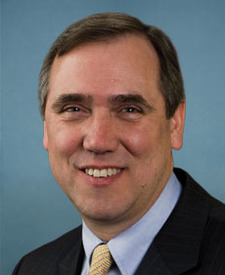
Legislative Progress
In CommitteeMr. Sanders (for himself and Mr. Merkley) introduced the following …
Read twice and referred to the Committee on Health, Education, …
Introduced in Senate
Stakeholder Effects
cui bono?How this legislation distributes effects. Mention counts reflect frequency, not effect magnitude.
Accredited nursing schools, Dental school students, Dental schools
Dentists relocating to rural areas, Healthcare facilities seeking nurses, Healthcare professionals relocating to rural areas
Federal budget/taxpayers, Patients in primary care settings, Rural communities lacking healthcare access
Positive-direction: Patients in primary care settings, Rural communities lacking healthcare access
Negative-direction: Federal budget/taxpayers, Taxpayers
Dental students who complete rural service, Dental students who do not complete service obligation
Positive-direction: Dental students who complete rural service
Negative-direction: Dental students who do not complete service obligation
Medical students who complete primary care service
Medical students who do not complete service obligation
Bill Structure & Actor Mappings
Who is "The Secretary" in each section?
- "the_secretary"
- → Secretary of Education
- "the_secretary"
- → Secretary of Education
- "the_secretary"
- → Secretary of Education
- "the_secretary"
- → Secretary of Health and Human Services
Note: The Secretary refers to Secretary of Education for student grant programs (Sections 420S-420CC under Higher Education Act) but refers to Secretary of Health and Human Services for institutional expansion grants (Section 3 amendments to Public Health Service Act)
Key Definitions
Terms defined in this bill
An institution of higher education that is a school of medicine or school of osteopathic medicine as defined in section 799B of the Public Health Service Act
A student in attendance at an eligible institution pursuing a professional doctor of medicine or doctor of osteopathic medicine degree
An institution of higher education that is a school of dentistry as defined in section 799B of the Public Health Service Act
A student in attendance at an eligible institution pursuing a professional dental degree
Has the meaning given that term in section 861(b)(2) of the Higher Education Act
An accredited school of nursing as defined in section 801 of the Public Health Service Act at an institution of higher education
A student in attendance at an eligible institution
Practice primary care as a physician for at least 10 years after training within 15 years of completing degree
Practice general dental care in a rural area for at least 10 years after training within 15 years of completing degree
We use a combination of our own taxonomy and classification in addition to large language models to assess meaning and potential beneficiaries. High confidence means strong textual evidence. Always verify with the original bill text.
Learn more about our methodology