Scam Compound Accountability and Mobilization Act
Summary
What This Bill Does
Establishes a seven-year federal campaign against international scam compounds, with priority attention to Southeast Asia but global coverage. The bill tells the Secretary of State, working with the Attorney General, Treasury Secretary, and other agencies, to produce a strategy within 180 days, identify enabling and impacted countries, map existing foreign-assistance programs, and set performance measures for prevention, survivor support, law-enforcement coordination, sanctions, and asset recovery. It also creates an interagency task force to keep the strategy current and requires annual public status reviews.
Who Benefits and How
U.S. victims of cyber-enabled fraud and U.S. citizens harmed by scam-compound schemes benefit from a more organized federal response and from a Justice Department review of whether forfeited assets can be used for financial redress. Human trafficking survivors forced into criminality benefit because the strategy must use a victim-centered approach and work with foreign governments, border officials, civil society, and private platforms to identify victims and avoid punishing people acting under duress. Partner governments and multilateral institutions get a clearer U.S. coordination framework for information sharing, regulatory action, and assistance.
Who Bears the Burden and How
Foreign persons, vessels, companies, financial facilitators, and technology providers that materially support scam compounds can face IEEPA-style blocking sanctions, loss of access to U.S.-controlled property, and civil or criminal penalties for violations. Countries that permit or fail to police scam-compound operations can be publicly listed as enabling countries in annual reviews. The State Department, Department of Justice, Treasury Department, and other agencies take on strategy writing, task-force staffing, sanctions reporting every 180 days, annual public reporting, and a forfeiture-law redress assessment.
Key Provisions
- Identifies scam compounds as a cyber-fraud, trafficking, money-laundering, and national-security threat, citing $13.7 billion in reported U.S. cyber-enabled fraud losses in 2024.
- Defines enabling countries, impacted countries, forced criminality, relevant foreign assistance programs, and significant transnational criminal organizations for the anti-scam-compound framework.
- Requires a global State Department strategy within 180 days that identifies structural vulnerabilities, affected countries, existing assistance programs, resource gaps, prevention tools, survivor support, and performance indicators.
- Establishes a State-Justice-Treasury interagency task force to implement and update the strategy, monitor scam compounds, list enabling and impacted countries, and publish annual status reviews.
- Authorizes the President to block property and transactions of foreign persons that materially assist scam compounds, recruitment fraud, trafficking, cyber-enabled fraud, money laundering, or enabling services.
- Requires sanctions-use reports every 180 days and a Justice Department report on using forfeited assets to compensate U.S. citizen victims of scam-compound operations.
- Sunsets the act seven years after enactment.
Evidence Chain:
This summary is generated from the full bill text using AI analysis. Expand "Detailed Analysis" below for identified beneficiaries/burden bearers with clause-level evidence links.
At a Glance
What This Bill Does
Creates a State Department-led global strategy, interagency task force, sanctions authority, and victim-redress review to combat overseas scam compounds tied to cyber-enabled fraud, forced labor, trafficking, money laundering, and PRC-linked transnational criminal organizations.
Key Policy Areas
Foreign Affairs, Criminal Justice, Financial Regulation, Human Trafficking
Primary Purpose
Creates a State Department-led global strategy, interagency task force, sanctions authority, and victim-redress review to combat overseas scam compounds tied to cyber-enabled fraud, forced labor, trafficking, money laundering, and PRC-linked transnational criminal organizations.
Policy Domains
Sections 2-8 - Global scam-compound enforcement and victim redress
Identified Gains
- U.S. fraud victims and their families
- Human trafficking survivor-service providers
- Partner government law enforcement agencies
- Civil society anti-trafficking organizations
- Private internet platform providers used in recruitment-fraud prevention
- Federal Bureau of Investigation cyber-fraud investigators
Identified Costs
- Foreign recruitment-fraud operators and money-laundering service providers
- U.S. banks and money-transfer providers processing blocked-property transactions
- Technology service providers enabling scam-compound services
- Country law enforcement agencies that permit scam compounds
- State Department, Justice Department, and Treasury Department
- Congressional committees receiving sanctions and strategy reports
Sponsors
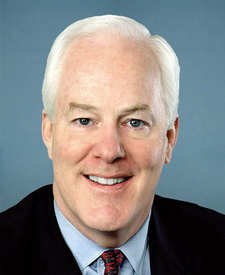



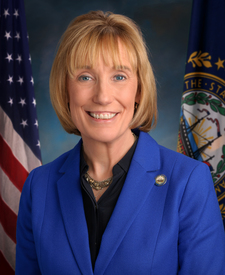
Legislative Progress
Passed SenateHeld at the desk.
Received in the House.
Message on Senate action sent to the House.
Passed Senate with an amendment by Unanimous Consent. (consideration: CR …
Passed/agreed to in Senate: Passed Senate with an amendment by …
Reported by Mr. Risch, with an amendment
Passed Senate (inferred from es version)
Placed on Senate Legislative Calendar under General Orders. Calendar No. …
Committee on Foreign Relations. Reported by Senator Risch with an …
Committee on Foreign Relations. Ordered to be reported with an …
Stakeholder Effects
cui bono?How this legislation distributes effects. Mention counts reflect frequency, not effect magnitude.
Department of Justice, Federal departments and agencies involved in anti-fraud efforts, State Department
Positive-direction: State Department scam-compound strategy program
Negative-direction: Department of Justice, Federal departments and agencies involved in anti-fraud efforts, State Department, Treasury Department
Foreign persons supporting scam compound operations, Foreign persons supporting scam-compound operations, Transnational criminal organizations operating scam compounds
Financial institutions facilitating scam compound money laundering, Financial institutions laundering scam-compound proceeds, U.S. financial institutions processing blocked-property transactions
Countries failing to combat scam compounds, Countries that permit scam-compound operations, Countries with weak scam compound enforcement
Private internet platforms used in recruitment-fraud prevention, Technology providers enabling scam compound operations, Technology providers enabling scam-compound services
At-risk populations targeted by recruitment fraud, U.S. citizens targeted by cyber-enabled fraud, U.S. citizens victimized by scam-compound operations
Human trafficking survivors forced into cyber-enabled fraud
Bill Structure & Actor Mappings
Who is "The Secretary" in each section?
- "task_force"
- → Interagency anti-scam-compound task force
- "the_president"
- → President of the United States
- "the_secretary"
- → Secretary of State
- "the_attorney_general"
- → Attorney General
- "the_secretary_of_the_treasury"
- → Secretary of the Treasury
Key Definitions
Terms defined in this bill
Use of the internet or other technology to commit fraud, obtain money, property, data, identification documents, authentication features, or counterfeit goods or services.
A country whose authorities permit or perpetuate scam-compound operations, or whose ineffective enforcement lets facilitating services reach those operations.
Forced labor that causes a victim to engage in criminal activity, including cyber-enabled fraud.
We use a combination of our own taxonomy and classification in addition to large language models to assess meaning and potential beneficiaries. High confidence means strong textual evidence. Always verify with the original bill text.
Learn more about our methodology