Artificial Intelligence Risk Evaluation Act of 2025
Analysis under review: This bill has generated analysis that may be too generic or incomplete. Clause-level evidence remains available below.
Summary
What This Bill Does
The Artificial Intelligence Risk Evaluation Act of 2025 creates a mandatory testing and evaluation program for advanced AI systems within the Department of Energy. Any AI system trained using more than 10^26 computing operations qualifies as an "advanced artificial intelligence system" and its developer must participate in the program. The program conducts standardized and classified testing to assess risks including loss-of-control scenarios, weaponization potential, critical infrastructure threats, civil liberties erosion, scheming behavior, and threats to economic competition. No advanced AI system may be deployed for interstate or foreign commerce without compliance, with violations subject to fines of at least ,000,000 per day. The Secretary of Energy must submit a detailed oversight recommendation to Congress within 360 days, including proposals for standards, certification, licensing, monitoring, and governance. The program terminates after 7 years unless renewed.
Who Benefits and How
- Congress: Receives empirical data and evidence-based recommendations for AI regulation rather than making policy in a data vacuum.
- The general public: Gains protection from potentially dangerous AI systems through mandatory pre-deployment testing.
- National security apparatus: Classified testing identifies weaponization risks and foreign adversary threats before deployment.
- Smaller AI companies below the threshold: Not subject to the program, potentially gaining a competitive advantage over larger developers.
- Department of Energy: Gains a major new institutional role in AI oversight.
Who Bears the Burden and How
- Large AI developers (companies training models above 10^26 operations): Must participate in mandatory testing, provide source code, training data, model weights, and architecture details to the government, and cannot deploy without compliance. Face M/day fines for violations.
- Open-source AI developers above the threshold: Subject to the same requirements, potentially chilling open-source development of frontier models.
- Federal Treasury: Must fund the evaluation program at DOE.
- Department of Energy: Must stand up a complex new program within 90 days.
Key Provisions
- Defines advanced AI system as one trained with more than 10^26 integer or floating-point operations (Section 3)
- Mandatory participation for all developers of advanced AI systems (Section 4)
- Developers must provide source code, training data, model weights, interfaces, and architecture details on request (Section 4)
- No deployment of advanced AI systems without program compliance (Section 4)
- Violations subject to fines of at least ,000,000 per day (Section 4)
- DOE must establish the evaluation program within 90 days (Section 5)
- Program includes adversarial red-team testing matching real-world jailbreaking techniques (Section 5)
- Secretary must submit federal AI oversight recommendations to Congress within 360 days (Section 5)
- Recommendations must address artificial superintelligence scenarios including potential nationalization (Section 5)
- Program terminates after 7 years unless renewed by Congress (Section 5)
Evidence Chain:
This summary is generated from the full bill text using AI analysis. Expand "Detailed Analysis" below for identified beneficiaries/burden bearers.
At a Glance
What This Bill Does
Establishes a mandatory Advanced Artificial Intelligence Evaluation Program at the Department of Energy to test and evaluate advanced AI systems for safety risks, requires developer participation under penalty of fines, and mandates the Secretary of Energy to recommend a federal AI oversight framework to Congress.
Key Policy Areas
Technology, National Security, Regulation
Primary Purpose
Establishes a mandatory Advanced Artificial Intelligence Evaluation Program at the Department of Energy to test and evaluate advanced AI systems for safety risks, requires developer participation under penalty of fines, and mandates the Secretary of Energy to recommend a federal AI oversight framework to Congress.
Policy Domains
Section 4 - Obligation to Participate; Enforcement
Identified Gains
Contextual inference, no direct clause citation- Federal government (gains oversight capability)
- General public (safety protection)
Contextual inference, no direct clause citation
Identified Costs
Contextual inference, no direct clause citation- Large AI developers (mandatory participation and IP disclosure)
- Open-source frontier AI developers
Contextual inference, no direct clause citation
Section 5 - Advanced AI Evaluation Program
Identified Gains
Contextual inference, no direct clause citation- Department of Energy
- Congress
- National security establishment
Contextual inference, no direct clause citation
Identified Costs
Contextual inference, no direct clause citation- AI developers subject to testing
- Federal Treasury (program funding)
Contextual inference, no direct clause citation
Sponsors


Legislative Progress
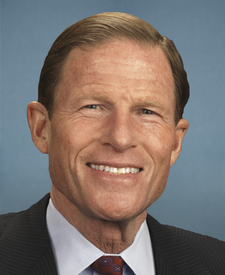
In CommitteeMr. Hawley (for himself and Mr. Blumenthal) introduced the following …
Read twice and referred to the Committee on Commerce, Science, …
Introduced in Senate
Stakeholder Effects
cui bono?How this legislation distributes effects. Mention counts reflect frequency, not effect magnitude.
AI developers - intellectual property, AI developers subject to evaluation, AI industry generally
Positive-direction: Red-team and AI safety researchers, Smaller AI companies below the threshold
Negative-direction: AI developers - intellectual property, AI developers subject to evaluation, AI industry generally, Developers of frontier AI models (above 10^26 ops threshold), Large AI developers (OpenAI, Anthropic, Google DeepMind, Meta AI, etc.), Open-source AI developers above threshold
Congress, Department of Energy, Federal Treasury
Positive-direction: Congress, Department of Energy, National security establishment
Negative-direction: Federal Treasury
Bill Structure & Actor Mappings
Who is "The Secretary" in each section?
- "the_secretary"
- → Secretary of Energy
- "the_secretary"
- → Secretary of Energy
- "the_secretary"
- → Secretary of Energy
Key Definitions
Terms defined in this bill
An AI system trained using more than 10^26 integer or floating-point operations. The Secretary may propose a new definition by rule, subject to Congressional approval via joint resolution.
An AI incident involving loss-of-control, weaponization by adversaries, critical infrastructure threats, civil liberties erosion, scheming behavior, or attempts to carry out such incidents.
AI that can operate autonomously in open-ended environments, match or exceed human cognitive performance across most domains, and potentially modify its own functions to circumvent human control.
A person that designs, codes, produces, owns, or substantially modifies an advanced AI system for interstate or foreign commerce, including initiating a training run.
A scenario where an AI system behaves contrary to instructions, deviates from rules, alters safety constraints, operates beyond scope, pursues unintended goals, subverts oversight mechanisms, or behaves unpredictably so as to be harmful.
AI behavior to deceive human designers or operators, including hiding true capabilities and objectives or attempting to subvert oversight or shutdown mechanisms.
We use a combination of our own taxonomy and classification in addition to large language models to assess meaning and potential beneficiaries. High confidence means strong textual evidence. Always verify with the original bill text.
Learn more about our methodology