AI LEAD Act
Summary
What This Bill Does
The bill creates congressional findings establishing the rationale for federal AI product liability legislation, citing harms from AI systems including teenage deaths from chatbot exploitation, unpredictable liability, defines key terms for the AI liability framework including artificial intelligence system (broad definition covering any ML/statistical/algorithmic software capable of predictions, recommendations, or decisions), and establishes comprehensive developer liability for AI harms under four theories: (1) negligent design with reasonable alternative design requirement (except for manifestly unreasonable designs), (2) failure to provide. It relies on compliance mandates, liability protections, definition changes, and reporting requirements. The main policy areas are Technology, Consumer Protection, Product Liability, and Finance.
Who Benefits and How
U.S. claimants seeking to sue foreign AI developers would be affected, Plaintiffs attorneys specializing in product liability could gain revenue opportunities, and Plaintiffs attorneys (fee recovery) could gain revenue opportunities.
Who Bears the Burden and How
AI developers (strict liability, design defect, warning requirements) could face increased risk, Large AI companies (OpenAI, Google, Meta, Anthropic, etc.) could face higher costs, and Foreign AI developers (e.g., DeepSeek, Mistral, international AI labs) would take on compliance duties.
Key Provisions
- Creates congressional findings establishing the rationale for federal AI product liability legislation, citing harms from AI systems including teenage deaths from chatbot exploitation, unpredictable liability...
- Defines key terms for the AI liability framework including artificial intelligence system (broad definition covering any ML/statistical/algorithmic software capable of predictions, recommendations, or decisions)...
- Establishes comprehensive developer liability for AI harms under four theories: (1) negligent design with reasonable alternative design requirement (except for manifestly unreasonable designs), (2) failure to provide...
- Defines deployer liability: deployers are liable as developers only when they make a substantial modification or intentionally misuse the covered product contrary to its intended use.
- Creates a federal cause of action allowing the U.S.
Evidence Chain:
This summary is generated from the full bill text using AI analysis. Expand "Detailed Analysis" below for identified beneficiaries/burden bearers with clause-level evidence links.
At a Glance
What This Bill Does
The bill creates congressional findings establishing the rationale for federal AI product liability legislation, citing harms from AI systems including teenage deaths from chatbot exploitation, unpredictable liability, defines key terms for the AI liability framework including artificial intelligence system (broad definition covering any ML/statistical/algorithmic software capable of predictions, recommendations, or decisions), and establishes comprehensive developer liability for AI harms under four theories: (1) negligent design with reasonable alternative design requirement (except for manifestly unreasonable designs), (2) failure to provide.
Key Policy Areas
Technology, Consumer Protection, Product Liability, Finance
Primary Purpose
The bill creates congressional findings establishing the rationale for federal AI product liability legislation, citing harms from AI systems including teenage deaths from chatbot exploitation, unpredictable liability, defines key terms for the AI liability framework including artificial intelligence system (broad definition covering any ML/statistical/algorithmic software capable of predictions, recommendations, or decisions), and establishes comprehensive developer liability for AI harms under four theories: (1) negligent design with reasonable alternative design requirement (except for manifestly unreasonable designs), (2) failure to provide.
Policy Domains
Title I - Liability
Identified Gains
- U.S. claimants seeking to sue foreign AI developers
- Plaintiffs attorneys specializing in product liability
- Plaintiffs attorneys (fee recovery)
- Minors (under 18) using AI products
- Claimants (can recover from deployer if developer unavailable)
Identified Costs
- AI developers (strict liability, design defect, warning requirements)
- Large AI companies (OpenAI, Google, Meta, Anthropic, etc.)
- Foreign AI developers (e.g., DeepSeek, Mistral, international AI labs)
- AI developers and deployers
- AI deployers who substantially modify or misuse products
Sponsors
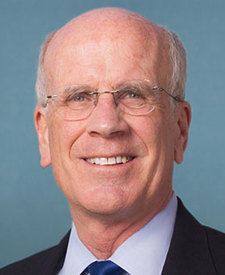
Legislative Progress
In CommitteeMr. Durbin (for himself and Mr. Hawley) introduced the following …
Read twice and referred to the Committee on the Judiciary. …
Introduced in Senate
Stakeholder Effects
cui bono?How this legislation distributes effects. Mention counts reflect frequency, not effect magnitude.
AI deployers (defined to include developers who also deploy), AI deployers (potential surrogate liability), AI deployers who substantially modify or misuse products
Positive-direction: AI deployers who use products as intended, AI safety and auditing firms, Businesses licensing AI products from third parties, Domestic AI developers (level playing field)
Negative-direction: AI deployers (defined to include developers who also deploy), AI deployers (potential surrogate liability), AI deployers who substantially modify or misuse products, AI developers (broad definition of covered product and design), AI developers (indemnification obligation), AI developers (strict liability, design defect, warning requirements), AI developers and deployers, AI developers and deployers (retroactive applicability), AI developers who use liability waivers in contracts, Foreign AI developers (e.g., DeepSeek, Mistral, international AI labs), Large AI companies (OpenAI, Google, Meta, Anthropic, etc.)
Claimants (broad definition of harm including emotional and reputational), Claimants (can recover from deployer if developer unavailable), Minors (under 18) using AI products
Plaintiffs attorneys (fee recovery), Plaintiffs attorneys specializing in product liability
Bill Structure & Actor Mappings
Who is "The Secretary" in each section?
- "state_ag"
- → State attorneys general
- "attorney_general"
- → U.S. Attorney General
- "attorney_general"
- → U.S. Attorney General
Key Definitions
Terms defined in this bill
Any software, data system, application, tool, or utility capable of making or facilitating predictions, recommendations, actions, or decisions using machine learning algorithms, statistical or symbolic models, or other computational methods. May be integrated into other hardware or software.
An artificial intelligence system.
A person, including a developer, who uses or operates a covered product for their own or a third party's use.
A person who designs, codes, produces, owns, or substantially modifies a covered product for their own or a third party's use.
Property damage (other than to the product itself), personal physical injury/illness/death, financial or reputational injury, mental/psychological anguish or behavioral distortion offensive to a reasonable person, or loss of consortium/services.
Any deliberate change by a deployer not authorized or reasonably anticipated by the developer that changes the purpose, use, function, design, or intended manner of use. Does not include modifications that solely reduce or mitigate risk.
We use a combination of our own taxonomy and classification in addition to large language models to assess meaning and potential beneficiaries. High confidence means strong textual evidence. Always verify with the original bill text.
Learn more about our methodology