To reduce spending on nuclear weapons and related defense spending and to prohibit the procurement and deployment of low-yield nuclear warheads, and for other purposes.
Analysis under review: This bill has generated analysis that may be too generic or incomplete. Clause-level evidence remains available below.
Summary
What This Bill Does
The Smarter Approaches to Nuclear Expenditures (SANE) Act imposes sweeping reductions on the U.S. nuclear weapons arsenal and its modernization programs. It caps the number of Columbia-class submarines at 8, limits ICBMs to 150, restricts deployed strategic warheads to 1,000, and caps B-21 bomber purchases at 80. It cancels several major programs outright, including the LGM-35 Sentinel ICBM replacement, the Long-Range Stand-Off cruise missile, F-35 nuclear capability, the W76-2 low-yield warhead deployment, new submarine-launched cruise missiles, space-based missile defense, and the W-93 warhead. It also halts the Uranium Processing Facility at Oak Ridge and freezes plutonium pit production expansion pending cost reporting.
Who Benefits and How
Federal taxpayers are the primary beneficiaries, as the bill aims to cut hundreds of billions in projected nuclear spending. The Congressional Budget Office estimated nuclear forces would cost billion from 2025-2034; this bill would substantially reduce that figure.
Arms control and nonproliferation advocates benefit from a policy shift toward reduced nuclear posture, aligning with the 2013 DOD guidance that forces could be reduced by up to one-third below New START levels.
Who Bears the Burden and How
Defense contractors working on cancelled programs bear the most direct burden. Companies involved in the Sentinel ICBM (Northrop Grumman), Long-Range Stand-Off weapon, B-21 production beyond 80 units, Columbia-class submarines beyond 8 (General Dynamics), and nuclear warhead programs would lose major revenue streams.
National Nuclear Security Administration (NNSA) and the Department of Energy nuclear weapons complex, including facilities at Los Alamos, Savannah River, Oak Ridge, and associated workforces, face reduced funding and potential job losses.
The Department of Defense faces constraints on force structure flexibility and nuclear deterrent options.
Key Provisions
- Submarine cap: No more than 8 Columbia-class submarines (Section 3)
- ICBM reduction: Air Force limited to 150 ICBMs, down from 400 (Section 3)
- Warhead cap: No more than 1,000 deployed strategic warheads (Section 3)
- Bomber cap: No more than 80 B-21 bombers (Section 3)
- Program cancellations: F-35 nuclear capability, LRSO cruise missile, Sentinel ICBM, W76-2 warhead deployment, new SLCM, space-based missile defense, W-93 warhead, B83-1 sustainment (Section 3)
- Facility restrictions: Halts Uranium Processing Facility and freezes plutonium pit expansion pending cost reporting (Section 3)
- Reporting requirements: Joint DOD/DOE reports on implementation plans, cost savings, and annual nuclear spending accounting (Section 4)
Evidence Chain:
This summary is generated from the full bill text using AI analysis. Expand "Detailed Analysis" below for identified beneficiaries/burden bearers.
At a Glance
What This Bill Does
Reduces nuclear weapons spending by capping submarine, ICBM, bomber, and warhead procurement, limiting deployed strategic warheads to 1,000, and cancelling several nuclear modernization programs to achieve significant cost savings.
Key Policy Areas
Defense, Government Operations, Energy
Primary Purpose
Reduces nuclear weapons spending by capping submarine, ICBM, bomber, and warhead procurement, limiting deployed strategic warheads to 1,000, and cancelling several nuclear modernization programs to achieve significant cost savings.
Policy Domains
Nuclear Weapons Spending Reductions
Identified Gains
Contextual inference, no direct clause citation- Federal taxpayers
- Arms control advocates
- Nonproliferation policy community
Contextual inference, no direct clause citation
Identified Costs
Contextual inference, no direct clause citation- Defense contractors (Northrop Grumman, General Dynamics, etc.)
- NNSA and DOE nuclear weapons complex
- Department of Defense
Contextual inference, no direct clause citation
Sponsors
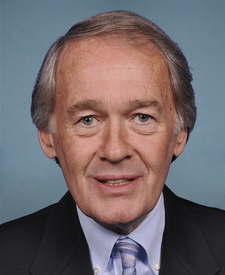
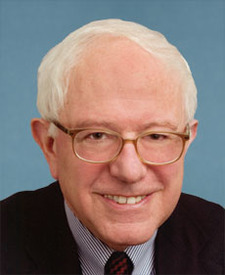
Legislative Progress
IntroducedMr. Markey (for himself and Mr. Sanders) introduced the following …
Stakeholder Effects
cui bono?How this legislation distributes effects. Mention counts reflect frequency, not effect magnitude.
Congressional committees, Congressional oversight committees, Department of Defense
Positive-direction: Congressional oversight committees
Negative-direction: Department of Defense, Department of Energy, Office of Management and Budget
Defense contractors (ICBM/missile manufacturers), Defense contractors (bomber manufacturers), Defense contractors (submarine manufacturers)
Los Alamos National Laboratory, NNSA nuclear weapons complex, Oak Ridge Y-12 facility
Bill Structure & Actor Mappings
Who is "The Secretary" in each section?
- "the_president"
- → President of the United States
- "secretary_of_energy"
- → Secretary of Energy
- "secretary_of_defense"
- → Secretary of Defense
- "administrator_for_nuclear_security"
- → Administrator for Nuclear Security (NNSA)
Key Definitions
Terms defined in this bill
Armed Services, Foreign Relations/Affairs, Appropriations, and Energy/Natural Resources committees of both chambers.
We use a combination of our own taxonomy and classification in addition to large language models to assess meaning and potential beneficiaries. High confidence means strong textual evidence. Always verify with the original bill text.
Learn more about our methodology